
Web3 Social Media Platforms 2026

Vance Wood
February 4, 2026
19 min read
With the growing censorship and surveillance issues of centralized Web2 social media, an alternative is growing in the form of Web3 social platforms. While their adoption is still orders of magnitude lower than traditional media, some of them are slowly becoming important market players. GetBlock is committed to building a decentralized, censorship-resistant future and supports it with its premium RPC nodes, so let’s explore key Web3 platforms that work on that.
Summary of top Web3 social media platforms
Here are the platforms we’re going to explore:
Bluesky
Lens Protocol
Farcaster
Steemit
Paragraph
DeBank
Mastodon
Audius
Minds
Diamond App
Chingari
Social media has been one of the primary drivers for the Web2 Internet growth, creating the interface for people to communicate with each other. Now, however, the whole Web2 Internet experiences a privacy crisis, when user data can be easily accessed and used against them. Combined with the fact that freedom of speech and confidentiality rights are violated in certain regions, the demand for a new medium that can protect users’ privacy while ensuring their rights to their content is growing.
As one can see below, the decentralized social media market is predicted to grow heavily.
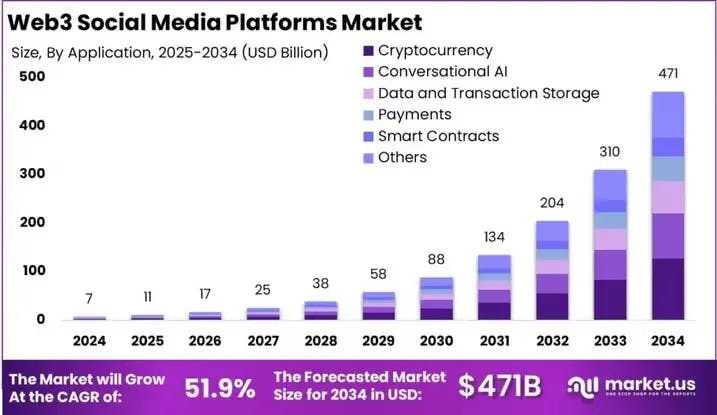
Source: Market.us
While the widespread Web3 social media adoption is still low nowadays, it’s increasing steadily, with new users and unique features for them. For example, DeBank allows efficient portfolio tracking and insight sharing, Paragraph is a decentralized publishing platform, Chingari is like a decentralized TikTok with creator rewards, and Audius allows indie music makers to get rewarded by fans.
Bluesky is the largest among such platforms, being essentially a decentralized Twitter, but it’s more like a transitioning option between more common Web2 and decentralized Web3 platforms. So, let’s explore them all more closely.
What are Web3 social media platforms?
Now, one can see why we need another type of social platform today. But what exactly is it?
A decentralized social media platform uses blockchain technology to secure content ownership onchain, while protecting the identities of its users. They differ in the extent to which they store data onchain: some store the whole content pieces, while others only secure ownership there. As they integrate crypto payments, it’s usually possible to transfer funds to other users easily, such as giving money to friends or tipping favorite content creators.
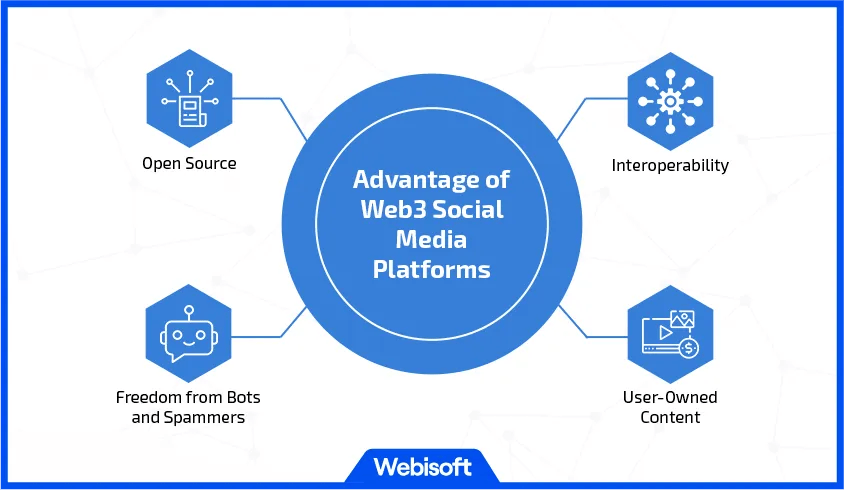
While all such platforms are different, they share some key similarities:
Its content is user-owned and cannot be alienated from them, as it’s recorded onchain and tied to a certain wallet. Users can also be rewarded for it. Only if a user loses access to their wallet, they can also lose their content ownership.
All its data is connected to the blockchain, which means they can be easily retrieved and migrated between platforms, as long as they support the chain on which they are based.
User identities are secured onchain, so it’s much harder for bots, spammers, and other non-authentic users to access the application.
Open-source development is promoted among Web3 ecosystems, which means that it’s easier for developers to build and grow their social dApps.
Below, one can see a simple infographics that illustrate these principles.
Web3 social platforms offer a fresh, censorship-resistant alternative to Web2 media, and while they aren’t actively used now, their potential is immense.
Comparison with Web2 platforms
Before exploring key Web3 platforms, let’s look at how exactly they solve typical Web2 platforms’ problems.
Issues of Web2 platforms
Current Web2 social platforms concentrate power over speech, data, and information access, which enables pervasive surveillance, selective moderation, and structural rights risks. Additionally, it makes centralized social media more vulnerable to security breaches, as they have only one point of failure.
Explore the Web2 and Web3 differences in our specialized article.
Let’s look closer:
A surveillance-driven business model is typical for current Web2 media. Most major platforms monetize by harvesting detailed behavioral data and selling targeted ads, a paradigm often described as surveillance capitalism. As a result, user data is stored on centralized databases without direct user control over it.
Centralized data custody means that a few companies, often affiliated with governments, store and control the vast majority of social graphs, posts, messages, and attention flows on their own servers. Users cannot easily export or manage their identity, followers, and content.
Content moderation policies are non-transparent and often enforced in ways that disproportionately affect some communities and politically sensitive speech. Reports document mass takedowns, uneven enforcement, and ranking algorithms that amplify some narratives while suppressing others.
Continuous tracking and targeting enable large‑scale behavior modification, nudging opinions and choices in ways users neither see nor control. This erodes privacy, increases polarization, and undermines informed democratic deliberation as feeds prioritize attention‑grabbing content over balanced information.
As a result, users become alienated from their own data and content, being forced to trust the platforms that store them. Web3 social platforms aim to mitigate these issues through user ownership, open trustless protocols, and decentralization. Let’s look closer.
How Web3 social media platforms work
As these platforms allow user control over their content, they solve the content alienation issue, which leads to censorship, opaque moderation, and other subsequent problems.
Web3 social media ensures stronger guarantees of freedom of expression, data sovereignty, and privacy against arbitrary removal and opaque down‑ranking of centralized platforms. However, to remain objective, we must explore their potential vulnerabilities and challenges. Let’s focus on them now.
Challenges and limitations of Web3 platforms
Blockchain and other decentralized technologies have inherent limitations, issues, and vulnerabilities, which should be acknowledged and addressed. They include:
Increased risks of genuinely harmful or illegal content, which can be preserved in immutable storage, so Web3 social platforms require more high-layer moderation policies, such as the usage of reputation systems and specialized gateways.
Smart contracts have inherent vulnerabilities, which can be used by hackers to breach security and steal data or money. They require extensive and regular security audits to prevent this.
Lost or stolen keys cannot be easily retrieved, which raises new security and usability issues, especially for non‑technical users. While users have control over their data and funds, it also implies much greater responsibility.
Web3 platforms are inherently pluralistic and fragmented, which means drastically different norms and rules in different communities, even on the same platform. It’s not an issue by itself, but it must be acknowledged.
Still, Web3 socials are needed as an alternative to centralized Web2 platforms. They offer an alternative to surveillance‑capitalist, ad‑driven platforms by re‑architecting identity, data storage, and governance around user and community ownership rather than corporate and governmental control. While it has inherent challenges, they can be addressed and solved step by step.
Key features
Let’s explore the features of the platforms we’re going to explore here in the table below.
DAU—Daily Active Users
MAU—Monthly Active Users
Platform | Primary purpose | Crypto integration | Chains used | Statistics |
Bluesky | Decentralized microblogging; real‑time conversation and link sharing | AT Protocol for decentralized identities and feeds; federation and custom algorithms; some crypto‑native communities use it alongside wallets and Web3 apps | None; | 15M+ total users |
Lens Protocol | On‑chain social graph; identity and content layer for SocialFi apps | NFT‑based profiles; on‑chain posts, comments, follows; modular SocialFi primitives; integrated with EVM wallets and DeFi/NFT tooling | Initially Polygon; | Hundreds of thousands of profiles and a growing ecosystem of apps (exact MAU varies by source) |
Farcaster | Decentralized social protocol; developer‑friendly cast feeds and channels | Ethereum mainnet + Optimism for IDs and storage roots; wallet‑linked accounts; on‑chain Frames and apps; permissionless client ecosystem | Ethereum; Optimism; off‑chain hubs for scalable data; multiple independent clients using the same protocol | Roughly 250k MAU and 100k+ funded wallets by late 2025 |
Steemit | Token‑rewarded blogging, forum‑style discussions, and curation | STEEM token rewards for posts and votes; delegated proof‑of‑stake governance; on‑chain social and payout logic | Steem blockchain (original L1) | Millions of registered accounts; significant early token rewards and activity, now is more niche Web3 social platform with no current precise MAU disclosed |
Paragraph | Crypto‑native publishing; newsletters and long‑form content | Wallet login; token‑gated posts and memberships; integrations with Farcaster and other Web3 IDs; on‑chain subscriptions and NFT gating via EVM tools | EVM‑compatible via integrations through connected wallets and protocols; operates as an application layer | Used by hundreds of Web3 publications and DAOs; growing creator base focused on on‑chain newsletters and gated essays |
DeBank | Portfolio tracking, social DeFi analytics, and wallet‑centric streams | Wallet‑based identity; on‑chain portfolio aggregation; DeBank Chain; social metrics like Trust and follower value; official on‑chain project pages | 30+ EVM chains; DeBank Chain with >350k unique addresses | 2.5M+ registered users; 100k–600k DAU range cited across 2025 sources |
Mastodon | Federated microblogging; community‑run social spaces | Thousands of ActivityPub servers (≈9,500 Mastodon instances) interconnected as the Fediverse | None; | ≈2.8M active users in the Fediverse; ~30% yearly growth into 2025 |
Audius | Decentralized music streaming; artist‑to‑fan distribution | AUDIO token for governance and node incentives; on‑chain artist tools; Solana and Ethereum integrations; USDC monetization paths | Ethereum (governance and token); | 7.5M+ monthly active users after SoundStage.fm acquisition; 1M+ tracks and 250k+ artists |
Minds | Open‑source social network; low censorship and creator monetization | Ethereum‑based Minds token; token rewards for engagement; Boost (paid promotion) and tipping; on‑chain treasury exposure to BTC/ETH/USDC | Ethereum (Minds ERC‑20 token); integrates with decentralized messaging (Matrix) while core app runs on traditional infra | ≈5M registered users and up to ~500k MAU historically; moved 25% of treasury into crypto; active token‑driven promotion and tipping economy |
Diamond App | On‑chain social feed, creator coins, and NFT content on DeSo | Fully on‑chain posts; creator coins; NFT minting and tipping; all data stored on DeSo; DESO token for fees and ecosystem incentives | DeSo L1 (Decentralized Social blockchain) optimized for social data; content and interactions written directly onchain | Hundreds of thousands of on‑chain social profiles across DeSo apps (Diamond is a key frontend) |
Chingari | Short‑video sharing; creator economy with token rewards | GARI token (originally Solana SPL; integrating with Aptos); on‑chain rewards via GARI Mining; NFT‑style badges with reward multipliers | Solana (GARI token and NFTs); Aptos integration driving large share of Aptos on‑chain activity; mobile apps as primary UX | 40M MAU and 5M DAU; 175M+ downloads; 175M+ total users; >2.6–2.8M GARI holders; >$1M worth of GARI distributed via rewards programs |
Top 11 Web3 social media platforms
Let’s dive into these platforms more closely.
Bluesky
Bluesky is a decentralized microblogging network that uses the AT Protocol, aiming to separate the social graph from any single app. It lets users choose moderation services and ranking algorithms while maintaining a familiar Twitter‑style short‑post interface, and the underlying protocol is designed to support multiple compatible frontends and data portability. While AT Protocol doesn’t use a native token, it has emerging integrations with crypto communities that treat Bluesky as a censorship‑resistant communication layer.
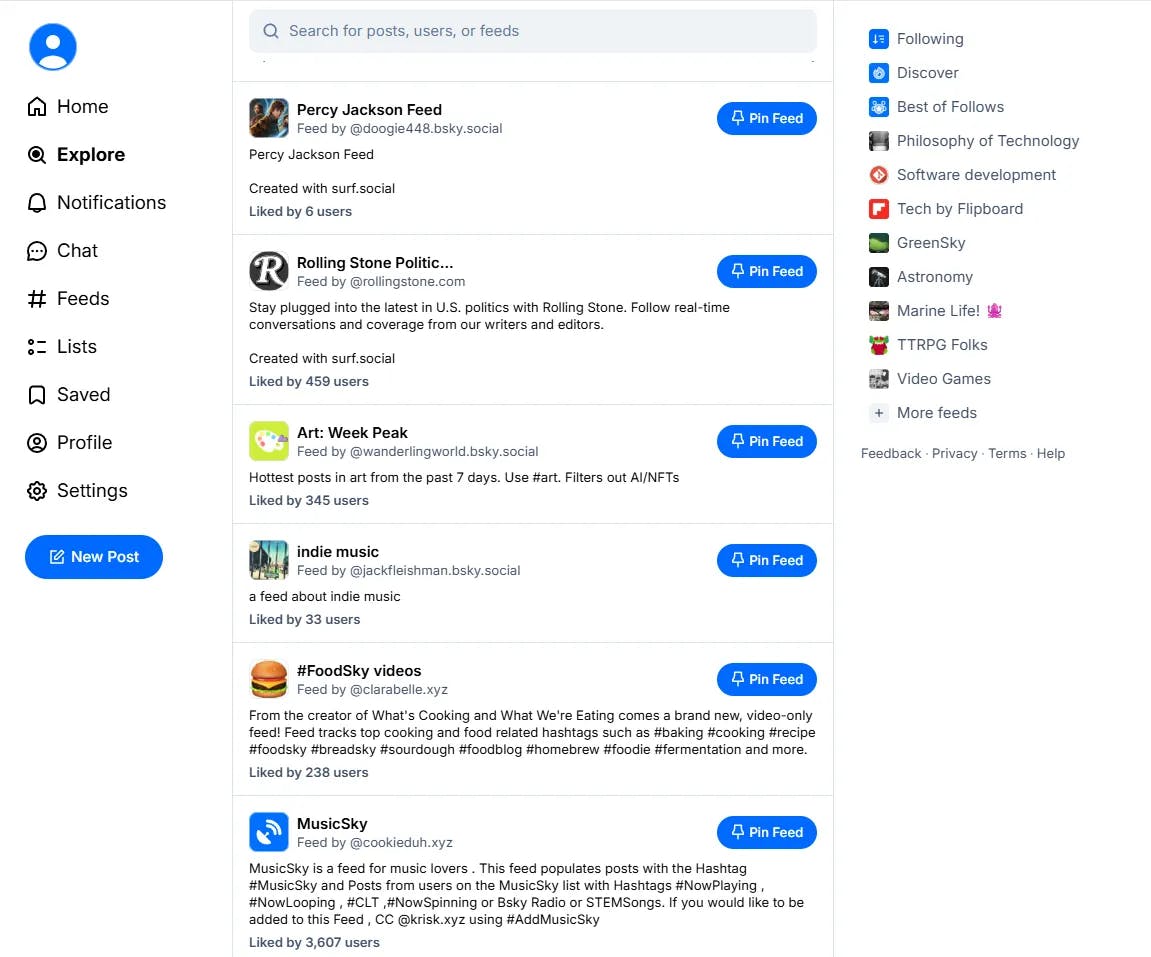
Bluesky interface
Bluesky is mainly used by journalists, developers, and crypto‑native users seeking an alternative to X/Twitter. The company has raised an 8 million USD seed round and a 15 million USD Series A led by Blockchain Capital, and reports more than 13 million users as of late 2024.
Lens Protocol
Lens Protocol is a Web3‑native social graph built originally on Polygon, designed in a way that profiles, follows, and content are on‑chain NFTs and composable across many frontends. Now, it evolved into Lens Network, a dedicated SocialFi‑optimized scaling layer. It provides a modular, smart‑contract‑based architecture where every interaction (profiles, posts, comments, mirrors) can be extended by new modules.
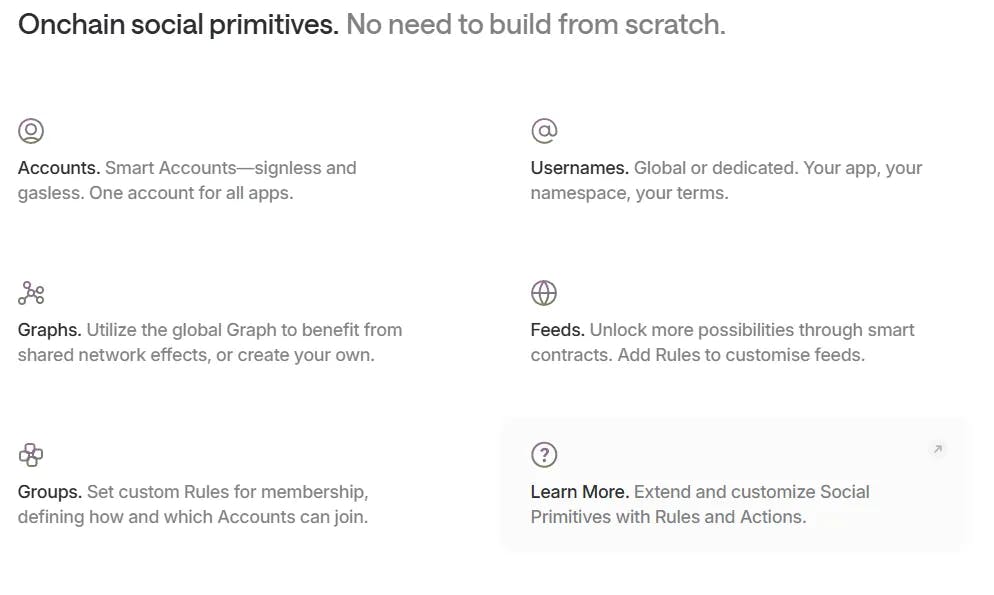
Lens onchain social primitives
This positions Lens less as a “single app” and more as the base protocol for any dApp that needs identity, social relationships, and monetization primitives baked in. Lens is primarily used by crypto‑native creators, NFT communities, DAOs, and DeFi teams that want a portable, ownable social graph integrated with on‑chain identities. Lens has raised over 60 million USD in total funding, including a 31 million USD strategic round in 2024.
Farcaster
Farcaster is a decentralized social networking protocol that uses Ethereum and Optimism for identity and data anchoring, while off‑chain hubs handle scalable content distribution. It exposes an open social graph and cast (post) feed that third‑party clients can build on, with features like channels, reactions, frames (interactive embeds), and wallet‑linked identities. This hybrid design aims to balance censorship resistance and user‑owned identity with practical performance and UX
The platform is used heavily by crypto builders, founders, investors, and power users who treat it as the “Telegram + Twitter” of on‑chain development, with dense concentrations of Ethereum and L2 ecosystem participants. It has raised roughly 180 million USD in VC capital (about 30 million USD earlier rounds plus a 150 million USD Series A at a 1 billion USD valuation) and reported about 250,000 monthly active users and 100,000+ funded wallets by late 2025.
Steemit
Steemit is a blockchain‑based blogging and discussion platform originally built on the Steem blockchain, rewarding posts and comments with crypto tokens. It uses a delegated proof‑of‑stake mechanism where stake‑weighted voting influences both curation and economic rewards, turning content discovery into an incentive game. Over time, governance disputes around Steem led to a community fork (Hive), but the Steemit application still illustrates early tokenized social mechanics.
Steemit attracts bloggers, commentators, and early crypto content creators seeking direct token rewards rather than advertising revenue. While its original growth has plateaued, and part of the community migrated to Hive Steemit’s on‑chain payout model remains a reference point for Web3 social tokenomics.
Paragraph
Paragraph is a Web3‑native publishing and newsletter platform that allows writers to build on‑chain communities and monetize with crypto‑powered memberships. It integrates with Farcaster and other protocols to let creators gate content with NFTs or ERC‑20 tokens, manage subscriptions, and send both on‑chain and email‑based newsletters from a single interface.
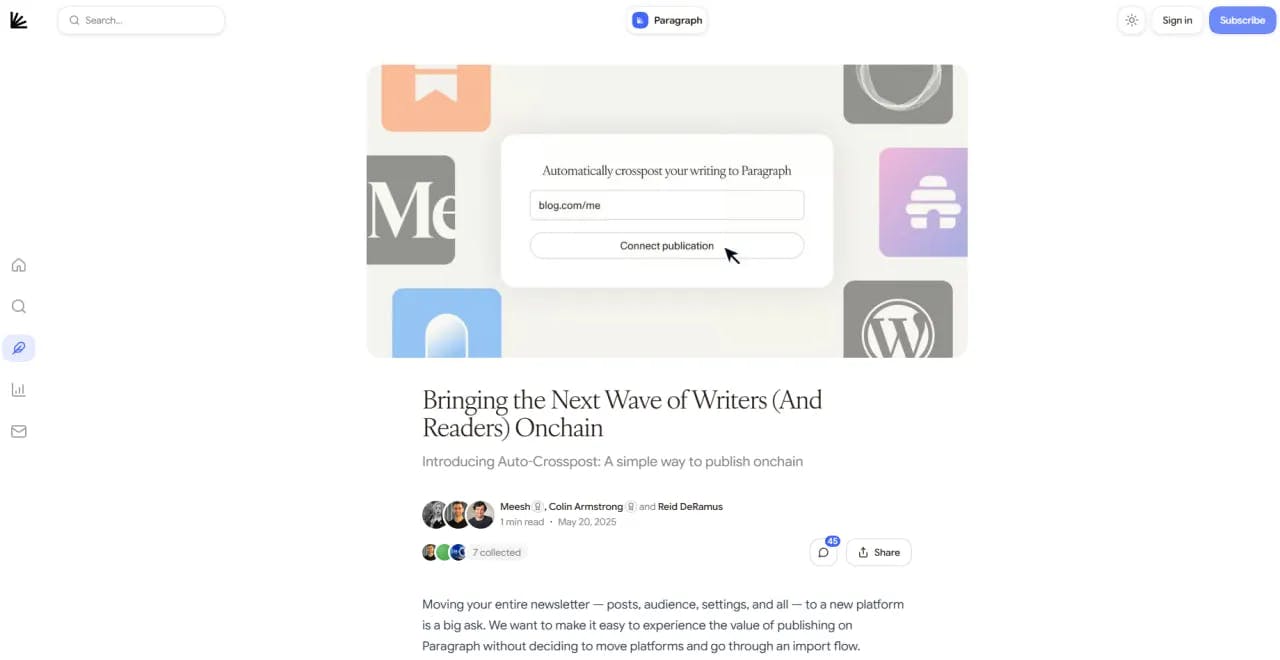
Source: Paragraph
Paragraph is mainly used by Web3 writers, DAOs, NFT communities, and protocol teams that want long‑form, ownable content instead of relying solely on Web2 publishing. The company raised a 1.7 million USD pre‑seed round led by Lemniscap and has continued to gain traction among Farcaster and crypto‑native creators.
DeBank
DeBank is a wallet‑centric DeFi portfolio tracker and social layer that aggregates positions across many EVM chains and presents a social feed (“Stream”) tied to on‑chain wallet activity. It supports dozens of chains and thousands of DeFi protocols, exposing token balances, lending and LP positions, NFTs, and historical performance, while DeBank Chain and its social metrics (Trust, follower value) add a native interaction and messaging layer.
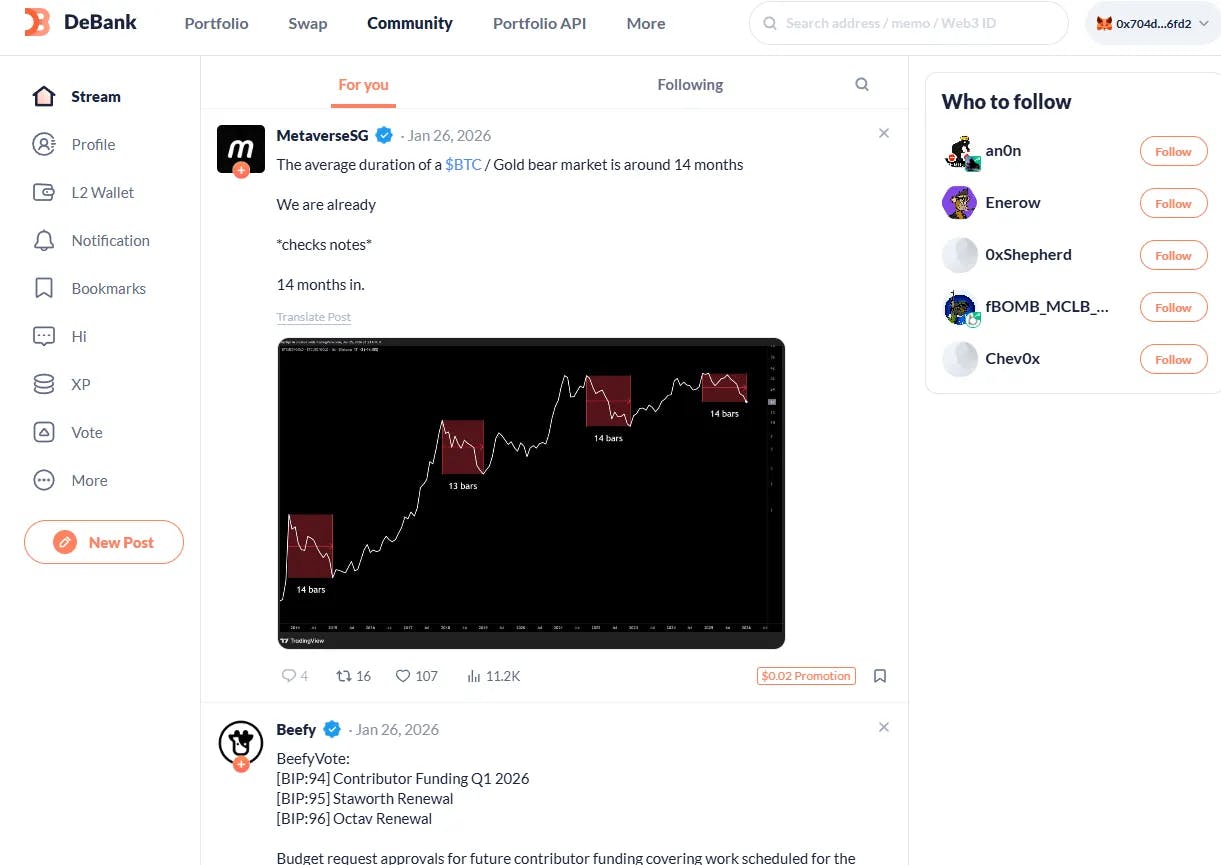
Source: DeBank
DeBank is heavily used by DeFi traders, portfolio managers, on‑chain analysts, and Web3 projects that want to track whales, monitor protocols, and communicate via wallet‑based social graphs. The company has raised 25 million USD at a 200 million USD valuation and, by 2025, has millions of registered users and high six‑figure daily actives.
Mastodon
Mastodon is an open‑source, federated microblogging platform that forms a major part of the “Fediverse,” using the ActivityPub protocol to link thousands of independent servers. It has no tokens, but each instance runs its own rules, moderation, and community culture. Users can follow accounts across instances, post text, images, audio, and polls, and interact through a Twitter‑like interface without a central authority. This architecture emphasizes community autonomy and privacy rather than tokenization.
Mastodon is widely used by tech communities, privacy advocates, journalists, academics, and niche interest groups that want control over governance and data. Across the broader Fediverse, Mastodon connects about 2.8 million active users on roughly 9,500 instances, and its user base grew more than 30% year‑over‑year into 2025.
Audius
Audius is a decentralized music streaming and distribution protocol that uses a hybrid architecture with Ethereum and Solana to support high‑throughput, low‑fee audio content. Artists upload tracks that are stored and served via decentralized content and discovery nodes, while the AUDIO token underpins governance and incentive structures around nodes and features. Solana integration powers social experiences and micropayments, including USDC‑based monetization paths.
Audius is primarily used by independent musicians, DJs, and electronic artists who want direct access to fans, as well as listeners interested in free or crypto‑enabled streaming without traditional label intermediaries. The platform has grown to over 4 million monthly active users and has raised substantial VC funding in earlier rounds.
Minds
Minds is an open‑source, crypto‑enabled social network that combines mainstream social features with Ethereum‑based token rewards. Users earn Minds tokens for contributions and can spend them on Boost (promotion), tipping, or premium content, and the platform integrates decentralized components such as the Matrix protocol for messaging and on‑chain wallets for token custody. This makes it a hybrid between a traditional social network and a tokenized attention marketplace.
Minds attracts free‑speech advocates, independent journalists, activists, and creators seeking alternative monetization channels outside ad‑driven networks. The network has reported around 5 million registered users with up to 500,000 monthly active users, and runs its own ERC‑20 token economy.
Diamond App
Diamond App is a Web3 social application built on the DeSo (Decentralized Social) layer‑1 blockchain, enabling posts, creator coins, NFTs, and tipping to live directly on‑chain. Every piece of content and social interaction is stored efficiently on DeSo, whose architecture is optimized for low‑cost content storage and social data rather than generic smart contracts. This allows Diamond to support features like minting posts as NFTs, launching social tokens, and receiving crypto tips with a UX similar to mainstream social apps.
Diamond is used by early‑adopter creators, NFT artists, and speculative communities around creator coins who want fully on‑chain social and monetization primitives. While Diamond’s own funding numbers aren’t disclosed, the underlying DeSo ecosystem has raised around 200 million USD via token sales and venture backing.
Chingari
Chingari is a Web3‑powered short‑video platform originating from India, integrating the GARI token to reward creators and users for engagement. It functions similarly to TikTok in UX but uses an SPL‑standard GARI token on Solana to pay out for actions like creating, sharing, and liking videos, and supports NFT‑based “GARI Badges” with reward multipliers. The app has grown into one of India’s top social video apps while embedding on‑chain incentives directly into video consumption.
Chingari is primarily used by mainstream short‑video consumers and creators in India and other emerging markets who can earn GARI for participation, as well as crypto users who buy or stake GARI for exposure to the ecosystem. The platform reports more than 40 million monthly active users, mostly from India, and has distributed at least 15 million GARI tokens (about 1 million USD) via its GARI Mining program, while GARI itself has reached roughly 2.8 million holders.
How to get started
Web3 social platforms let you own your identity, data, and audience across apps while connecting with high‑signal communities like devs, traders, and creators. Let’s wrap the article up with a quick overview of that.
Marketing on Web3 social platforms
Many of these networks cluster high-value user audiences. For example, Farcaster and Lens are extensively used by builders, DeFi‑heavy tools like DeBank by traders, and Audius/Paragraph by music and long‑form content creators. Here is a quick algorithm of how to reach out to them:
Define your goal (dev hiring, liquidity, brand, or content reach).
Pick 2–3 platforms where your target users actually hang out.
Connect a wallet, set up a consistent handle, and complete your profile.
Provide value first: technical threads, dashboards, AMAs, or open‑source drops.
Measure response (follows, on‑chain actions) and double down on what works.
Treat these networks as relationship rails, not just broadcast channels.
Future trends 2026
Expect richer on‑chain identity, token‑gated communities, wallet‑aware feeds, and interactive formats (Frames, social NFTs), with early adopters coming from developers, DeFi power users, creators, and crypto‑curious media brands.
GetBlock for Web3 social dApps
The current decentralized social media adoption remains low. As of 2026, there are about tens of millions of regular users on these platforms, compared to billions on much more common Web2 social platforms. However, the adoption is growing, slowly but steadily. It can be compared to the growth of Web2 social media in the mid-2000s, albeit now it’s mostly driven by the demand for privacy and freedom of expression.
Overall, the Web3 social media market is growing actively, and it’s a good time to develop Web3 social applications and use them for various purposes. GetBlock hopes that our article will be a good guide for those who want that, and offers help and support.
To realize their mission in building a free, secure, and censorship-resistant Internet, Web3 social media platforms need a stable and robust blockchain connection - which means efficient infrastructure. GetBlock works to ensure that every Web3 social project that needs it will have it, no matter which chain and business model it uses.
Our Web3 ecosystem is more than just an infrastructure: it’s the basis for Web3 projects that transform our society for the better. We offer 24/7 technical support, deep blockchain development expertise, and promotion help for both new and mature Web3 social media platforms, ensuring that they can realize their mission of reclaiming the Internet. Don’t waste time - contact us now with your project, select the best RPC node plan for you, and let’s grow together!
FAQ
What are Web3 social media platforms?

How do Web3 social media platforms enhance privacy?
Can users monetize their content on Web3 social media platforms?
What challenges do Web3 social media platforms face?
How can brands leverage Web3 social media for marketing?


Popular Posts

June 9, 2021
4 min read

November 9, 2021
5 min read

May 24, 2022
5 min read

March 18, 2021
4 min read


