npx skills add https://github.com/GetBlock-io/getblock-blockchain-skills --skill getblock-skill
 Claude
 ChatGPT
 Perplexity
 Grok
Grok Google AI Mode
Running in production at






Platform
The full infrastructure stack
Managed endpoints and single-tenant nodes, from a free key to a dedicated cluster.

Data
Streams, webhooks and indexed history, already shaped for your product.
Solana Shreds
Transactions ahead of block confirmation.
From $250/mo
Real-Time Streams
Blocks, transactions, and logs streamed as they land.
Webhooks
Chain events delivered to your endpoint, no polling.
Market Data
Normalized Solana and Ethereum trades from DEXs and prediction markets.
Indexed Archive
Complete indexed history for Solana and Sui, at lower cost than Bigtable.
Risk & Compliance
Screening, wallet audits and risk APIs, on our own models and our own nodes.
Crypto AML Check
Sanctions and risk screening for any address, dashboard or API.
From ~$0.50 / check
Full Wallet Audit
Complete counterparty profile: history, exposure, and connected entities.
$0.20 / request
Rug Pull Scanner
Contract and liquidity risk checks before capital is committed.
$0.20 / request
Token Risk API
Programmatic risk scoring for any token.
Token Insight API
Ownership, liquidity, and holder analytics for any asset.
Payment Solutions
Cheaper transfers today, agentic payment rails next.
TRON Energy Rental
TRC-20 USDT transfers at 70% lower cost, billed in USD.
x402
Integration with the x402 agentic payments protocol.
MPP
Agent-to-agent payment rails for your service.
Staking
Our own validators, and validator operation for anyone who would rather not run one.
NEAR Validator
GetBlock's NEAR validator, anchored by Meta Pool.
Stake NEAR
NEAR delegation at competitive rates on operated infrastructure.
Validator Portal
A single view of validator performance and delegation.
Validator-as-a-Service
Managed validator operation for any network, on demand.
Use cases
Built for the hardest workloads in crypto
The engineering behind wallets, exchanges, and regulated payment institutions. Select a category to see the work.

Trust Wallet
124M
Active users
93
Countries
35%
Of the software wallet market
Challenge
Serving 124M wallet users required Bitcoin address indexing and a patched Cosmos client under one multi-chain SLA.
Outcome
Trust Wallet consolidated 12 networks onto managed infrastructure, with an estimated 4,500 engineering hours saved.
Read the case study- Bitcoin full node with Blockbook indexing for address and transaction lookups
- Cosmos node running a custom client patch maintained in-house by GetBlock
- Fault-tolerant cluster spanning 12 networks, including long-tail chains
- EU-weighted routing through the Frankfurt cluster for latency and residency
- 99.99% uptime under SLA, backed by 24/7 engineering support
A top-10 national bank, publicly listed
Name withheld under NDA
$80B
In assets
20+
Cryptocurrencies supported
3 weeks
From first call to production
Challenge
A listed top-10 bank needed an isolated, audit-ready EU node environment under a contract framework that did not exist.
Outcome
The bank went from first call to a production cluster in three weeks, with an estimated 1,200 DevOps hours saved.
- Isolated EU node cluster with strict IP allowlisting and full policy review
- Standard hardware: 2x1TB and 2x2TB NVMe, 1M+ IOPS, 25 GB/s uplink
- Mixed network coverage, from Polygon to Cardano and Bitcoin
- SOC 2 attestation supported by more than 10 independent security tests
- Custom legal and contractual framework built from scratch for the engagement

MEXC
40M
Users
3,000
Cryptocurrencies listed
$6B
In reserves
Challenge
Exchange-scale load required dedicated capacity with cross-tier failover and Ethereum client diversity in one setup.
Outcome
MEXC held 99.99% uptime through peak 2024 and 2025 trading load, with an estimated 3,000 engineering hours saved.
Read the case study- Dedicated node cluster across five networks, exposed through 100 endpoints
- Cross-tier failover, with shared nodes backing dedicated capacity
- Ethereum client diversity: Prysm, Teku, and Geth in a single setup
- Enterprise capacity of 100B compute units per month, sustained at 300 RPS
- JSON-RPC and WebSocket access routed through the Frankfurt cluster
Tangem
6M
Wallets sold
Zero
Security incidents
90+
Blockchains supported
Challenge
A hardware wallet shipping 6M units needed EVM and UTXO networks under a single dedicated setup and one contract.
Outcome
Tangem has held three years of 99.99% uptime and doubled its supported network count on GetBlock infrastructure.
Read the case study- Fault-tolerant dedicated cluster spanning more than 10 blockchain networks
- EVM and UTXO chains in one setup, from Ethereum and BNB Chain to Cardano
- Latency held below 10ms on the most frequently requested RPC methods
- Mixed monthly and annual contract terms to match the budget cycle
- Network coverage doubled with no additional procurement cycle required
CoinGate
7M+
Payments processed
180+
Countries served
Every 20s
A crypto order is placed
Challenge
A MiCA-licensed payment gateway needed 13 networks and a DORA-grade ICT posture from one infrastructure provider.
Outcome
CoinGate gained a DORA and GDPR framework built from scratch, with an estimated 1,400 hours of engineering work saved.
Read the case study- Single cluster across 13 networks: UTXO, EVM, Solana, XRPL, and TRON
- Testnet parity for every network running in the production cluster
- DORA-ready ICT posture: incident reporting, resilience testing, exit plans
- SOC 2 Type II attestation covering shared and dedicated node products
- Self-service network management with no procurement cycle per chain

Revert Finance
$400B+
Cumulative volume on Aerodrome
7
Blockchains covered
1st
Overlay-enabled Base node on the market
Challenge
Deterministic AMM analytics on Base required overlay RPC methods that no commercial provider offered in production.
Outcome
Revert moved from trial to production analytics on Base, on the first production overlay-enabled Base node we know of.
Read the case study- Custom fork of op-erigon, patched in-house by GetBlock
- Overlay RPC namespace made production-ready on Base, with overlay_getLogs and overlay_callConstructor fixed end to end
- Base archive node with full state and bytecode override replays
- Fixes contributed upstream to the op-erigon maintainers
- Hardened node image with monitoring for head lag and state regressions

Blockaid
$500B+
In digital assets protected
10+
Fortune Crypto 40 clients
5B+
Malicious transactions and connections screened
Challenge
Real-time transaction screening required sub-7ms multi-chain nodes running Blockaid's own binary in three regions.
Outcome
Blockaid extended screening to networks with no commercial RPC support, with an estimated 1,500 hours of work saved.
Read the case study- Load-balanced clusters of two to three full nodes for every network
- Deployment across New York, Frankfurt, and Singapore for global coverage
- Three-stage rollout of Blockaid's proprietary binary on every synced node
- First commercial Abstract RPC node, plus Worldchain and Zero on request
- Dedicated Grafana dashboards, 3-hour RCA, first response under 5 minutes
Easy start
Start building on GetBlock today
Estimate what your setup costs, claim a grant, or open a free endpoint and put your first project on GetBlock today.
Plan your setup
See what it costs
Set a month of traffic and see what it costs: a shared plan while the compute units last, Limitless for fixed RPS with no counter, a dedicated node above that.
Get support
Solana Grant Program
Up to $10K in credits
Explore grantsStart building
Free Tier
No credit card required
Get endpoint
Inference
Introducing GetBlock AI
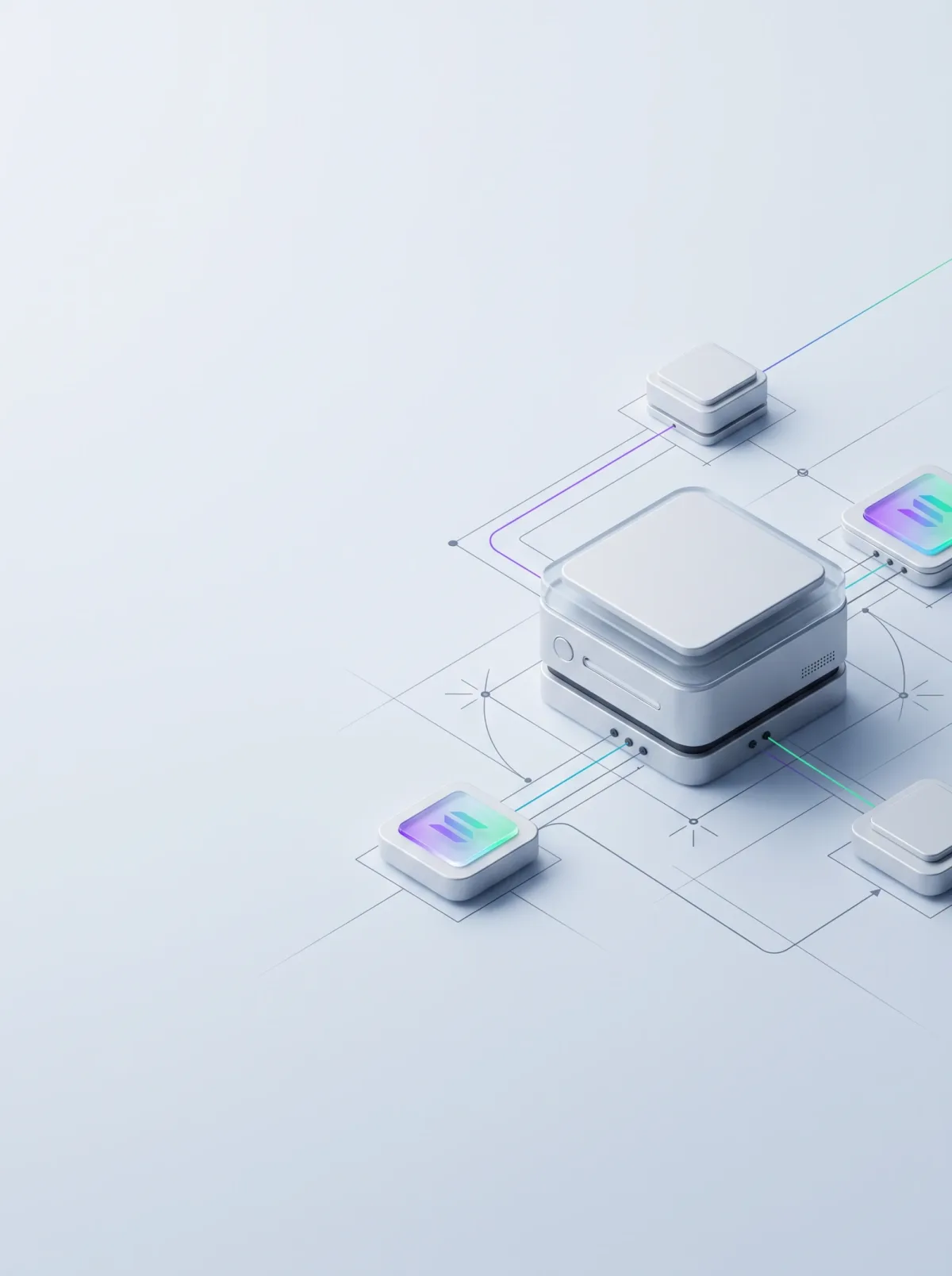
GetBlock AI is an inference routing layer that puts many models and providers behind one API, and governs them with one policy.
Change your base URL and keep your existing integration.
Works with
- OpenAI SDK
- Anthropic SDK
Frontier models
When capability decides the outcome. Every major lab through one endpoint, with no surcharge over list price.
Open-weight models
When volume and cost decide it. The same endpoint, routed to whichever provider is serving that model best.
Why GetBlock AI
One API for AI models, one routing policy, single bill
Integration
One endpoint, not one per provider
Change your base URL and keep the integration you already have.
Traceability
A receipt for every request
Request ID, provider, execution mode, attempts, latency, and tokens.
Billing
One balance for nodes and models
The same GetBlock balance and dashboard are already running your RPC nodes.
Model access
Every model in one catalog
Frontier and open-weight models side by side.
Routing
Routing on your terms
Set provider order, price ceilings, and allowlists per key.
Fallbacks
Failures you can actually see
Every provider attempt is logged. If none succeeds you get an explicit error and no charge.
Available soon
- Policy control
- Spend visibility
- Raw blockchain data
The best infrastructure is quiet
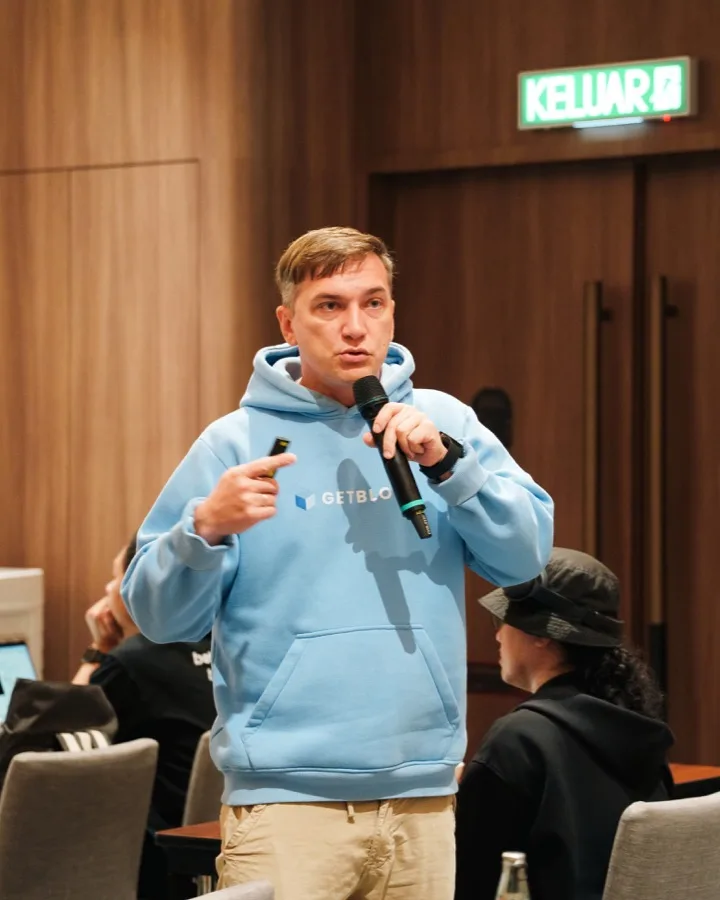
We run the fleet so your engineers never chase a stalled block, a reorg, or a p99 spike. Fifty billion requests a month across 130+ networks, with failover in three regions. We also carry the operational and regulatory weight that no digital asset business should hold on its own: uptime under SLA, SOC 2 Type II attestation, and ICT terms aligned with DORA and GDPR.
That has been the work since 2019, through three cycles without a pause.
The engineers behind it have spent decades keeping production systems up, and the team is among the strongest I have worked with.
Products that need infrastructure to stay up are built on GetBlock.
Enterprise
Your security review, already answered
Attestations, contracts, and evidence, ready before you ask.
When it doesn't exist yet, we build it
Patched clients, custom forks, blockchain networks no one else runs commercially. Most requests ship in days, not quarters.
- SOC 2 Type II
- DORA and GDPR
- ISO 27001
- ISO 27017


99.99%
Uptime under SLA
3 regions
FRA · NY · SG
130+
Blockchain networks
30+
CKA-certified engineers
2019
Singapore-incorporated
If you get stuck
You are never on your own
Talk to an engineer within minutes, or find what you need in the docs.
24/7 support from human engineers
On call through weekends and holidays.
- First response
- <5 min
- Root cause analysis
- <3 h
Reach us via
Documentation
Every network and product, from the first request to production.
Status pageUptime and incident historyFAQ
GetBlock is a blockchain infrastructure platform that has operated RPC nodes, indexed data services, compliance APIs, payment rails, and staking infrastructure across more than 130 networks since 2019.
Incorporated in Singapore, it serves wallets, exchanges, banks, and payment processors from infrastructure in New York, Frankfurt, and Singapore. It holds a SOC 2 Type II attestation and processes more than 50 billion requests a month.
These answers cover pricing, supported blockchains, compliance status, and infrastructure locations.