
GetBlock vs QuickNode – Which RPC Provider to Choose in 2026?

Deen Newman
January 19, 2026
13 min read
Every Web3 application needs to talk to the blockchain. This is what RPC node providers deliver. They run node infrastructure, giving applications blockchain access.
GetBlock and QuickNode are both mature RPC platforms, delivering production-grade infrastructure, powering thousands of Web3 applications, from DeFi protocols and NFT marketplaces to fintech and analytics platforms.
This comparison examines both providers across pricing, coverage, latency, developer tools, and compliance. We've analyzed actual pricing tiers, performance benchmarks, and features to show what you're getting at each price point. Let's find out which platform matches your requirements.
TL;DR: GetBlock delivers stronger value on core RPC infrastructure: broader blockchain coverage, more competitive pricing, and superior user experience. QuickNode compensates with a richer developer tooling ecosystem.
Last updated: February 25, 2026
Comparing QuickNode and GetBlock: Key takeaways
QuickNode and GetBlock are two of the industry’s largest Web3 infrastructure platforms
GetBlock’s advantage is in core infrastructure services: broader chain coverage, higher RPS throughput, full-featured free tier, customizable and configurable RPC access
QuickNode’s clearest advantage is ecosystem breadth: a marketplace with 70+ add-ons plus additional services like validator offerings, more mature documentation, and educational materials
GetBlock is the more cost‑efficient for core RPC services, with uniform pricing and more generous rate limits, while QuickNode’s effective cost can rise above the base plan depending on which networks (some with extra fees) and additional add-ons are required
Both providers run multi-region infrastructure: QuickNode’s regional control is available on dedicated clusters, GetBlock gives all users explicit control over region placement for more consistent latency.
GetBlock focuses on hands-on engineering support for custom infrastructure deployments, while QuickNode provides additional services focused on business guidance and enterprise operations
Both QuickNode and GetBlock aim for production-grade performance. However, GetBlock’s latency figures are reported by an external benchmarking site, while QuickNode’s stats are self-reported
QuickNode holds SOC 1 Type 2, SOC 2 Type 2, and ISO 27001 certifications for its enterprise offerings. GetBlock has completed SOC 2 Type 1 audit and is progressing through SOC 2 Type 2 compliance processes targeted for completion in 2026.
GetBlock built its infrastructure around core RPC performance at competitive prices. QuickNode is building an ecosystem. Which approach fits your architecture? Let’s dive deeper now.
What is QuickNode?
QuickNode was founded in 2017 as one of the pioneering blockchain infrastructure providers, establishing itself during the early days of decentralized application development.
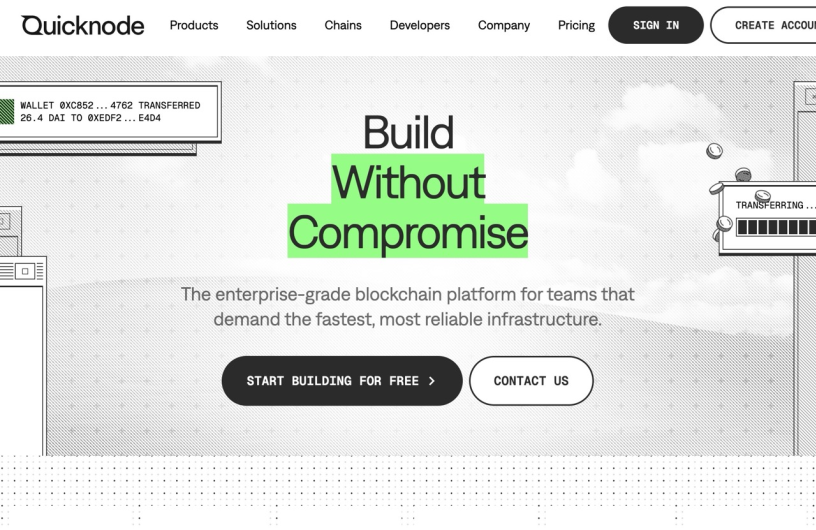
It offers a global RPC API network focusing on fast access to many blockchains and enterprise-ready features like dedicated clusters, used by a wide range of projects from NFT and DeFi apps to gaming and fintech products.
Over time, QuickNode has expanded into a broader Web3 platform, offering services that range from tools that support application development to validator infrastructure and business services. The company’s rapid scaling and enterprise focus were validated by participation in Y Combinator and by major funding rounds.
What is GetBlock?
GetBlock is a Web3 infrastructure company founded in 2019 that provides high-performance blockchain access for developers and enterprises.
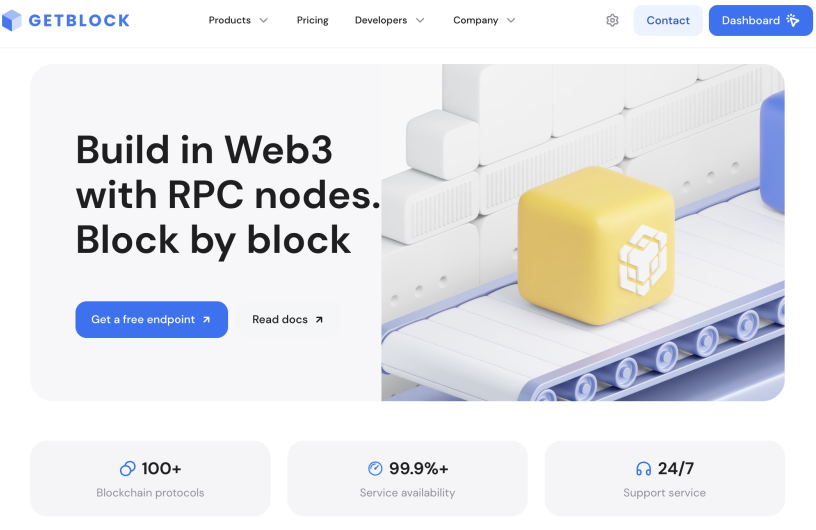
GetBlock maintains one of the widest chain coverages in Web3 with over 100 supported protocols. Access is offered through flexible service options designed for different stages and team sizes – from solo developers and early-stage projects to enterprise-grade workloads that require dedicated infrastructure.
By 2026, GetBlock has grown into one of the larger blockchain infrastructure vendors in the market, with a strong focus on global performance. Its infrastructure spans Europe, the United States, and the Asia-Pacific region. The regional placement is exposed to customers as a configurable infrastructure parameter, enabling more predictable latency.
Alongside its standard RPC offerings, GetBlock places strong emphasis on custom infrastructure engineering. The company works closely with clients on tailored solutions, including private node setups and custom architecture design.
QuickNode vs GetBlock: Blockchain coverage
GetBlock offers broader protocol coverage, one of the broadest in the industry – perfect for multi-chain applications or projects needing access to more niche networks. QuickNode is hitting all the major ecosystems, but limits access to newer or more specialized chains.
GetBlock supports 100+ blockchain protocols, from Bitcoin and Ethereum to new or experimental chains like Story, Core, TAC, Akash, etc. Every blockchain is included in your base plan. If GetBlock doesn't support your chain yet, they'll integrate it on request
QuickNode covers 80+ networks, hitting all the major ecosystems. But here's the catch: the platform introduced the “select access” model in 2024, where chains like Zora, Dogecoin, Litecoin, Fraxtal, Osmosis, and some others cost an extra fee.
GetBlock vs QuickNode pricing: Core RPC services
GetBlock and QuickNode offer two fundamental infrastructure models and comparable prices. QuickNode pricing gives flexibility, but with hidden costs and sales-gated pricing for some services. GetBlock wins on pricing transparency and cost efficiency with 2x higher performance at identical price points.
Shared nodes
Both providers offer shared RPC infrastructure. GetBlock calls it “Shared Nodes” while QuickNode markets it as “Core RPC API”. The fundamental model is the same: multiple users access the same node clusters through individual API endpoints.
Both platforms structure their shared services across similar pricing tiers.
GetBlock offers five monthly plans: $0, $49, $199, $499, and $999. As you move up tiers, rate limits and resource quotas measured in Compute Units (CUs) scale substantially.
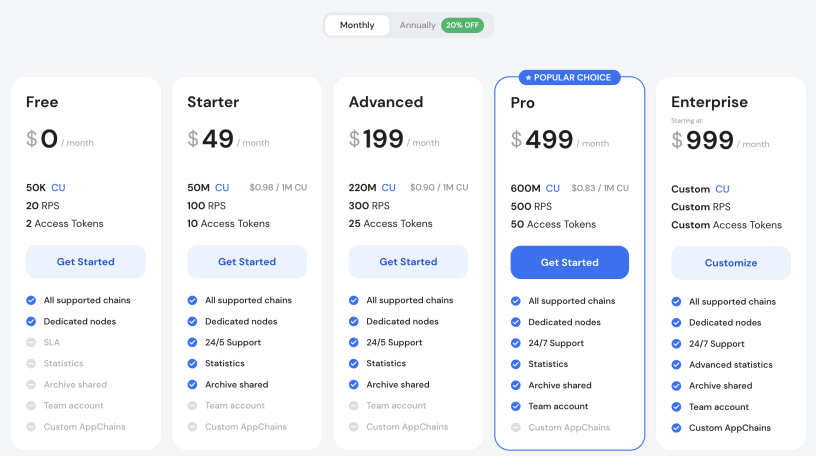
GetBlock monthly Shared Node pricing as of Jan 2026 / Source: GetBlock pricing page
QuickNode's Core API offers pricing tiers matching GetBlock's structure, from $0 to $999 monthly. Rate limits are more conservative across tiers, though API credits scale generously.
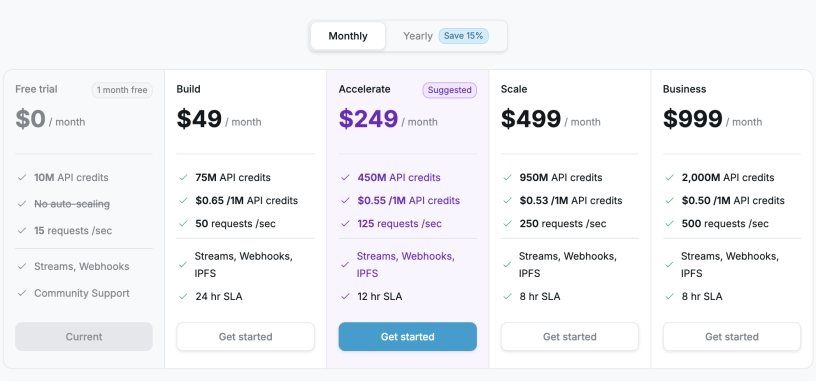
QuickNode monthly Core RPC API pricing as of Jan 2026 / Source: QuickNode dashboard
Note: QuickNode's plan specifications slightly vary between their public pricing page and user dashboard. Dashboard screenshot shown here, assuming it reflects more accurate information.
Here's a table comparing up-to-date GetBlock and QuickNode shared node service pricing tier by tier.
Plans and Key Features | GetBlock | QuickNode |
Free Plan | Indefinite access (50K CU/day, 20 RPS) | 1-month trial (10M API credits, 15 RPS) |
Entry Paid Plan | $49/mo (50M CU, 100 RPS) | $49/mo (75M credits, 50 RPS) |
Mid-Tier Plan | $199/mo (220M CU, 300 RPS) | $249/mo (450M credits, 125 RPS) |
Higher-End plan | $499/mo (600M CU, 500 RPS) | $499/mo (950M credits, 250 RPS) |
Top Shared Plan | $999/mo (up to 200B CU, 1000+ RPS) | $999/mo (2B credits, 500 RPS) |
Annual Discount | 20% | 15% |
Crypto payments | Yes (monthly) | Yes (2 months minimum commitment) |
To summarize the core differences:
GetBlock delivers higher rate limits for the same or lower monthly cost
Upgrading from free to the first paid tier is a 33x usage capacity increase on GetBlock versus 7.5x on QuickNode
Annual discounts: GetBlock offers 20% off versus QuickNode's 15%. Over a year at the $499 tier, GetBlock saves you an additional $299 compared to QuickNode's annual plan
GetBlock accepts monthly cryptocurrency payments; QuickNode requires a 2-month minimum when billing in crypto
Another important note: GetBlock provides uniform pricing across all 100+ supported blockchains; QuickNode adds $99/month fees for select access chains. The math matters. If your application needs access to three select-access chains, you're paying an additional $297/month on top of your base subscription.
Dedicated infrastructure services
Both providers offer Dedicated RPC nodes – isolated infrastructure for a single client needs. GetBlock gives you transparent pricing and self-service configuration. QuickNode handles provisioning through sales with custom quotes.
QuickNode has no self-service option for dedicated infrastructure. Every dedicated cluster setup requires sales engagement. If you need infrastructure today, you're waiting for sales responses and pricing discussions.
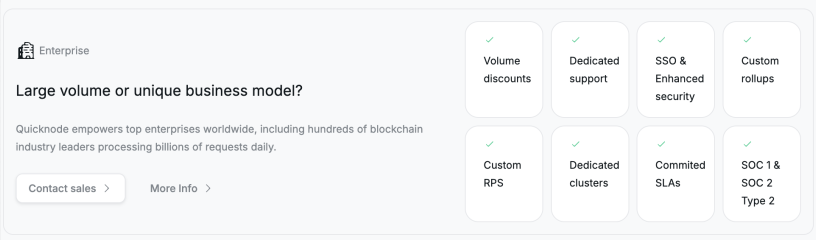
QuickNode enterprise offering including a Dedicated cluster service
GetBlock prices dedicated nodes from $1,000/month for full node setups and $1,500/month for archive node setups. You select your specifications, provision your node, and start using it, no sales team involvement required unless you need complex custom configurations.
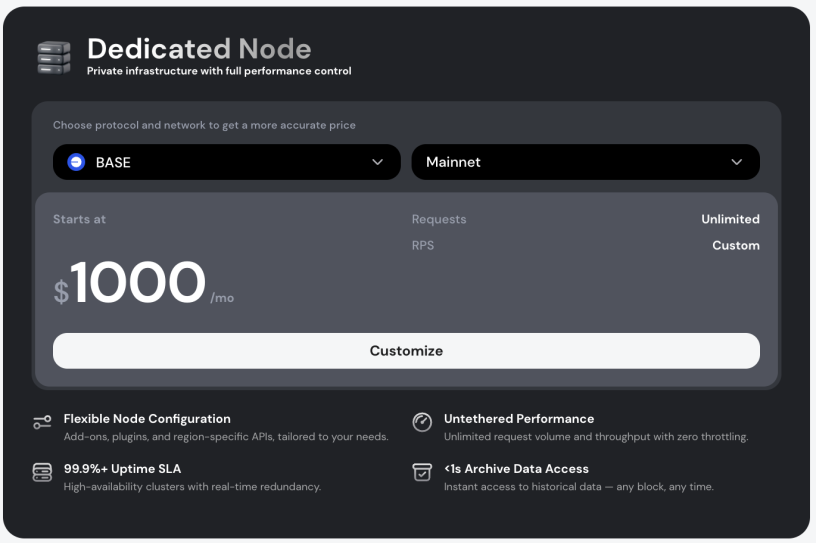
GetBlock Dedicated Node offering
If your application requires infrastructure that isn't available as a standard configuration, contact GetBlock's engineering team. To explore standard RPC access across 100+ protocols, view the list of supported chains.
QuickNode vs GetBlock: Latency and performance
If you need externally validated benchmarks for compliance or procurement processes, GetBlock provides that transparency. If you're comfortable with vendor-reported metrics, QuickNode's self-published data shows competitive latency.
GetBlock has been verified by CompareNodes as one of the fastest RPC providers across several popular networks, notably Solana and BNB Smart Chain. GetBlock’s Solana RPC is consistently ranking as a top performer in European regions. At the time of writing, GetBlock's Solana EU cluster clocks in at 21.8 ms latency.
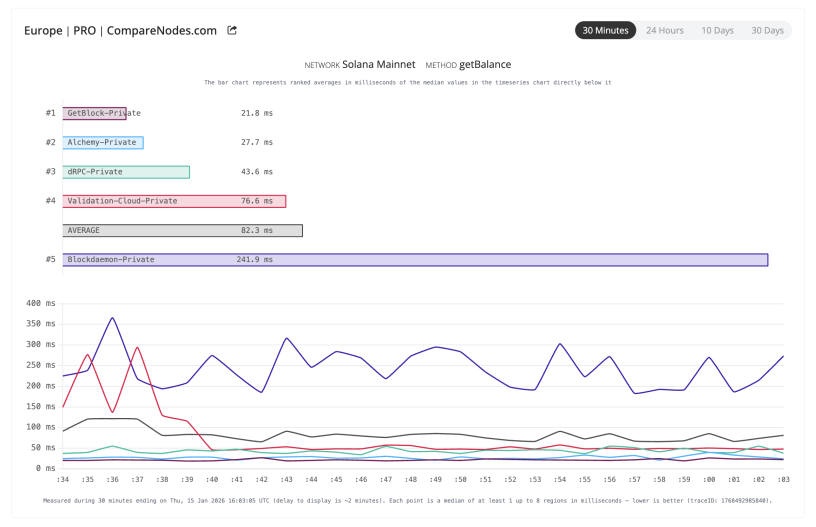
Solana RPC Latency in Europe – Top 5 providers as of Jan 15, 2026 / Source: CompareNodes
QuickNode reports 30.5 ms median global latency for Solana through their QuickLee dashboard. These are solid numbers, and QuickNode publishes impressive metrics for other chains too – like 26 ms average latency for Ethereum globally. However, these figures come from internal monitoring rather than independent performance-tracking platforms like CompareNodes, where QuickNode is not featured among top-5 providers for major chains.
Ecosystem & tooling
How each provider extends its core RPC surface? Both GetBlock and QuickNode offer third-party tools they integrate, including popular tools like MEV protection, bundle services, Blockbook API, Yellowstone Geyser gRPC, DAS API, DeFi APIs.
QuickNode built a marketplace where you activate over 70 pre-built add-ons with a few clicks. These include various Token and NFT APIs, Debug and gas APIs, analytics tools, MEV protection add-ons, database connectors, and other third-party services. Among QuickNode's proprietary tools, the Solana Transaction Fastlane provides access to stake-weighted quality of service mechanisms with sub-slot latencies for high-priority transaction routing.
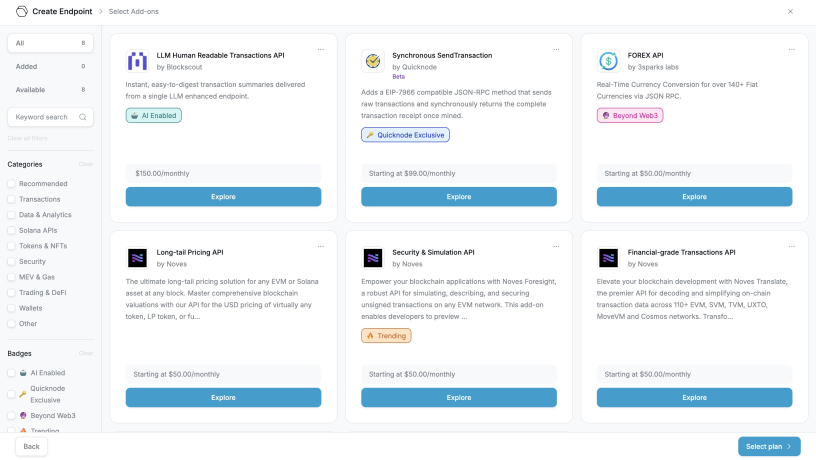
QuickNode marketplace
GetBlock has fewer third-party integrations but offers some specialized tools engineered into dedicated node setups. Most of these are designed for low-latency data and transaction delivery and high-performance indexing. Among the latest integrations are bloXroute BDN and Clio API support for XRPL nodes.
Its Solana toolset – StreamFirst, LandFirst, TradeFirst, and high-performance indexed historical API – is explicitly built by GetBlock to give customers low-latency, turnkey Solana data pipelines.
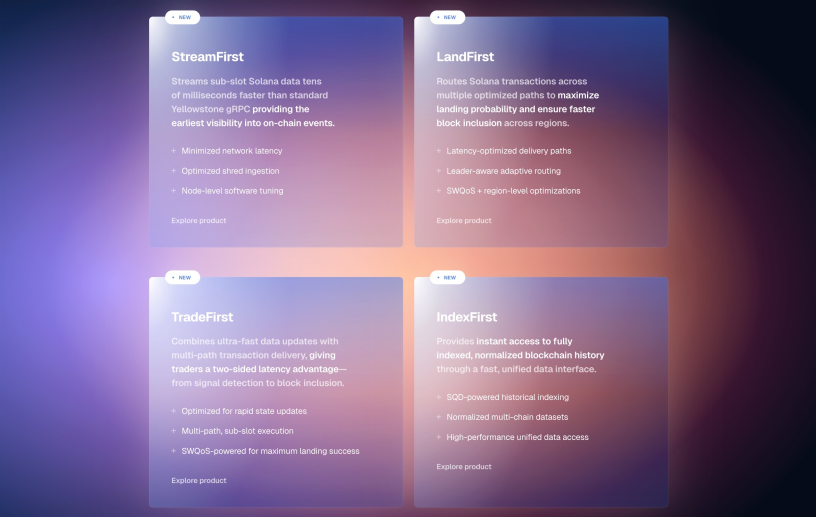
GetBlock advanced Solana data tooling
Aside from that, GetBlock focuses on bespoke configurations – if you need something specific, they'll integrate it or build it.
User experience
The daily experience of using an RPC provider matters just as much as technical specifications. How quickly can you create an account? Can you configure infrastructure yourself or do you need sales approval?
User account
QuickNode requires email or SSO (SAML 2.0) authentication. Crypto wallet login isn't available; users must provide traditional account information to access the platform.
GetBlock supports multiple authentication methods: crypto wallet (MetaMask), GitHub, and email. You can access the entire platform anonymously without providing personal information.
Service management
GetBlock provides a self-service dashboard configurator where users select specifications (blockchain, region, interfaces, and other settings), and provision endpoints or dedicated nodes. No sales interactions required unless you need custom solutions beyond the standard options.
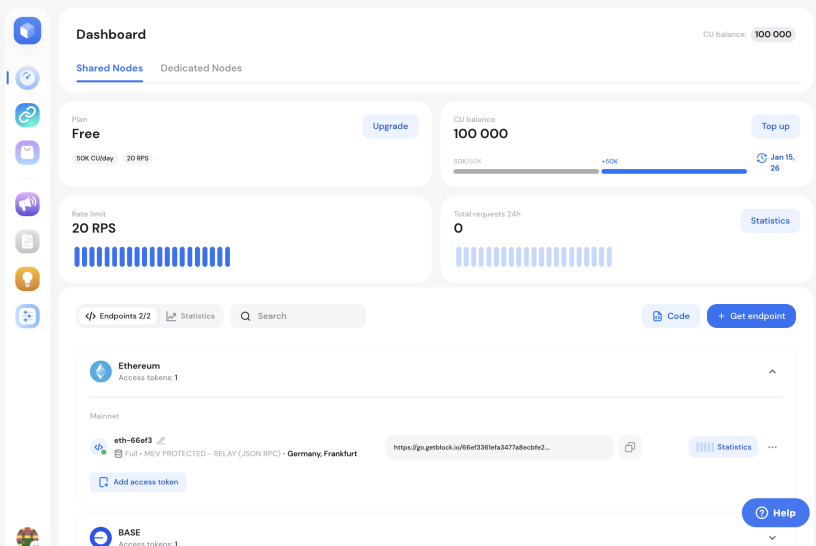
GetBlock user dashboard
QuickNode has no self-service option for dedicated clusters. All dedicated node provisioning requires direct engagement with their sales team. Core RPC endpoint setup is straightforward; however, some users notice it lacks customization like deleting or regenerating endpoints, or using interfaces other than JSON-RPC or WebSocket.
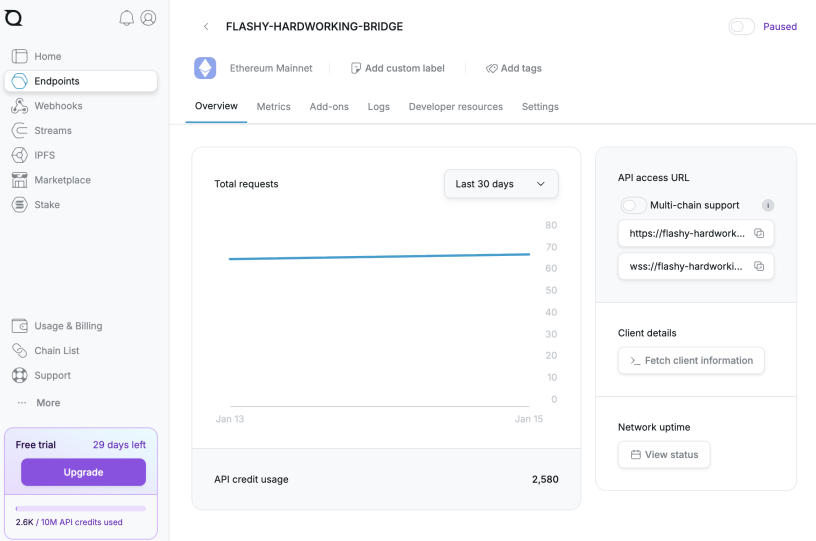
QuickNode user dashboard
Meanwhile, GetBlock exposes all blockchain-specific interfaces, supports manual region configuration, archive or full mode customization, and better acces token lifecycle management.
QuickNode restricts regional endpoint customization to dedicated clusters only. Even on the most expensive shared plan, users cannot select their connection region without upgrading to dedicated infrastructure. The platform handles geographic distribution automatically, but you don't control where specific endpoint connects.
Free plans
GetBlock provides a highly usable free tier. It gives you:
two free simultaneous endpoints,
almost full Shared Node service functionality,
no credit card required.
Use it for development, testing, or light production workloads as long as you need.
QuickNode gives you a meaningful slice of the platform services within its free plan, but it’s essentially a trial, rather than a permanent free tier. After 31 days, users are forced to upgrade to paid tiers.
For solo developers and early-stage projects, the difference may be huge. GetBlock lets you build and iterate without billing pressure. Start with a free account.
Developer resources
GetBlock offers blockchain explorers, testnet faucets, more detailed navigation of their services, and practical how-tos.
QuickNode provides a more extensive documentation with pre-built code snippets in different programming languages. Their guides include sample applications, step-by-step tutorials, and educational courses. QuickNode also offers an SDK, and extra tools like gas tracker and faucets.
Additional services
GetBlock provides hands-on engineering assistance service with complex configurations and custom setups. The company also offers AppChains deployment for EVM and Cosmos-based application-specific blockchains.
QuickNode leans towards business development support and product guidance for clients needing strategic consulting alongside infrastructure. QuickNode also runs a Solana validator and a SOL staking UI in addition to an enterprise Validator-as-a-Service offering.
Security and compliance
GetBlock has completed a SOC 2 Type 1 audit; a SOC 2 Type 2 audit is currently in progress and is expected to be completed in 2026.
QuickNode is SOC 1 Type 2, SOC 2 Type 2, and ISO 27001 certified.
QuickNode or GetBlock: Which RPC provider to choose?
Both providers deliver top-tier infrastructure. The choice depends on what builders prioritize – core performance and pricing efficiency or complementary tooling and ecosystem maturity.
Comparison table
Here's a side-by-side GetBlock vs QuickNode comparison across pricing, features, and infrastructure specifications:
Feature | GetBlock | QuickNode |
Blockchains Supported | 100+ | 80+ (some under “select access”) |
Free Plan | Yes, permanent | 31-day trial |
Pricing Tiers (Shared plans) | $0, $49, $199, $499, $999 | $0, $49, $249, $499, $999 |
Max Rate Limits (Shared plans) | 1000+ RPS | 500 RPS |
Dedicated Setup | Yes, self-service | Yes, sales required |
Dedicated Node Pricing | From $1,000 | Undisclosed |
Annual Discount | 20% | 15% |
Fiat Payments | Yes | Yes |
Crypto Payments | Yes, monthly | Yes, 2-month minimum |
Latency | Low (externally verified) | Low (self-reported) |
Customizable Regional APIs | Yes (Frankfurt, NY, SG) - all plans | On Dedicated clusters only |
Built-in Features | MEV protected endpoints, archive queries, multi-region API | Streams, Webhooks, IPFS, archive data |
Advanced Dev Tools | Add-ons (Yellowstone gRPC, Jito, DAS API, DeFi APIs, etc.), bloXroute BDN, Solana trading and advanced streaming stack | Marketplace of 70+ add-ons (MEV protection, Yellowstone gRPC, Jito, Token and NFT APIs, analytics tools, etc.), Solana Transaction Fastlane |
Additional Services | Custom infra engineering, AppChains deployment | Business consulting, validator infrastructure, rollup deployment |
Web3 Wallet Login | Yes | No |
Audits | SOC 2 Type 1 completed, SOC 2 Type 2 in progress (2026) | SOC 1 Type 2, SOC 2 Type 2, ISO 27001 certified |
GetBlock excels at core RPC infrastructure: more blockchains, clearer pricing, higher included rate limits, configurable endpoints and nodes. The platform especially suits projects exploring growing and niche ecosystems and businesses requiring custom infrastructure configurations at reduced sales and onboarding friction.
QuickNode offers a mature ecosystem with extensive third-party integrations, comprehensive documentation, and additional services. The platform fits teams seeking pre-built tooling, established compliance certifications, and willingness to pay for ecosystem breadth.
The best infrastructure provider isn't the one with the most features, it's the one that solves your specific bottlenecks at a price that makes sense.
The only way to verify that fit is to test it yourself. GetBlock provides the infrastructure to run those tests without friction: start with deploying free endpoints, compare performance, explore the tools and discuss custom configurations if your architecture demands it.


Popular Posts

June 9, 2021
4 min read

November 9, 2021
5 min read

May 24, 2022
5 min read

March 18, 2021
4 min read


