

Crypto Nodes That Pay: 2026 Top Earning Opportunities in Crypto

Vance Wood
February 20, 2026
18 min read
GetBlock is all about crypto nodes for Web3 developers, but there are other options for advanced crypto users to run blockchain nodes. Validator nodes, masternodes, and other types allow operators to earn the network token for contributing to the network. Many of them are actually profitable and can earn significant revenues, but usually they require an initial investment (sometimes a large one) and expertise. Here, we'll explore these option, with various requirements and potential revenues.
Note: We already have the extended article about the best nodes to run. You may choose to start with it to overview the overall benefits of blockchain nodes, and then return here to focus on the most profitable options.
What is a crypto node?
A node is the blockchain’s basis. It contains the blockchain copy, either full or pruned, and communicates with other nodes to ensure that the blockchain remains unchanged and can change only according to its consensus mechanism. They can also communicate with external applications via RPC API clients, powering decentralized applications.
And much, much more.
Types of rewarding nodes
Not every blockchain node is rewarding, and many of them don’t have such a purpose. RPC nodes, provided by GetBlock and run by many developers around the world, are used to connect dApps to the blockchain, so they can use its methods. They are crucial for the steady work of decentralized services, but they aren’t profitable by themselves.
There are three main types of rewarding blockchain nodes, and every network mentioned here will belong to one of these types. Let’s look closer:
Validator node is a full node that serves as an operational element of a Proof‑of‑Stake (PoS) blockchain. It proposes and validates new blocks to enforce the network consensus. Validators lock a minimum amount of the native token as stake and earn block rewards in exchange for honest uptime and timely participation, while being punished for malicious activities.
Masternode is a specialized full node that offers enhanced services in certain blockchains. Examples include instant‑pay functionality, privacy enhancement, or treasury‑funded governance. Operators must lock a predefined amount of tokens as collateral, which typically grants them voting rights in governance and rewards.
DePIN node is a hardware or software node that contributes real‑world resources, like bandwidth, storage, computing power, or wireless coverage, to a decentralized physical infrastructure network (DePIN). Examples include decentralized Wi‑Fi hotspots, storage elements, or computation units. They perform utility‑oriented tasks and are rewarded with native tokens when their contribution is verified by the protocol.
Read more about DePIN technology in GetBlock’s dedicated article.
Top 8 paying nodes
Let's explore in more depth various networks for profitability. The list will include various node types with different requirements. Depending on your starting capital and investment goals, each of these options might be a good choice for you.
Ethereum and other EVM validators
Ethereum (and other EVM chains) offer a simple and easy way to earn through staking. It’s better to view Ethereum not just as a blockchain, but as an ecosystem of various L2s, sidechains, and independent L1s, united by the Ethereum Virtual Machine (EVM).
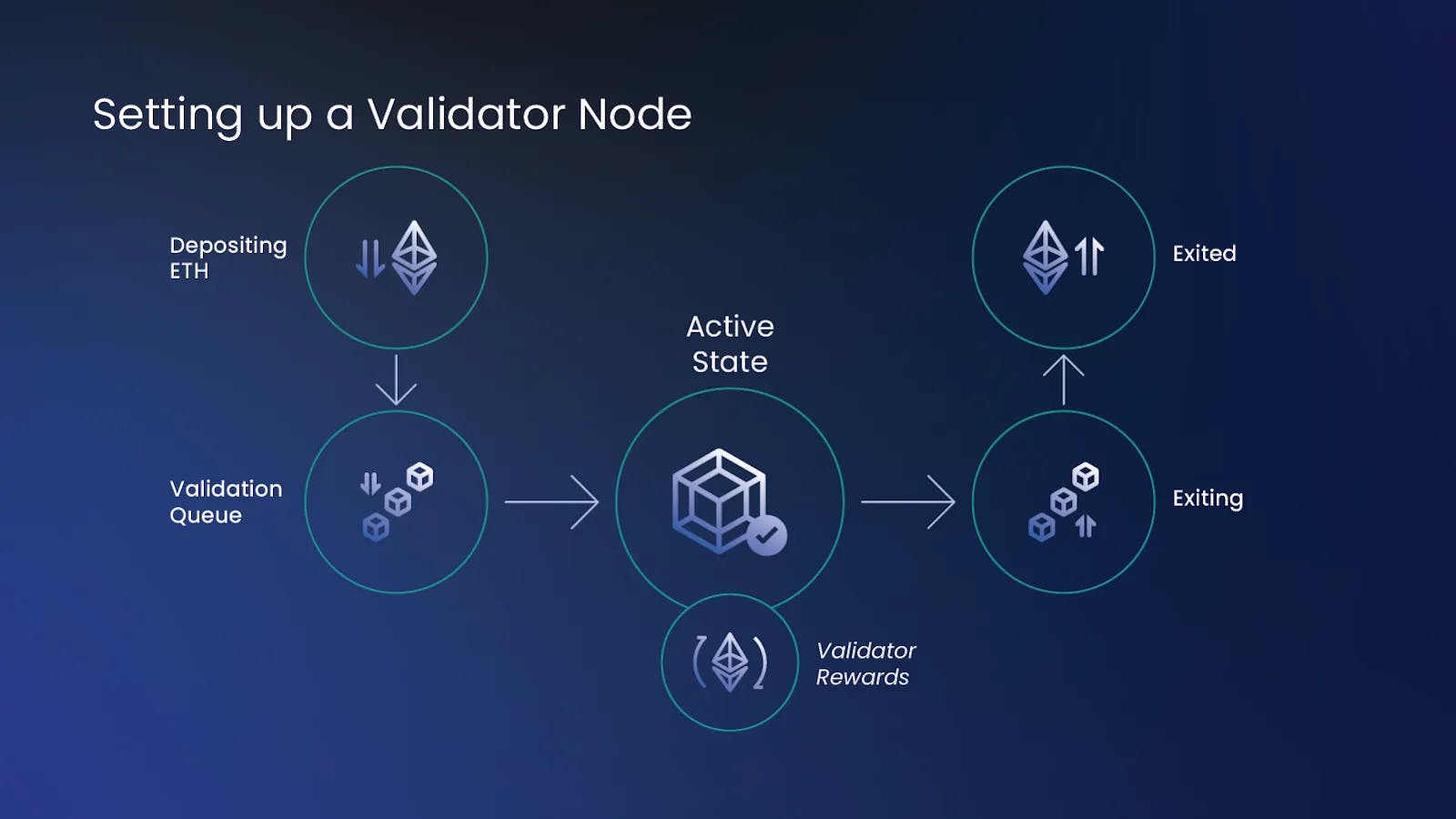
It serves as a unified execution layer for dozens of blockchain networks, creating an interconnected ecosystem where smart contracts, tooling, and developer skills transfer seamlessly across chains. Ethereum itself operates as the flagship PoS network, while sidechains like Polygon and L1s like Avalanche and BNB Smart Chain (BSC) extend the architecture to different throughput and cost profiles.
EVM validator requirements vary significantly by chain, creating distinct opportunities for operators with different capital levels. Let’s look closer at these four examples.
Ethereum requires 32 ETH (~$100,000+ at current prices) to run a solo validator, with APY around 3–5%, making it the expensive but most stable option.
Avalanche has a lower barrier with 2,000 AVAX (~$60,000–$80,000) and typically offers higher APY in the 6–10% range, attracting mid-capital operators.
Polygon PoS requires 100,000 POL (~$40,000–$60,000) under new staking rules, with APY around 5–8%, positioning it as a moderate-capital, moderate-yield choice.
BNB Smart Chain (BSC) demands 2,000+ BNB (well over $1,000,000), with APY in the 5–8% range, making it accessible primarily to institutional or high-net-worth operators.
All four chains require mid-range server hardware (cloud or colocation) and 24/7 uptime monitoring to avoid slashing or missed rewards. The setup algorithm is similar for all four networks:
Acquire and secure the required token collateral amount in your wallet.
Acquire dedicated server hardware or rent cloud infrastructure.
Install validator client, sync blockchain, connect account, and configure keys.
Register validator on-chain and monitor uptime continuously.
Generally, EVM validators offer stable, long-term passive income backed by mature ecosystems. Avalanche and Polygon present better entry points for mid-capital stakers seeking higher APY with moderate risk, while Ethereum and, especially, BSC, are good options for institutional and large-scale investors.
Generally, EVM validators offer stable, long-term passive income backed by mature ecosystems. Avalanche and Polygon present better entry points for mid-capital stakers seeking higher APY with moderate risk, while Ethereum and, especially, BSC, are good options for institutional and large-scale investors.
Generally, EVM validators offer stable, long-term passive income backed by mature ecosystems. Avalanche and Polygon present better entry points for mid-capital stakers seeking higher APY with moderate risk, while Ethereum and, especially, BSC, are good options for institutional and large-scale investors.
Generally, EVM validators offer stable, long-term passive income backed by mature ecosystems. Avalanche and Polygon present better entry points for mid-capital stakers seeking higher APY with moderate risk, while Ethereum and, especially, BSC, are good options for institutional and large-scale investors.
Generally, EVM validators offer stable, long-term passive income backed by mature ecosystems. Avalanche and Polygon present better entry points for mid-capital stakers seeking higher APY with moderate risk, while Ethereum and, especially, BSC, are good options for institutional and large-scale investors.
Generally, EVM validators offer stable, long-term passive income backed by mature ecosystems. Avalanche and Polygon present better entry points for mid-capital stakers seeking higher APY with moderate risk, while Ethereum and, especially, BSC, are good options for institutional and large-scale investors.
Check GetBlock’s shared and dedicated nodes for high-grade Web3 development infrastructure.
Dash masternode
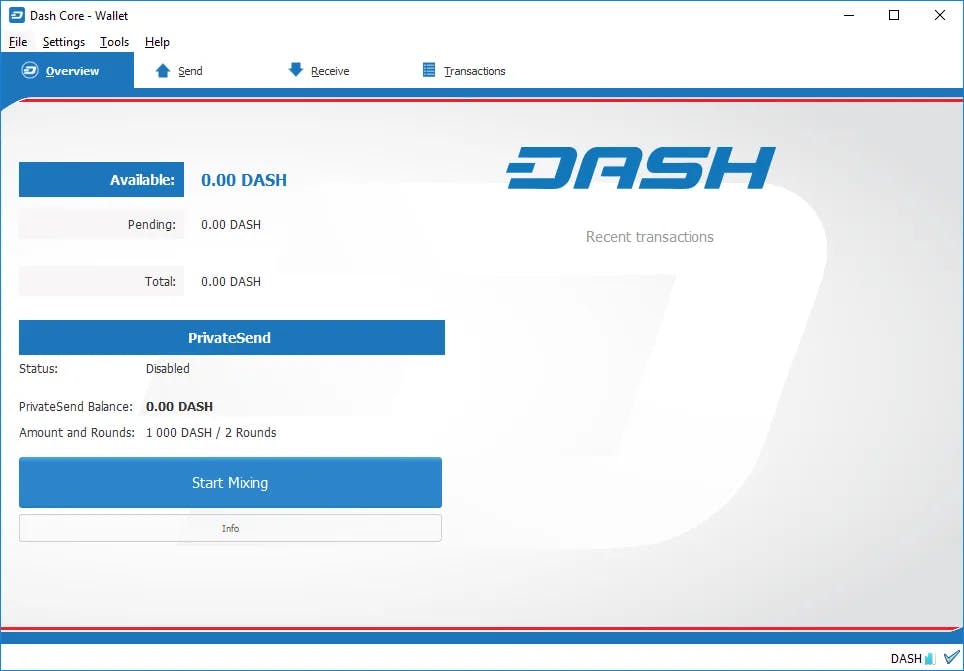
Dash is a Proof-of-Work blockchain that pioneered the two-tier masternode architecture, where masternodes provide instant transactions (InstantSend), privacy features (CoinJoin), and treasury governance voting rights.
Each masternode requires exactly 1,000 DASH as collateral, which remains in the operator's wallet and can be moved at any time, though doing so removes the node from service. The DASH token has experienced moderate volatility, trading in the $20–$40 range in recent years, making the initial investment around $20,000–$40,000.
Source: Dash
Masternode operators earn approximately 45% of block rewards, receiving around 1.94 DASH (~$40–$80) every 4–5 days, translating to annualized returns in the 6–10% range depending on network participation. It makes Dash one of the most attractive options for running a long-term earning node.
Running a Dash masternode requires a VPS or dedicated server with a static IP address and 24/7 uptime, but hardware demands are relatively modest compared to modern PoS validators. The setup algorithm is provided below:
Acquire 1,000 DASH and lock collateral via wallet.
Deploy Linux VPS with dedicated IP and stable connectivity.
Install Dash Core, configure masternode keys, and register them.
Monitor node status and maintain uptime for rewards.
Dash masternodes offer predictable passive income with governance participation rights and a middle entry threshold, but they’re rivaled by newer high-yield PoS alternatives. Still, it’s perfect for long-term holders seeking stable returns and voting influence in a mature ecosystem.
Flux node
Flux is an L1 blockchain that acts as a decentralized cloud infrastructure platform, where node operators contribute compute, storage, and bandwidth units to power Web3 applications. Basically, it’s a distributed alternative to AWS or Azure.
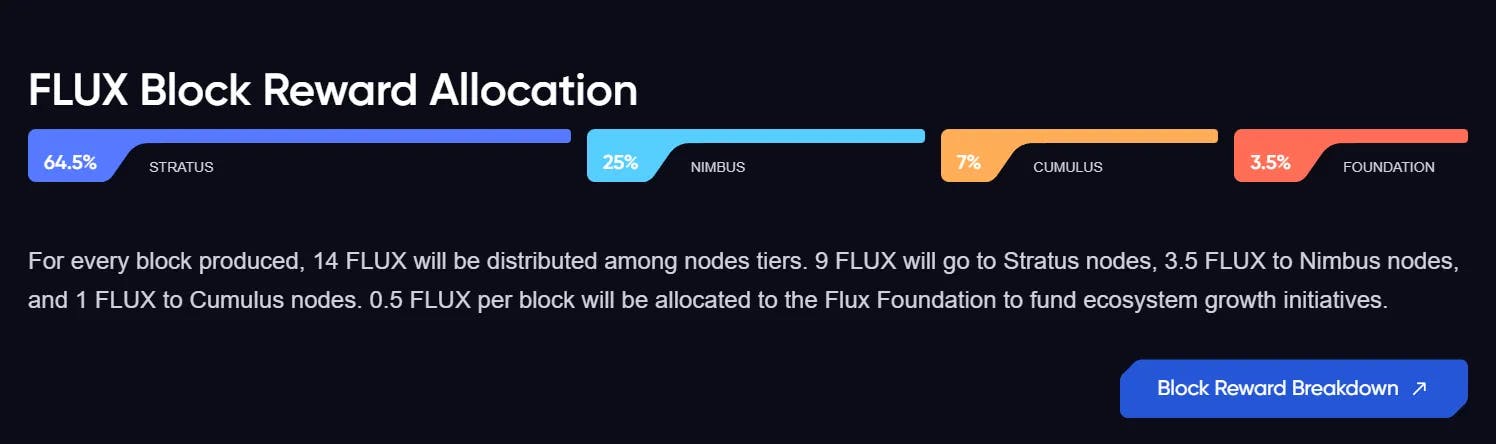
The network has three node tiers: Cumulus (1,000 FLUX), Nimbus (12,500 FLUX), and Stratus (40,000 FLUX). Each requires different hardware specs and collateral, with higher tiers earning proportionally larger rewards from block emissions.
Source: Flux
FLUX token prices have been volatile, typically ranging from $0.30 to $1.50, making entry costs range from ~$300 (Cumulus) to ~$40,000+ (Stratus), depending on market conditions. The network recently introduced Progressive Node Rewards (PNR), which dynamically adjust payouts based on uptime and performance. Operators also earn additional revenue by hosting DApps on FluxCloud, creating dual income streams.
Here is how to connect to the Flux network:
Acquire collateral (1,000 / 12,500 / 40,000 FLUX by tier).
Provision hardware meeting tier-specific compute and storage requirements.
Install FluxOS, register node, and lock collateral on-chain.
Maintain uptime and host DApps for additional revenue.
Flux nodes offer scalable entry points from low-budget Cumulus to high-capacity Stratus, with dual rewards from block emissions and cloud-service revenue. However, token volatility creates income unpredictability, so this option is suited for operators participating in bullish trading or decentralized cloud adoption pioneers.
Helium hotspot
Helium is a DePIN: a decentralized wireless network where participants deploy physical hotspot devices to provide LoRaWAN (Long Range Wide Area Network) IoT connectivity and 5G mobile coverage. It runs on Solana, and its participants earn rewards for data transmission and network coverage. For rewards, it uses its own HNT token on Solana.

Helium hotspot device
It has shown significant price volatility, ranging from $2 to $50+ historically, and the DePIN narrative has driven renewed interest in 2024–2025. Hotspot operators earn based on proof-of-coverage verification and actual data transmission, with rewards varying widely by location density and local network demand.
Running a Helium hotspot requires purchasing specialized hardware (ranging $200–$800 depending on type: IoT vs 5G) and an internet connection with stable bandwidth. Unlike validator nodes, hotspots are designed as plug-and-play consumer devices requiring minimal technical expertise, though optimal placement and antenna setup impact profitability significantly.
Here is a quick installation guide:
Purchase certified Helium hotspot hardware (IoT or 5G).
Connect the device to the Internet.
Adjust an optimal outdoor antenna for better connectivity.
Register a hotspot on Helium via the mobile app.
Maintain connectivity and monitor coverage rewards in HNT.
Helium hotspots offer one of the lowest technical barriers among DePIN nodes and can generate passive income with minimal maintenance, but profitability heavily depends on geographic location, network saturation, and HNT price. It makes this option ideal for operators in underserved areas with strong network demand.
Storj storage node
Storj is a decentralized storage platform where node operators share unused hard drive space and bandwidth to store encrypted file fragments. This DePIN platform competes with centralized services like Amazon S3.
Storage nodes earn STORJ tokens (ERC-20 on Ethereum) based on storage used, which is measured in GB-hours at $1.50/TB/month. STORJ token prices have ranged from $0.30 to $3+ historically, though operators are paid in USD-equivalent STORJ, providing some price stability.
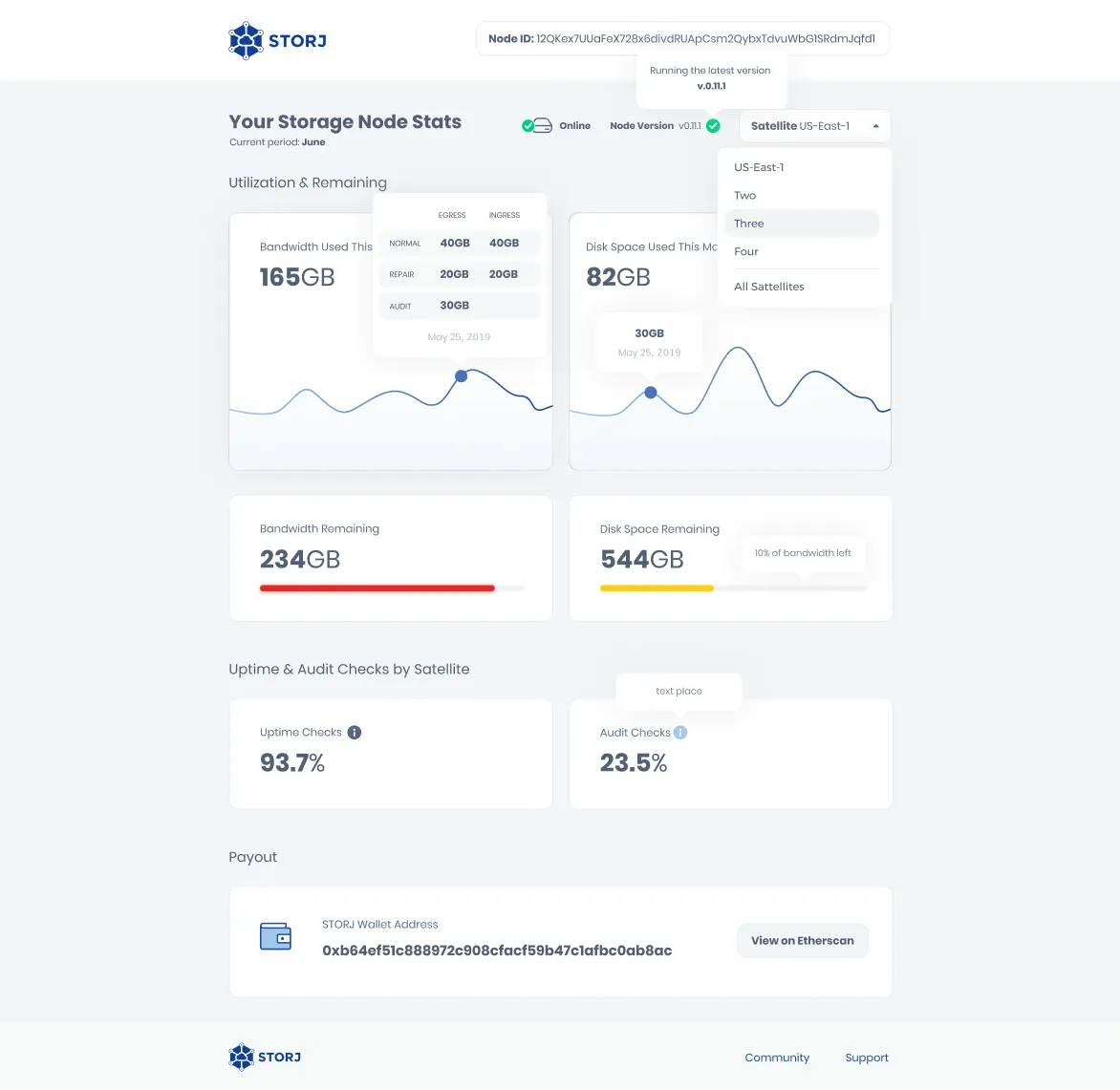
Unlike staking nodes, Storj has no upfront token requirement. Instead, 25% of earnings are withheld during the first 9 months to incentivize long-term participation, with 50% returned at the 15-month mark.
A Storj storage node requires a computer (Windows, Linux, or macOS) with at least 500GB of free disk space, a stable internet connection, and 24/7 uptime to maximize utilization and avoid penalties. Operators with larger storage capacity (multi-TB) and faster bandwidth can earn proportionally more, up to $50–$70/month after the withholding period ends.
Here is how to participate in this DePIN:
Allocate 500GB+ unused storage and ensure stable connectivity.
Download and install the Storj node software on the computer.
Register node with Storj satellites and share storage.
Maintain uptime, as earnings scale with utilization over time.
Storj nodes offer the easiest DePIN entry with no token collateral and low hardware requirements, making them ideal for monetizing existing spare storage. However, earnings ramp up slowly due to the 9-month withholding model and depend heavily on network demand, requiring patience and consistent uptime for meaningful returns.
Do you have something to offer to GetBlock? Visit our feature request portal and leave your comment there!
PIVX masternode
PIVX (Private Instant Verified Transaction) is a privacy-focused Proof-of-Stake blockchain launched in 2016 that uses masternodes for governance and advanced features like instant transactions and optional privacy shielding.
Each masternode requires exactly 10,000 PIVX as collateral, valued at approximately $0.30–$1.20 per token historically, putting the entry cost around $3,000–$12,000 depending on market conditions. PIVX has maintained a relatively stable development trajectory with active governance participation, though with high price volatility.
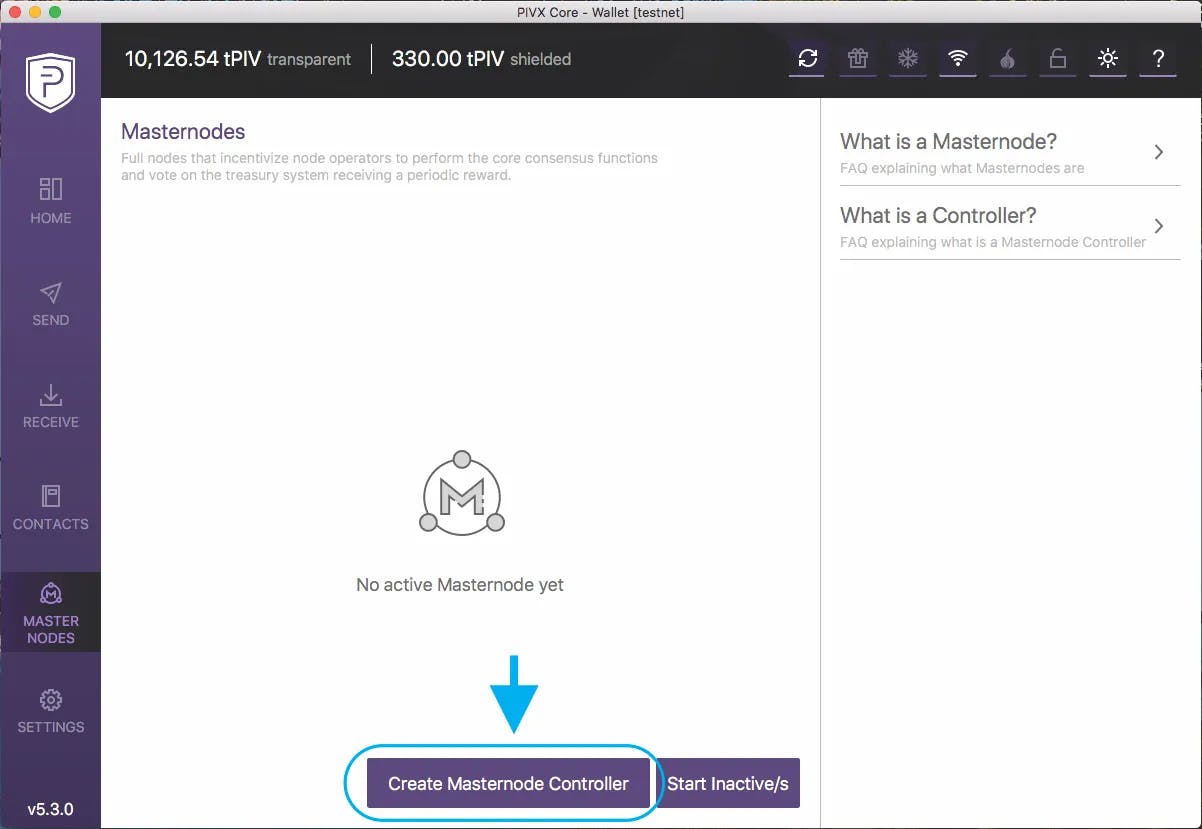
Source: PIVX documentation
Masternode operators earn 6 PIV per block (versus 4 PIV for regular stakers), granting them higher rewards plus voting rights on treasury proposals and protocol upgrades through the PIVX DAO. Running a PIVX masternode requires a VPS or dedicated server with modest specifications and 24/7 uptime, similar to Dash. Here is how to set up the node:
Acquire and lock 10,000 PIVX collateral in the wallet.
Deploy Linux VPS with static IP and network connectivity.
Install PIVX Core, configure masternode keys, and activate.
Participate in governance voting and maintain consistent uptime.
PIVX masternodes provide a relatively affordable entry point into masternode operation with governance participation and higher staking rewards than standard PoS. However, limited exchange liquidity and the niche market constrain price appreciation potential, making this option best suited for long-term privacy pioneer holders.
Syscoin masternode
Syscoin is a Bitcoin L2 layer with dual-chain architecture (UTXO + EVM) that positions itself as a Bitcoin data availability layer for rollups and scalable applications. Masternodes secure the network, facilitate fast finality, and gain seniority bonuses: 35% reward increases after ~1 year and 100% increases after ~2.5 years of continuous operation.
Each masternode requires 100,000 SYS as collateral, which at historical prices of $0.10–$0.80 represents an investment range of $10,000–$80,000. The seniority mechanism uniquely rewards long-term operators, creating compound earnings growth that incentivizes persistent participation rather than node churn.
Source: Syscoin’s Medium
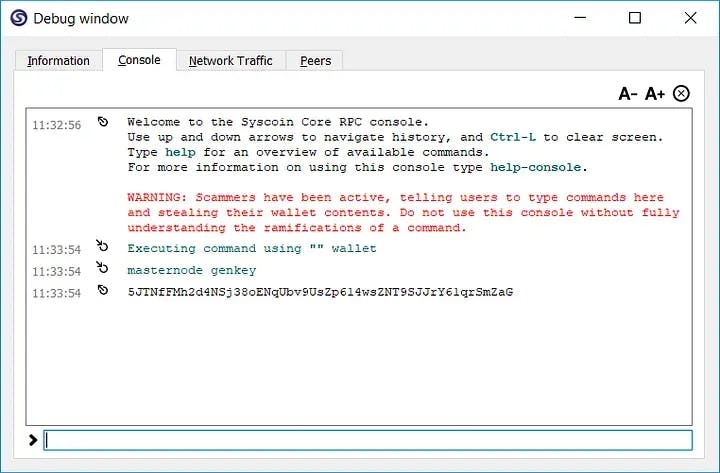
Syscoin masternodes require a Linux server (Ubuntu 18.04+ preferred) with very modest requirements. Operators must generate BLS key pairs for each masternode and carefully manage collateral to preserve seniority, as moving the 100k SYS resets the bonus multiplier. Here is how to start:
Acquire 100,000 SYS and lock via Coin Control.
Deploy Ubuntu server and install Syscoin Core software.
Generate BLS keys and register masternode on-chain.
Maintain uptime to accumulate seniority reward multipliers.
Syscoin masternodes uniquely reward long-term commitment through seniority bonuses, making them attractive for patient operators bullish on Bitcoin Layer-2 narratives. The $10,000+ entry cost and technical setup complexity make it a middle-tier option, best suited for long-term SYS holders.
Solana validator
This option can be the most profitable—but it’s extremely expensive. Read more in our specialized article - or let’s overview here shortly.
Solana is a high-performance Layer-1 blockchain built for ultra-fast throughput (up to 65,000 TPS) using a hybrid Proof-of-Stake and Proof-of-History consensus mechanism, making it one of the most technically demanding validator environments.
Validators earn rewards from SOL inflation (currently offering 6–8% APY), plus transaction fees and increasingly from MEV (maximal extractable value) opportunities as DeFi activity grows. SOL has experienced dramatic price swings during the last few years, ranging from under $50 to over $200, creating both high reward potential and significant volatility risk for operators.
The minimum technical stake is 1 SOL, but here is a trick: maintaining the validator requires burning 2–3 SOL per epoch for transaction validation. It means that any stake that cannot earn more than these 2–3 SOL per epoch will only suffer losses. Usually, a profitable Solana node requires a staggering 45,000 SOL as a minimum stake, well over $3,000,000.
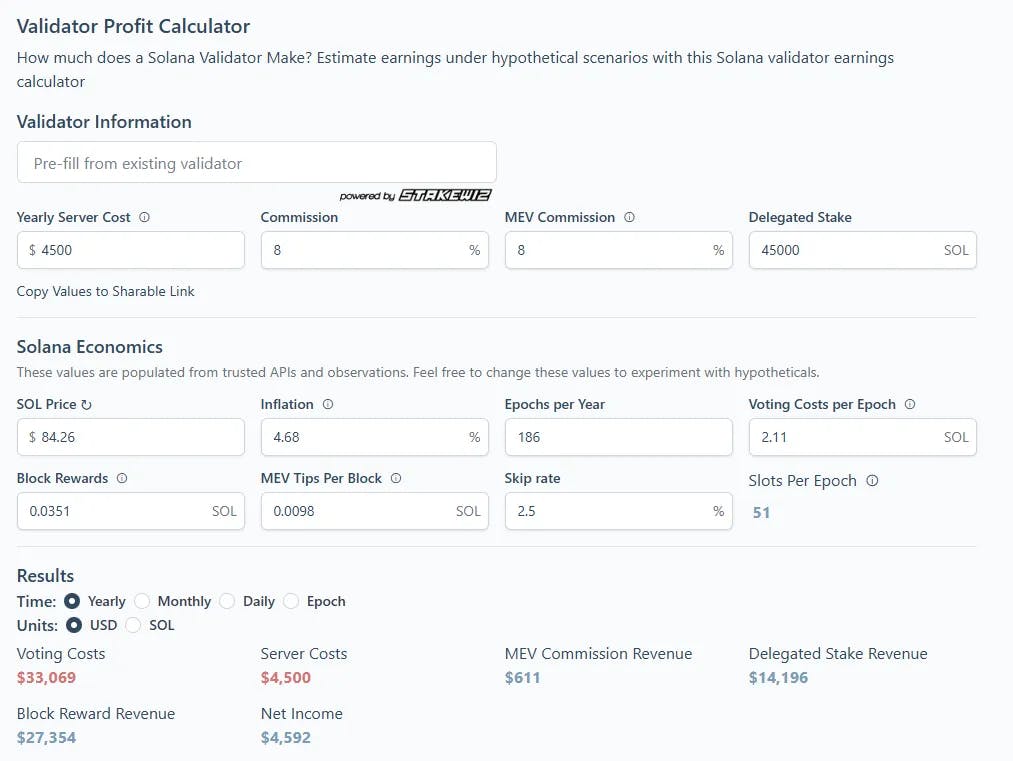
Source: Cogent Crypto
As such, combined with high-demanding hardware (minimum $3,000 for setting up or $500–$900/month for hosting), Solana staking is a viable option only for large-scale Web3 enterprises and institutions. Here is a short algorithm for participation:
Provide a high-spec server with EPYC CPU specifications and 512 GB RAM.
Install Solana validator software and sync the full ledger.
Acquire a SOL stake (the more, the better) and configure keys.
Attract delegations, maintain 100% uptime, earn on MEVs, and monitor vote transactions.
Solana validators offer one of the highest potential returns among major PoS networks through APY, fees, and MEV, but require substantial capital (over $2 million of initial investment) and technical expertise. This option is best suited for well-capitalized operators or institutional players capable of sustained investment and professional-grade infrastructure management.
Profitability Analysis
Let’s summarize with the table below, so you can refer quickly and explore which options are the best for you.
Network | Network/node type | Network token and prices | Initial investment | Rewards (APY) | Commentary |
Ethereum | L1 EVM chain | ETH, ~$2,000–4,000 | ~$100,000+ (32 ETH) | 3–5% | Stable, mature ecosystem for large investors |
Avalanche | L1 EVM chain | AVAX, ~$18–50 | ~$36,000–$100,000 (2,000 AVAX) | 6–10% | Mid-capital entry, higher yield than Ethereum |
Polygon | L2 sidechain EVM | POL, ~$0.40–0.60 | ~$40,000–$60,000 (100,000 POL) | 5–8% | Moderate capital, balanced risk-reward profile |
BNB Smart Chain | L1 EVM chain | BNB, ~$450–1,200 | $900,000–$2,400,000+ (2,000+ BNB) | 5–8% | Institutional-grade, very high capital requirement |
Dash | L1 PoW masternode | DASH, ~$20–40 | ~$20,000–$40,000 (1,000 DASH) | 6–10% | Governance voting, predictable income, mid-tier entry |
Flux | L1 DePIN cloud | FLUX, ~$0.30–1.50 | $300–$60,000+ | Variable by tier | Scalable tiers, dual income streams available |
Helium | DePIN wireless on Solana | HNT, ~$2–50 | $200–$800 (hardware only) | Variable, dependent on location | Low barrier, location-dependent profitability |
Storj | DePIN storage on Ethereum | STORJ, ~$0.30–3 | Minimal (no collateral) | $50–70/month | No collateral, slow ramp-up period required |
PIVX | L1 PoS masternode | PIVX, ~$0.30–1.20 | ~$3,000–$12,000 (10,000 PIVX) | Higher than standard PoS | Low entry, privacy-focused, governance participation |
Syscoin | Bitcoin L2 masternode | SYS, ~$0.10–0.80 | ~$10,000–$80,000 (100,000 SYS) | Variable +35–100% seniority | Seniority rewards, Bitcoin Layer-2 narrative |
Solana | L1 PoS chain | SOL, ~$50–200 | $2,250,000–$9,000,000+ (45k SOL) | 6–8% + MEV | Highest returns, very high requirements, institutional-only option |
Do you plan to go beyond and launch your own Web3 enterprise? GetBlock is here to help! Contact us now, and get to know how.
Risks and mitigation
Running blockchain nodes introduces several risks that operators must actively manage to ensure profitability and security. Otherwise, they may lose their rewards or even their stakes. So, let’s review them.
Token devaluation risk. Price volatility can erode staking rewards significantly, especially for smaller-cap tokens like FLUX ($0.30–$1.50) or PIVX, where collateral value can drop 50%+ during bear markets. Diversify across multiple networks and stake only capital you can afford to lock long-term.
High-APY unreliable projects. Many new projects offer large (100%+) APYs, but are designed to collapse after collecting investor funds. While not all such projects are scam, very large APYs after the project’s maturation will inevitably lead to token devaluation. Research project fundamentals thoroughly, verify team transparency and audit reports, and be very careful with projects whose yields exceed 20–30%.
Hardware and uptime failures. Downtime causes missed rewards and potential slashing penalties, especially on strict networks like Ethereum, where validators can lose up to 32 ETH. Implement 24/7 monitoring systems, deploy redundant backup infrastructure in different geographic locations, and use failover mechanisms.
DDoS and network attacks. Validators are vulnerable to targeted attacks that disrupt connectivity and cause penalties described above. Thus, deploy DDoS protection services, configure strict firewall rules limiting node access, and consider running nodes behind VPNs or in isolated network segments.
Operational errors. Manual configuration mistakes during upgrades or key management can trigger slashing or fund loss. It’s better to automate routine maintenance tasks, conduct dry runs in test environments, and schedule regular security audits of validator infrastructure.
Legal risks. Ensure that it’s legal to work with crypto in the jurisdiction you’re living in, and pay taxes on your validator income where they’re applicable to avoid legal issues related to that.
If you’re aware of these risks, mitigating and averting them is much easier.
Next steps
The modern Web3 ecosystem offers truly diverse ways to amplify your earnings beyond simple DeFi activities and trading. Contributing to various decentralized networks enhances their security, increases their capabilities, and makes the world freer and fairer. Whether you’re an individual with limited net worth or a multi-million dollar investment fund, you can find your niche to contribute and grow.
GetBlock's ultimate goal is to power the growing Web3 ecosystem, becoming the basis on which its ideas of a better world may grow and develop. For that, we offer robust blockchain RPC infrastructure for 110+ chains and support rising Web3 stars with promotion and funding opportunities. Sign up now, and let’s grow together!
FAQ
Which crypto nodes pay the most?

How hard is it to run a crypto node?
Is it worth running a crypto node?
Do crypto nodes actually make money?
Which crypto nodes pay daily or monthly?


Popular Posts

June 9, 2021
4 min read

November 9, 2021
5 min read

May 24, 2022
5 min read

March 18, 2021
4 min read


