
The 24 Best Web3 Wallets for 2025: Expert Review

Vance Wood
December 16, 2025
17 min read
Blockchain wallets are key services for all Web3 activities. They store users’ assets, from money to NFT collectibles, with various specific functionalities. Moreover, they serve as digital identities, enabling users to sign in and manage their online reputation without revealing their actual identity. So, let’s explore the best Web3 wallets and their features.
Web3 wallets: Introductory list
Here are twenty-four crypto wallets that have a decent prominence in the Web3 market.
MetaMask
Rabby
Phantom
Exodus
GemWallet
Trust Wallet
Rainbow
Zerion
Brave Wallet
Atomic Wallet
Binance Wallet
Coinbase Wallet
OKX Wallet
Safe (Gnosis Safe)
Argent
Ledger
Trezor
Tangem
OneKey
Keystone
imToken
TokenPocket
Sequence Wallet
Frame
Of course, we cannot focus on them all, as this article is already large. We’ve created a large table where you can check their characteristics quickly and select those that suit you best, and then explore several of them in depth. But before, let’s explore what a Web3 wallet is in general.
What is a Web3 wallet
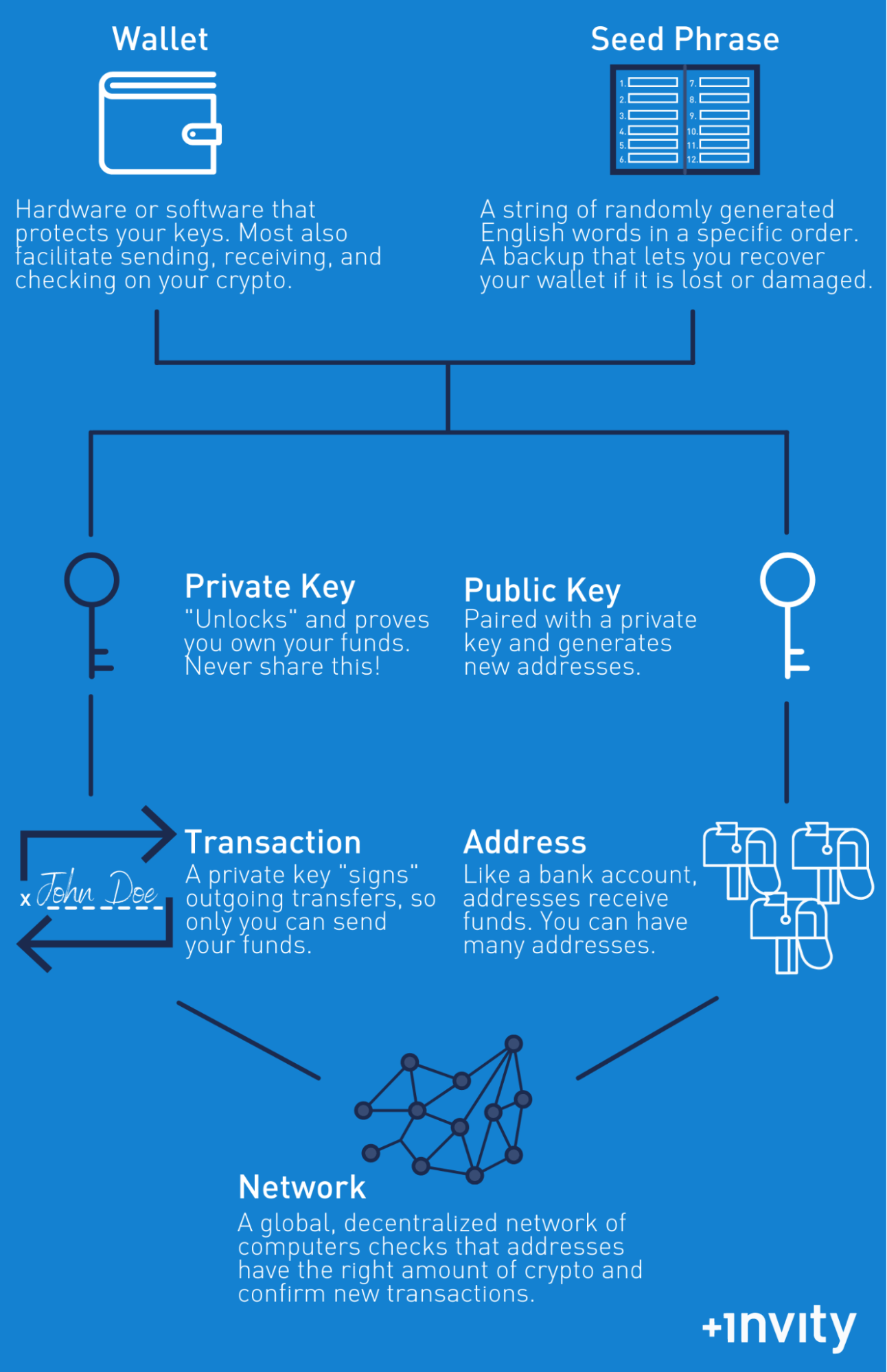
A crypto wallet doesn’t actually store user assets: that’s the first thing you’ll learn when getting to know them better. Instead, they provide a usable interface for accessing the assets, which are already securely stored onchain.
Source: Invity
Let’s explore its work principles now.
How it works
In blockchain technology, two unique strings of numbers, public and private keys, are used to manage all onchain assets. They are randomly generated for each user and are specific to each blockchain. For example, all EVM blockchains use a hexadecimal number and start with 0x, while all Tron keys start with T.
Public key can be shared with anyone and acts as a public identifier of a wallet and its user’s identity; it’s used to receive transactions and prove asset ownership.
Private key should be protected with all precautions, as it’s used to sign and send transactions; thus, its owner can easily transfer costs and assets anywhere.
Private keys are often connected with seed phrases, used to ensure quick and easy access to funds. Each of them is a string of 12, 18, or 24 randomly generated English words, and it’s used as a personal password to a wallet. While at first sight it doesn’t look very secure, a 12-word seed phrase provides 128 bits of security, which translates to about 10 in 39th power of potential combinations—far exceeding all modern capabilities of brute force hacking attacks.
To clarify, one seed phrase can be used to sign in to multiple wallets that support a given network. A wallet is just an interface: your tokens are stored onchain and can be accessed via various interfaces using a single set of credentials.
Types of blockchain wallets
For a general review, we’re going to explore several specific types of Web3 wallets.
Custodial wallets
These are mostly maintained by CEXs and traditional banking structures, and in most ways, they’re similar to ordinary banking accounts. Custodial wallets hold users’ private keys and manage their funds, which can be accessed after ordinary registration and, often, identity verification procedures (KYC and AML).
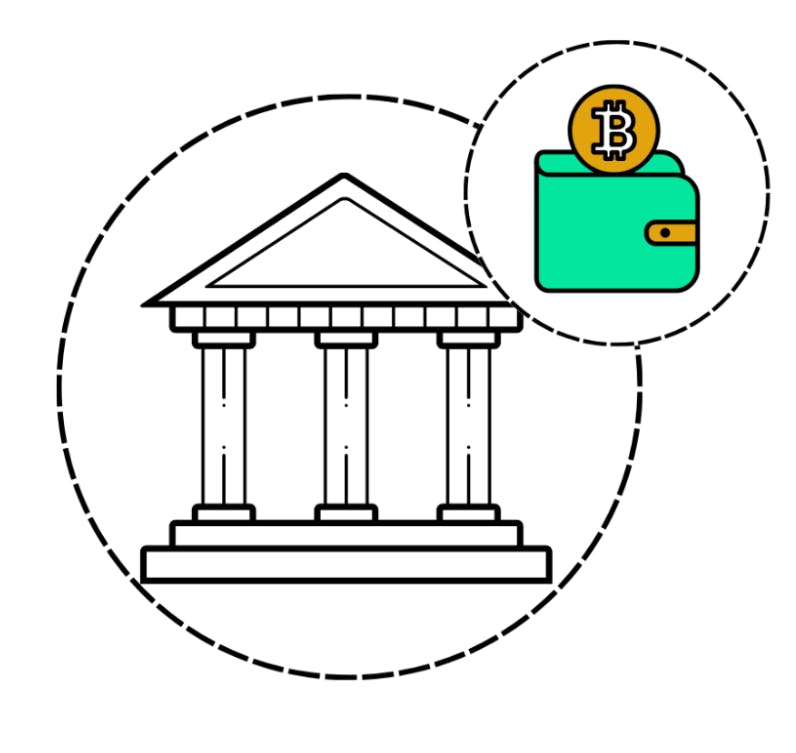
They don’t use seed phrases, and users don’t know their private keys, so they’re forced to trust an entity that maintains the wallet. In return, they protect user funds and can recover or refund them under certain circumstances.
Non-custodial wallets
This type of wallet doesn’t interfere with user funds at all: it simply provides an interface for interacting with funds, while a user holds private keys. If a user doesn’t have a wallet yet, they usually can generate one using a seed phrase. As they don’t store user information and just provide an interface for managing onchain assets, they don’t require any identity verification.
Criteria | Custodial wallet | Non-custodial wallet |
Private keys holder | Private keys are held by a centralized entity, usually a CEX or a bank | Private keys are held only by a user and are never shared with anyone |
Private keys security | Private keys aren’t held by a user, so they might be stolen, i.e., during a platform hack | Private keys are held by a user, so they can only be tricked away from a user |
Fund recovery | Funds can be recovered in some cases, as per the user agreement | Funds cannot be recovered, as a user is solely responsible for them |
Identity verification | Users are usually required to complete KYC/AML before accessing an account | Users just need to access a wallet or retrieve the existing one; no KYC required |
Access and restrictions | An entity can potentially restrict access based on a location, citizenship, etc. | No one can restrict access if a user can access a platform’s website |
The moment when a wallet interface reads your keyboard inputs and signs you into your wallet is a critical one. It’s when a potential malefactor can catch the input, gain access, and steal your funds. Therefore, it’s where most precautions must be made: both from the wallet’s and the user’s side. In general, non-custodial wallets are the most widely used among the Web3 community, as they’re considered truly decentralized.
GetBlock reminds: non-custodial wallets cannot access your private key and seed phrase. After signing you in, they delete all the information related to it. However, you may be a target of impersonation scams, which look very similar to popular wallets (i.e., MetaMask or Phantom), and you might accidentally submit your private key here—and say bye-bye to your funds! Always double-check the project’s link and contact the project’s community in case of any suspicions. Yes, being suspicious is a positive quality here.
Smart contract wallets and account abstraction
This is a special type of non-custodial wallet that doesn’t require a seed phrase, instead being secured by the blockchain itself. Some wallets like Gnosis Safe and Argent rely solely on this method, while others, like MetaMask, introduce account abstraction as one of the options. The topic of account abstraction is innovative and deserves its own article, but let’s overview it very shortly.
Ethereum standard ERC-4337 (Account Abstraction) was specifically designed for that, allowing users to send a pseudo-transaction object UserOperation into a separate mempool. Specialized nodes called bundlers handle them and send them to the EntryPoint, a smart contract that verifies them and records them into the blockchain. Thus, this approach abstracts an account’s control, defines it as a smart contract, and adds a robust layer of security.
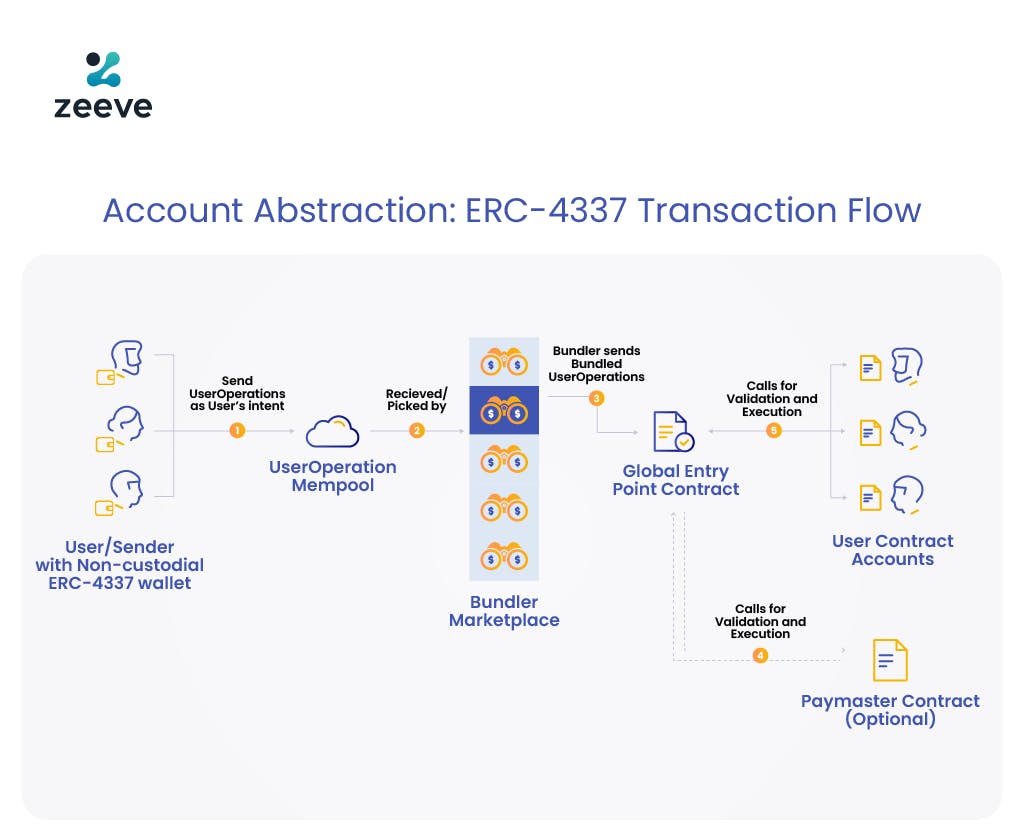
Source: Zeeve
This new type of smart contract can determine how and under which conditions the account owner can restore access to the wallet. For example, social recovery involves several trusted individuals, known as guardians, who cannot access the wallet individually but can restore it together. There can be other recovery rules, too, as well as various spending limits, determined by the contract.
The topics of account abstraction and smart wallets are essential, so stay tuned for our next articles.
Hardware wallets
While hardware wallets aren’t as affordable as web-based ones and cost money (usually at least $70), they are the safest type. It’s a physical device with a specific structure that contains:
Secure element that performs cryptographic operations and stores private keys
Physical input devices, such as screens, NFC, buttons, etc.
Memory components to store public keys and transaction caches
Microcontroller unit to connect all components and handle inputs/outputs
While specific hardware wallets can have different hardware characteristics, they are more or less similar to the structure presented above. A secure element is the core component of the hardware wallet, used to sign transactions, and cannot be accessed directly by other components to prevent fund theft.
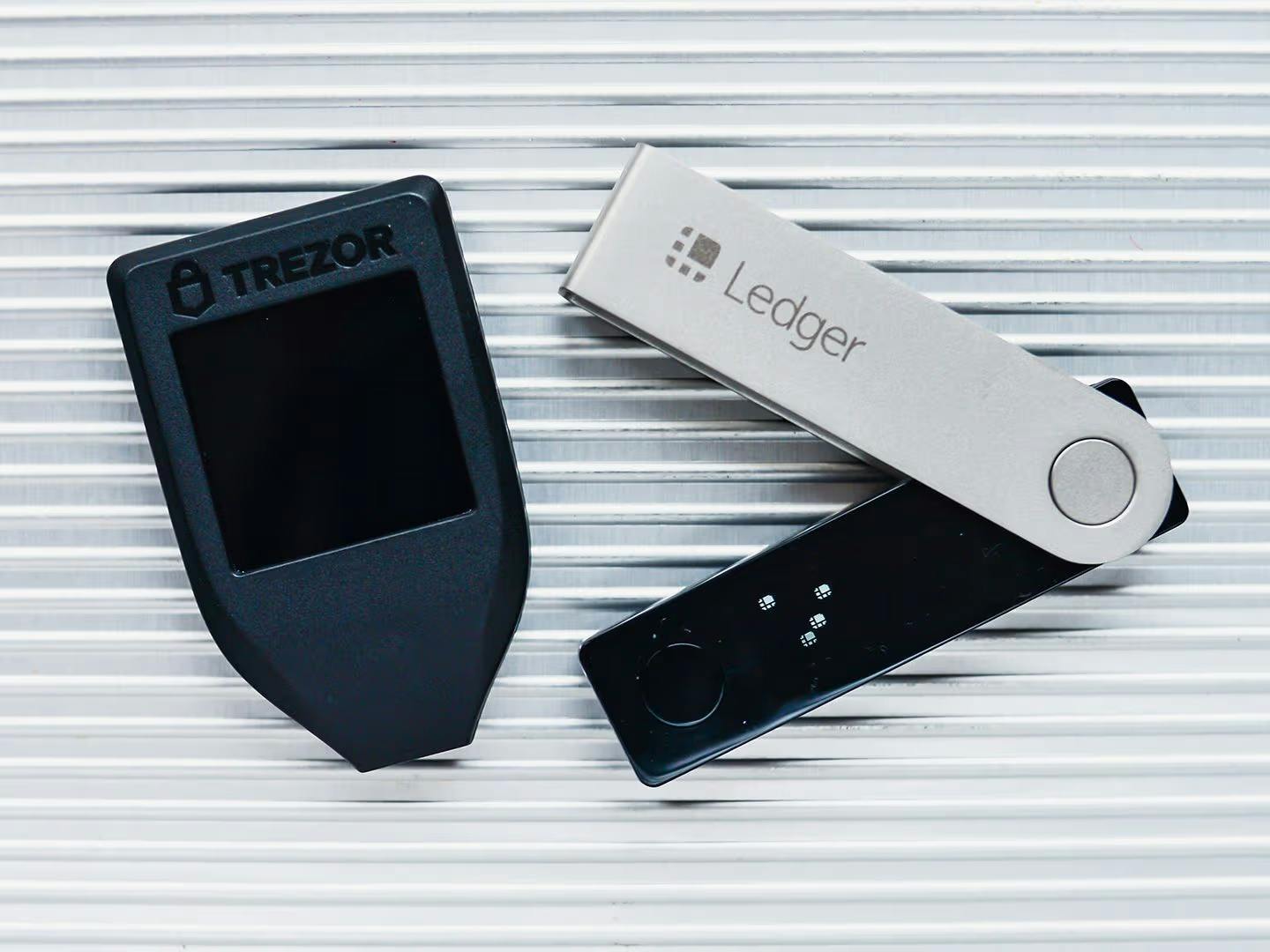
Trezor and Ledger, popular examples of hardware wallets
Hardware wallets are highly recommended to be purchased in case a user owns large sums of crypto assets, as they cannot be accessed via the Internet at all. Usually, even if the physical wallet is stolen, a thief cannot retrieve the funds without specific keys.
“Paper” wallet
This type of crypto wallet is the most low-tech one, but it’s also considered very safe. It’s just a piece of paper with the public and private key printed on it, usually also with the QR codes to check the balance or make a payment quickly.
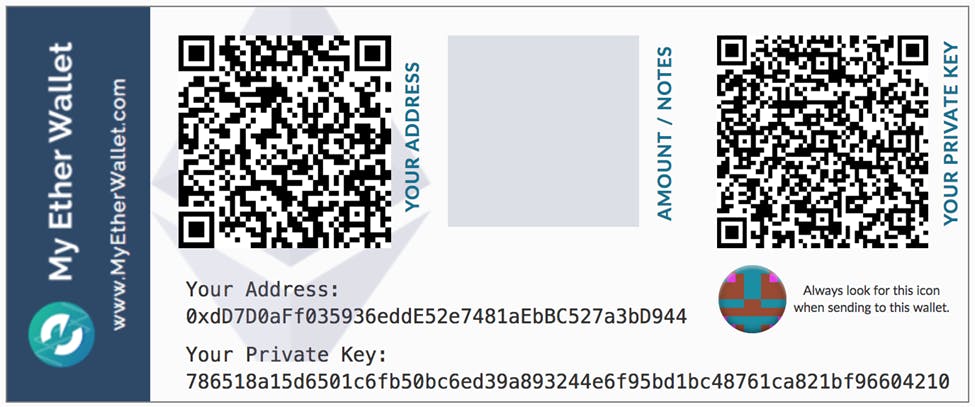
Source: MyEtherWallet: an example of an Ethereum paper wallet
The largest advantage of a paper wallet is that you don’t need an Internet connection to store your funds at all, so it’s basically impossible to steal private keys via hacking. But of course, they aren’t as convenient as other types of wallets. Also, it’s just paper, after all: it’s fragile and generally unreliable.
Our metrics for the best Web3 wallets
How do we evaluate our best blockchain wallets? Here are three key metrics:
Security, including the wallet recovery
Usability, including supported chains and features
Activity, including the wallet’s community
Let’s dive deeper.
Security
The foremost aspect of a crypto wallet is protecting access to user funds. But how exactly should it achieve it, and how can we measure it? Here are some crucial aspects.
It must have a robust random number generator for ensuring a proper seed phrase creation, which is one of the core wallet functionalities.
Its interface, app logic, and smart contracts must be properly audited to minimize the breach potential.
It should be aware of potential scams and report them to the user if the user has their wallet installed.
It should use trusted RPC nodes and a secure connection to prevent malicious attempts to record false balances or altered gas fees.
It’s the most essential parameter, as protecting user funds is essential.
Usability
This is the broad category that includes a variety of factors influencing the user experience (UX) of interacting with the wallet.
To be more precise, it includes:
Buttons for quick sending and receiving funds
Tools for quick token swapping
NFT management tools (NFT visuals, connection with marketplaces, and analytics)
Portfolio management tools (token analytics and current user tokens’ value)
Native yield functionalities
Functionalities for adding a custom RPC
API for connecting to other dApps
Supported chains: a good wallet supports the most popular ones or specializes in a certain one
Some of these features, such as buttons for token sending, receiving, and swapping, are must-haves for all wallets. NFT tools and at least some form of portfolio management are also considered industry standards by now. Others boast an advanced interface that allows users to monitor the market, catch the fast-growing tokens, and earn native yield.
Also, note that here we're mostly focused on wallets that support various chains. There are specialized ones, such as TronLink for Tron, which is the best for this chain, considering its specifics with energy and bandwidth usage. But here we're focusing on the multi-chain ones.
Read more about Tron energy, bandwidth, and other peculiarities in our specialized guide.
Activity
Last but not least, we look for already established projects. There are innovative products with unique features, but we don’t touch them here—only projects with an established user ecosystem can count as the best ones. All our projects have an established community and support either a wide number of chains or are based on a very active chain (i.e., Ethereum and Solana).
Best Web3 wallets: Comparison table
Here is a comparison table of all major Web3 wallets, so you can explore their primary features and peculiarities quickly.
Wallet | Type | Supported chains | Additional features |
MetaMask | Non-custodial; Smart-contract support; Mobile/Web | All EVM chains | Token swap; Portfolio; NFT support |
Rabby Wallet | Non-custodial; Mobile/Web | All EVM chains | Token swap; Approval control; Gas optimizer |
Phantom | Non-custodial; Mobile/Web | Solana; Ethereum; Polygon; Base; Bitcoin; Sui; HyperEVM | NFT support; In‑wallet swaps; Portfolio |
GemWallet | Non-custodial; Mobile/Web | 40+ chains; Bitcoin; Ethereum; Solana; BNB | NFT support; Token swap; dApp browser |
Trust Wallet | Non-custodial; Mobile/Web | 100+ chains; Bitcoin; Ethereum; BNB; Solana | DEX swaps; NFT support; Staking |
Exodus | Non-custodial Desktop/Mobile | 50+ chains; Bitcoin, Ethereum, Solana | Built‑in swaps; Portfolio; Staking |
Rainbow | Non-custodial; Mobile/Web | Ethereum and many EVM networks | NFT gallery; Swaps; ENS support |
Zerion | Non-custodial; Mobile/Web | 10+ EVM chains; Ethereum, Polygon, BSC | DeFi portfolio; Aggregated swaps; NFT viewer |
Brave Wallet | Non-custodial; Browser‑native (desktop/mobile Brave) | Solana, Bitcoin, Ethereum, and many EVM chains | Built‑in swaps; NFT support; dApp browser |
Atomic Wallet | Non-custodial; Desktop/Mobile | 50+ chains | Built‑in swaps; Staking; NFT support |
Binance Wallet | Custodial and non-custodial; Web/Mobile (Binance Web3) | 30+ networks; BNB Chain; Ethereum; Bitcoin; | DEX access; Cross‑chain bridge; dApp browser |
Coinbase Wallet | Custodial and non-custodial; Mobile/Web | 40+ chains; Ethereum; EVM chains; Bitcoin; Solana | dApp browser; DeFi access; NFT support |
OKX Wallet | Custodial and non-custodial; Mobile/Web | 100+ chains; Ethereum, BNB, Solana | Cross‑chain DEX; NFT marketplace; DeFi hub |
Safe (Gnosis Safe) | Non-custodial; Smart‑contract wallet; Web | 14+ EVM chains | Multisig accounts; Role controls; dApp integrations |
Argent | Non-custodial; Smart‑contract wallet; Mobile/Web | Ethereum; zkSync; Starknet | Social recovery; DeFi integrations; Gas abstraction |
imToken | Non-custodial; Mobile | 10+ chains; Ethereum, Bitcoin, Tron | DEX swaps; dApp browser; Staking |
TokenPocket | Non-custodial; Mobile/Desktop | 80+ chains; Ethereum, BNB, Tron, EOS | Multi‑chain DEX; dApp browser; NFT support |
Sequence Wallet | Non-custodial; Web | All EVM chains | Gaming SDK; Gas abstraction; MPC/AA wallet |
Frame | Non-custodial; Desktop/Web | All EVM chains | Native dApp browser; RPC control; Hardware support |
Ledger Live | Non-custodial; Hardware + Desktop/Mobile app | 5,500+ coins/tokens across multiple chains | Secure storage; Portfolio; Built‑in swaps |
Trezor Suite | Non-custodial; Hardware + Desktop/Web | 20+ chains; Bitcoin, Ethereum, others | Secure storage; Coin control; dApp access (via Web3) |
Tangem | Non-custodial; Hardware (card) + Mobile app | 20+ chains; Bitcoin, Ethereum, BNB | Tap‑to‑pay cards; Multi‑card backup; DeFi/NFT via apps |
OneKey | Non-custodial; Hardware + Mobile/Desktop | 5,000+ assets across major chains | Hardware security; DEX swaps; dApp browser |
Keystone | Non-custodial; Air‑gapped hardware + Mobile app | 5,500+ coins/tokens across multiple chains | QR signing; Multisig support; dApp connectivity |
Now, we’ll select several of them to explore further.
Best Web3 wallets: Non-custodial software wallets
Let’s explore non-custodial Web3 wallets which are easily accessible via mobile apps or browser extensions and can be utilized by any Web3 user.
MetaMask
Website: https://metamask.io/
Supported chains: Ethereum, most EVM chains, Solana, Sei
MetaMask is among the most well-known Web3 wallets. Originally, it was built for Ethereum, and then also for its expanding ecosystem of EVM-compatible chains. Recently, it was also expanded to support Solana and Sei, while other popular chains can be added using specific addons called MetaMask Snaps.
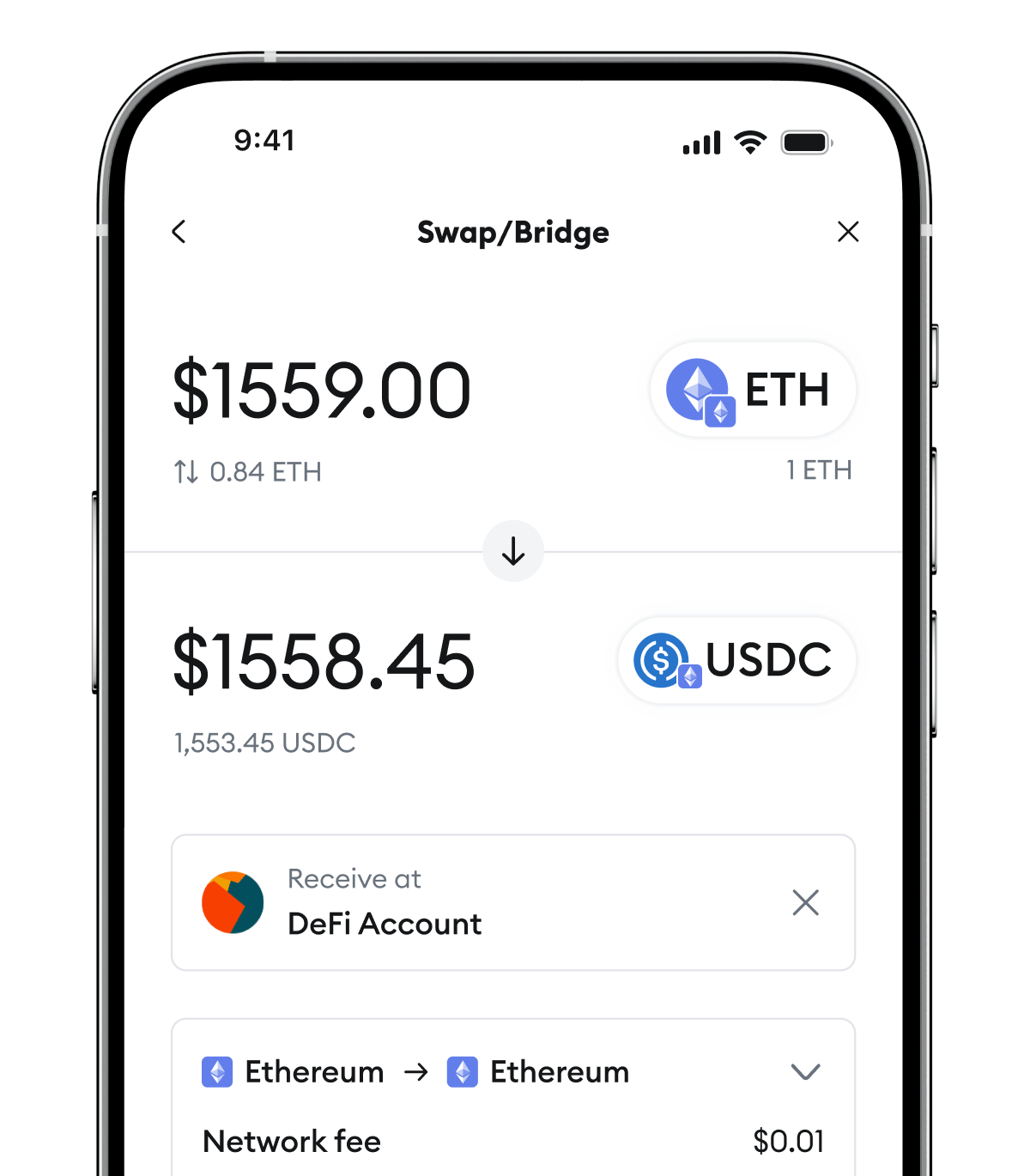
Source: MetaMask
It can be installed as a browser extension or mobile app, and it also has the MetaMask Portfolio service connected with it, with robust functionality to control one’s funds and monitor various tokens. Custom EVM networks can be added to MetaMask with ease by specifying their chain ID and the RPC API URL to handle blockchain requests.
Check our instructions to learn more!
Rabby Wallet
Website: https://rabby.io/
Supported chains: Ethereum and most EVM chains
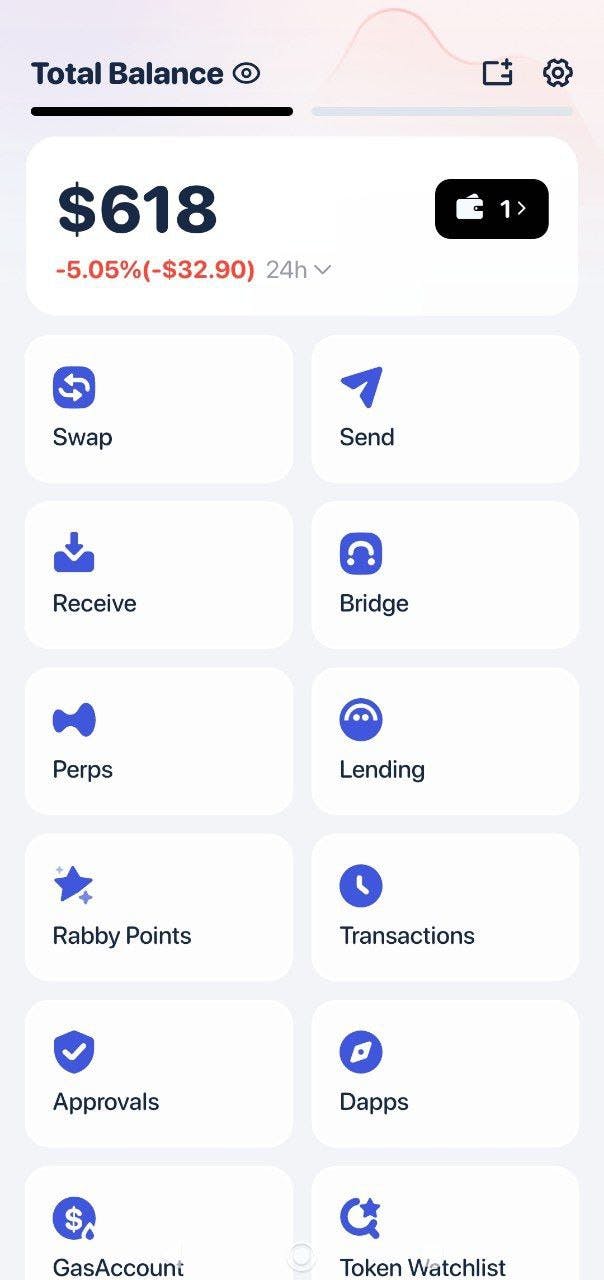
Rabby is an EVM wallet that supports all EVM networks, which can be added to it, similar to MetaMask. It has a variety of features, such as token swap and bridge, which allow quick token exchange and trading, while its dApp connections ensure easy DeFi functionalities.
Source: Rabby Wallet
With its variety of token management features, Rabby is a good option for digital identity management, which is often one of the purposes of crypto wallet usage.
Phantom
Website: http://phantom.com/
Supported chains: Solana, Ethereum, Base, Polygon, Sui, Monad, Bitcoin, HyperEVM
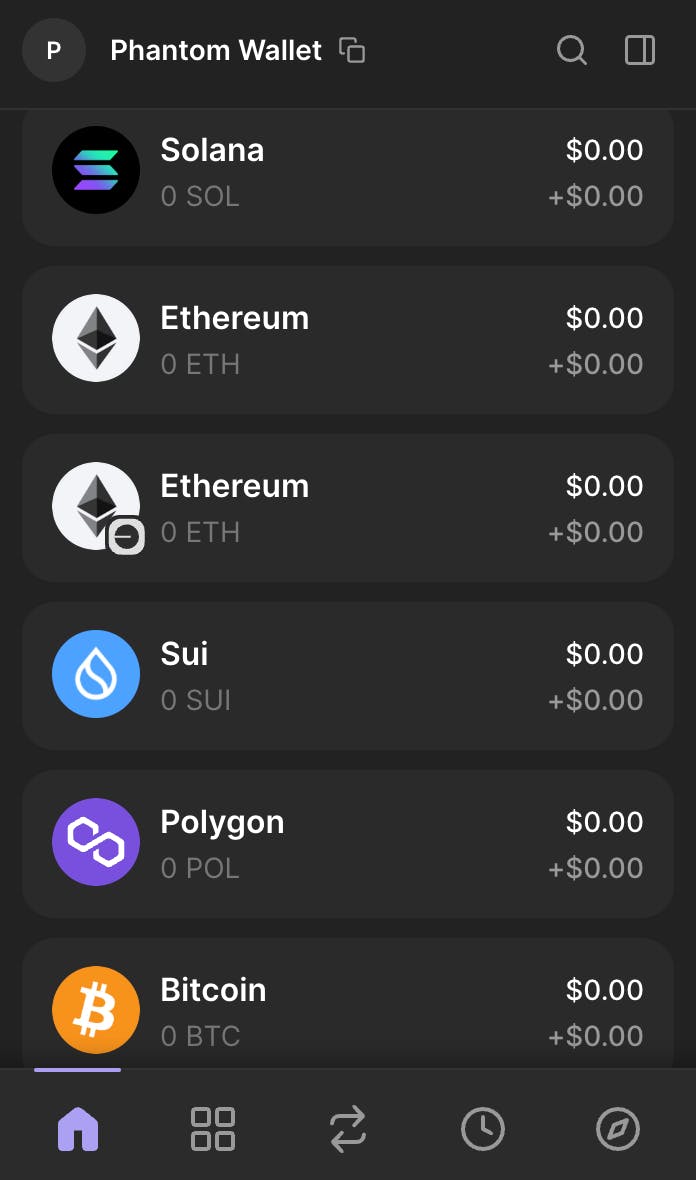
Similar to how MetaMask became a standard for EVM wallets, Phantom is among the most popular Solana wallets. Nowadays, it also supports Ethereum and several other popular chains, and a custom RPC API can also be added to it.
Source: Phantom
Exodus
Website: https://www.exodus.com/
Supported chains: Bitcoin, Ethereum, Solana, and 50+ other chains
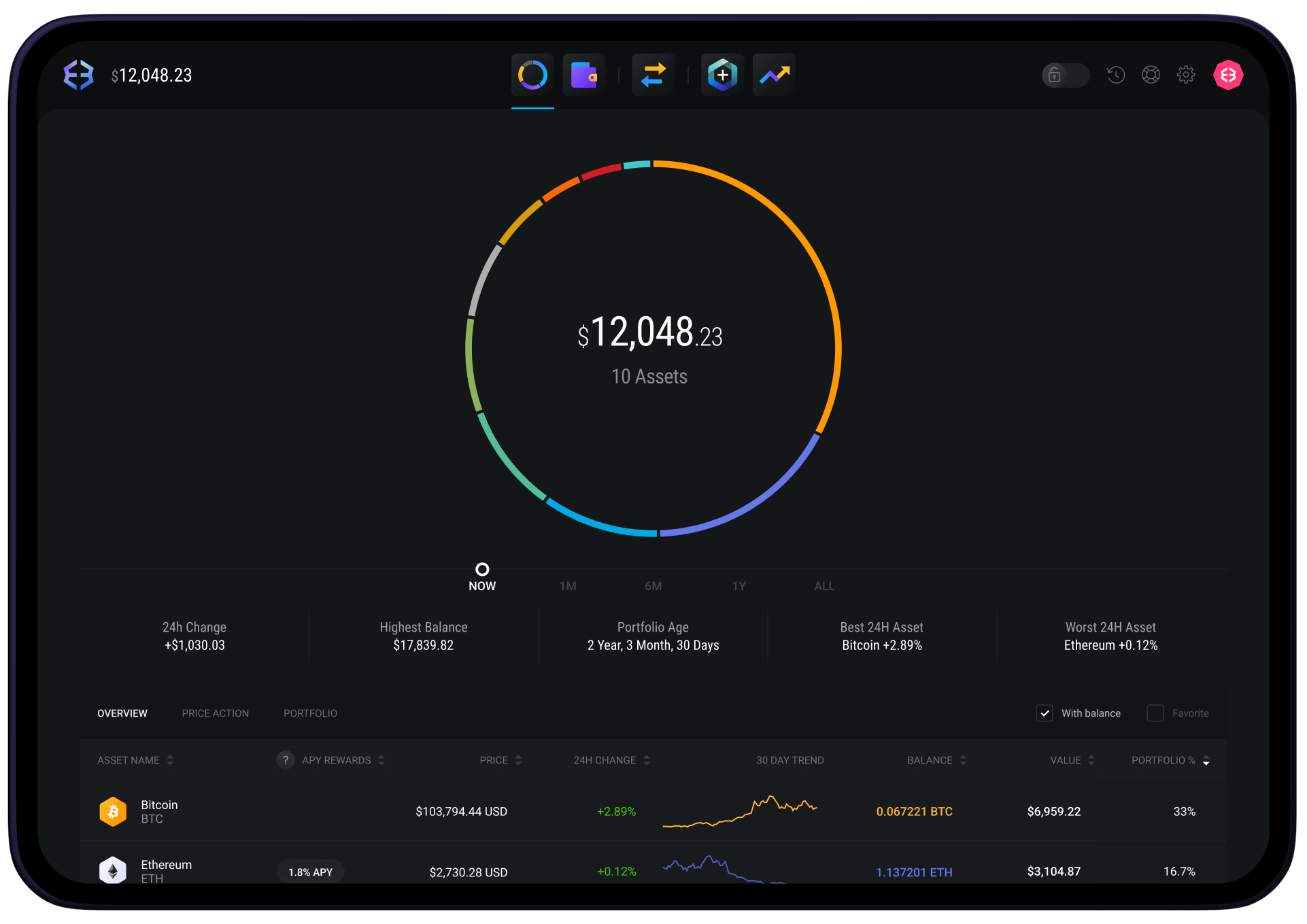
This wallet is a universal choice for various crypto users. It allows easy portfolio tracking using its rich graphical interface and offers features like swaps for quick token exchange between networks.
Source: Exodus
GemWallet
Website: https://gemwallet.com/
Supported chains: Bitcoin, Ethereum, Solana, TON, BSC, Aptos, Base, and 40+ others
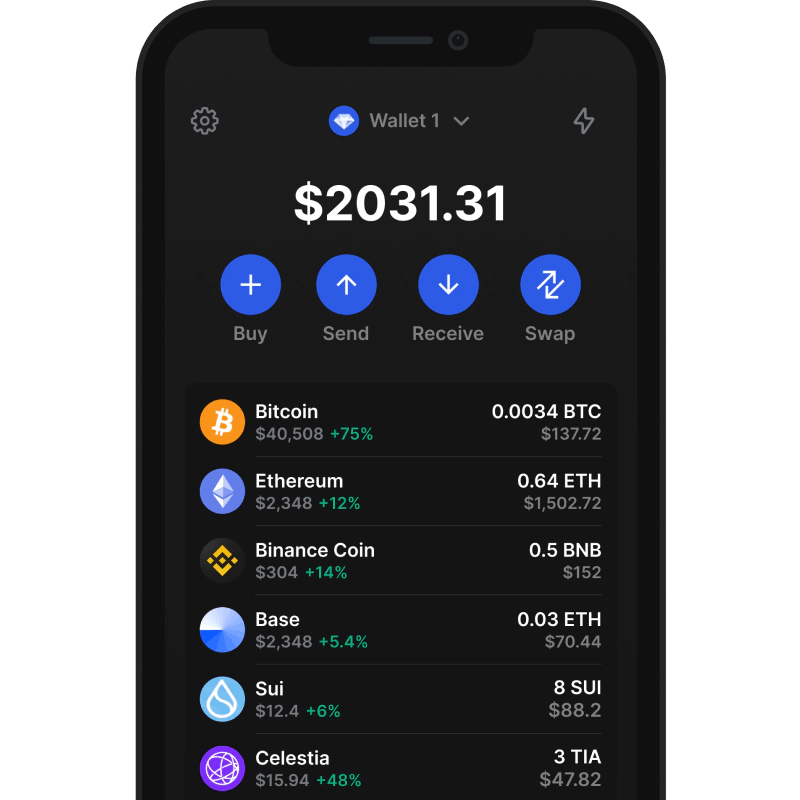
GemWallet is an easy-to-use wallet that supports multiple chains and doesn’t require any additional setup. It has everything one needs to send and receive crypto transactions on all major chains without additional setups.
Source: GemWallet
TrustWallet
Website: https://trustwallet.com/
Supported chains: Bitcoin, Ethereum, Solana, Tron, BSC, TON, Polygon, and 80+ others
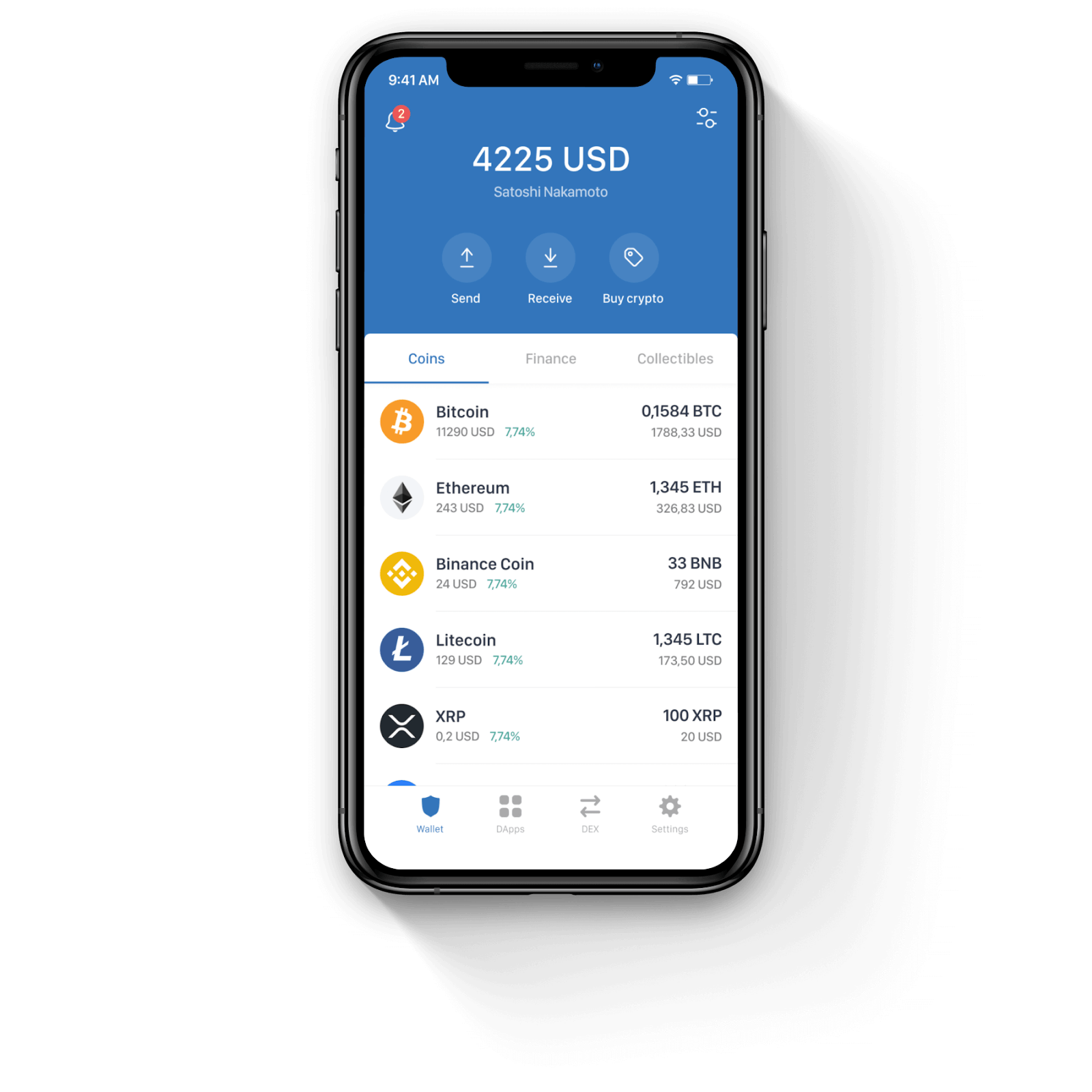
Another popular multi-currency wallet, Trust Wallet, is an all-in-one solution for everyday use if one needs to pay and receive money in crypto. One can send and receive transactions on the popular chains quickly and easily.
Source: Trust Wallet
Best Web3 wallets: Hardware wallets
For storing large amounts of crypto, hardware wallets are recommended. Let’s explore the most popular and relevant options.
Ledger
Website: https://www.ledger.com/
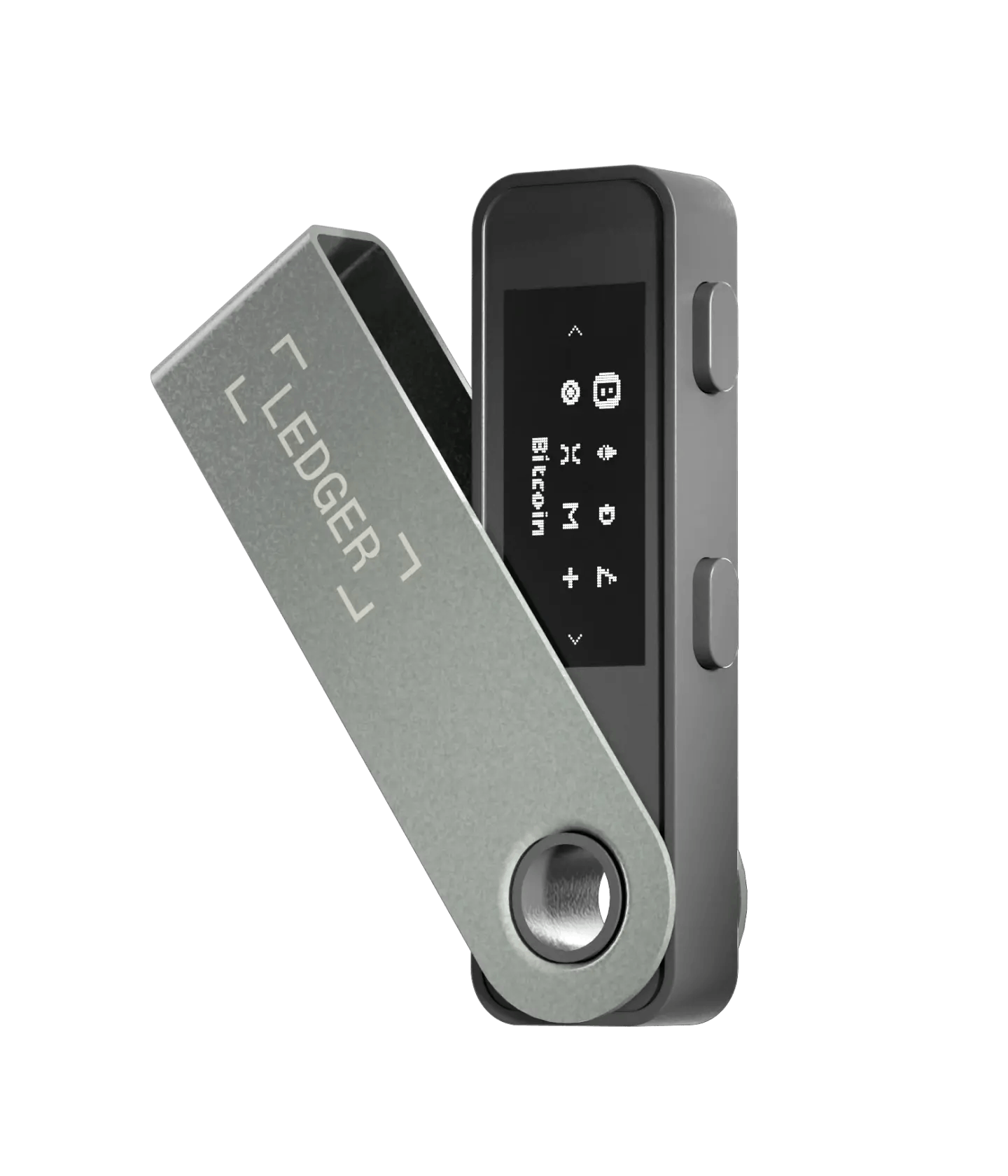
Ledger is one of the earliest and most popular hardware wallet brands for securing cryptocurrencies and other digital assets.
Ledger devices use a dedicated secure element chip paired with Ledger’s proprietary BOLOS operating system to store private keys offline, protecting them from online threats. They support thousands of assets across many blockchains.
Source: Ledger
Users interact with their funds via the Ledger Wallet app (formerly Ledger Live) on desktop or mobile to send, receive, stake, and even manage NFTs, with physical confirmation required on the device screen for transactions. Backup is handled through a traditional 24-word recovery seed phrase, which allows users to recover their wallet if the device is lost, but it requires careful offline storage.
Ledger’s combination of wide asset support, robust security, and versatile software makes it suitable for both beginners and advanced users seeking all-around self-custody.
Trezor
Website: https://trezor.io/
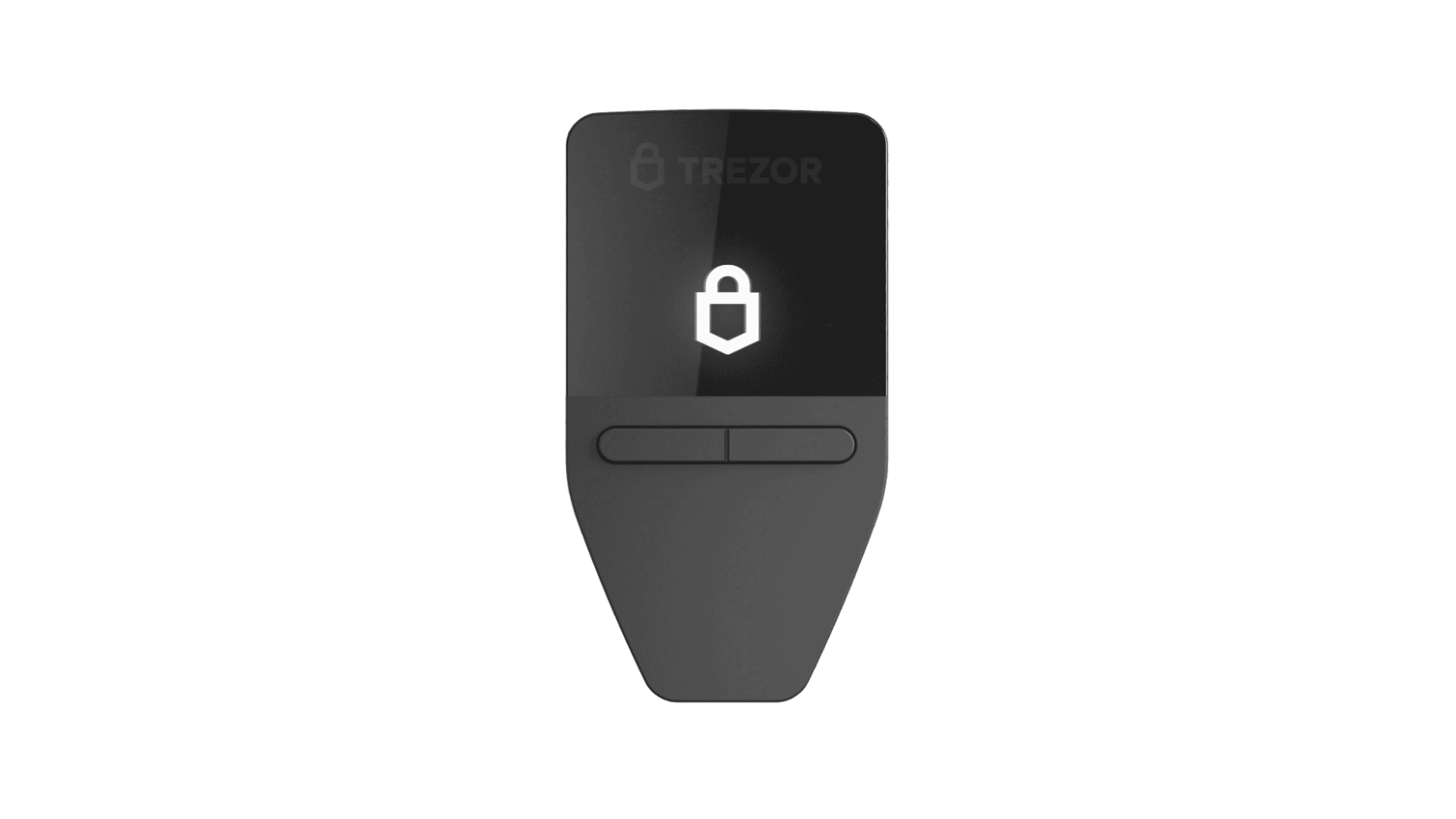
Trezor, developed by SatoshiLabs, is another well-established hardware wallet known for pioneering principles of transparency and user control with fully open-source firmware.
Trezor devices (such as the Trezor Model T) connect to computers or mobile devices via USB and feature a built-in screen — and on some models a touchscreen — for secure transaction verification and easy navigation.
Source: Trezor
They support a broad range of cryptocurrencies and integrate with software like Trezor Suite and third-party wallets for managing assets, backups, and advanced features like Shamir Backup, which splits the recovery seed into multiple shares for safer recovery.
As a non-custodial wallet, private keys remain offline on the device, and users protect access with a PIN and a traditional 12 or 24-word seed phrase. Trezor is favored by users who value open-source auditability and transparent security design.
Tangem
Website: https://tangem.com/
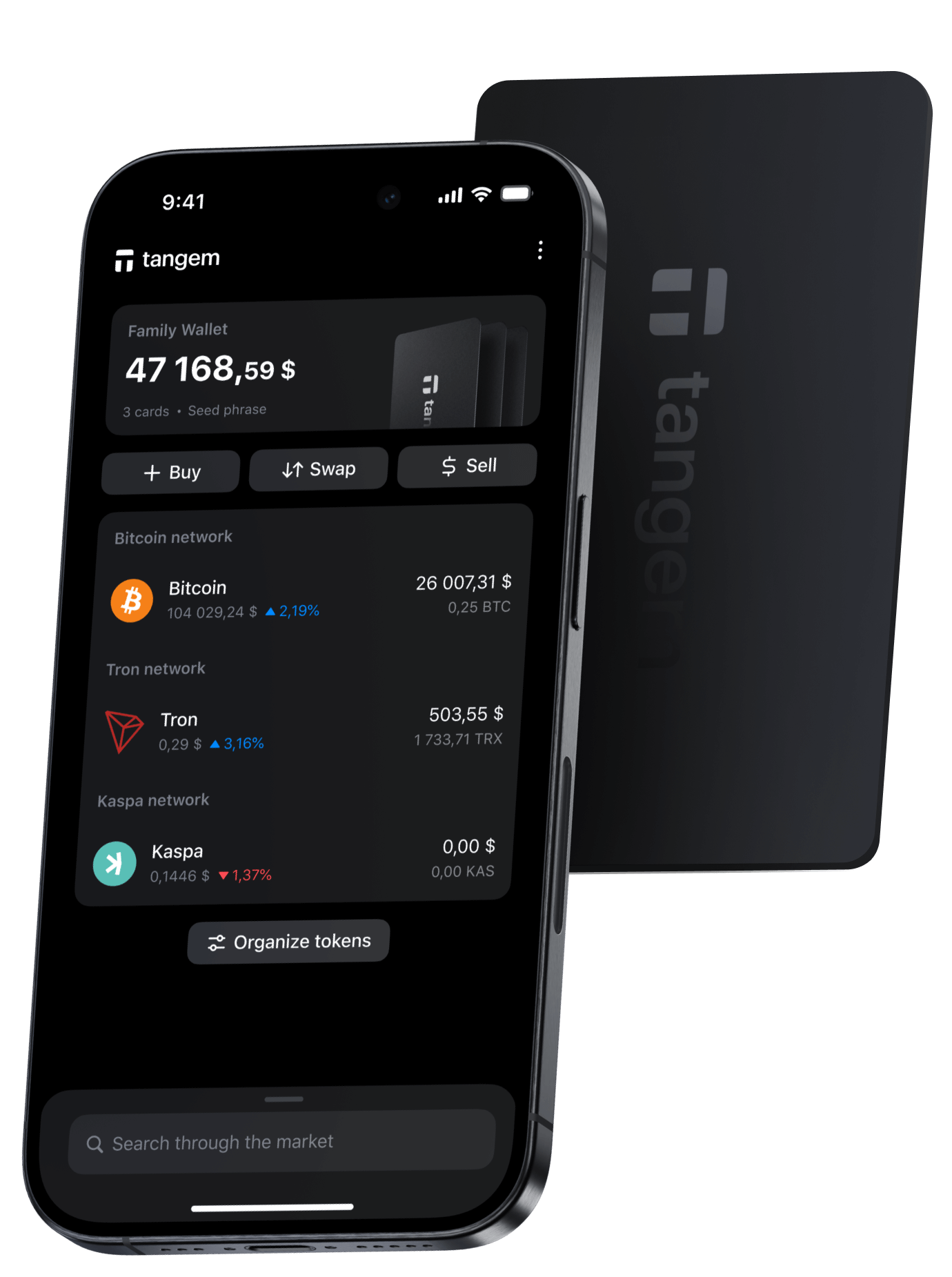
Tangem offers a different take on hardware wallets by using NFC-enabled card-style devices that are extremely portable and require no cables, batteries, or chargers.
Unlike traditional wallets that rely on a seed phrase, Tangem cards can be used seedlessly through physical backup cards (with identical keys) created at setup, and they store private keys in an EAL6+ certified secure chip offline, accessible by tapping the card to a smartphone with the Tangem app. This approach emphasizes simplicity and convenience: users authenticate and sign transactions directly with their phone via NFC, making Tangem particularly accessible for mobile-centric users and those who want a straightforward, on-the-go cold storage solution.
Source: Tangem
Tangem also supports a wide range of assets across many blockchains, and its backup and recovery practices differ from the usual seed-phrase model.
Key points to consider when choosing a wallet
Let’s wrap up with several questions that may help you select the Web3 wallet that suits you best.
Will you use it just for crypto payments/receiving a salary, or for activities like trading and NFT collecting?
Will you use it for personal affairs only, or do you need institutional-grade services for your enterprise?
Do you monitor trending coins and new chain developments, and are you interested in interacting with them?
Do you play Web3 games or use SocialFi apps, so your wallet is also used as your unique identifier there?
Do you plan to integrate wallet services in your own applications, or just use them as an end user?
Depending on your answer, you can explore the table and select those that suit you. For example, MetaMask offers great portfolio management and API integration tools, Rabby Wallet is great for identity management, and Trust Wallet is good for everyday use if you don’t dive deep into the Web3 world.
Security basics
We’ve already explored risks connected with the usage of Web3 wallets. Let’s now summarize them in a quick checklist.
Always keep an offline backup of your wallet data, so you can recover it at any time.
Always check the wallet service before authorization and never share your private keys.
Never store private keys and seed phrases in the cloud to minimize breach chances.
Review dApp permissions regularly and revoke irrelevant ones.
Keep your wallet app updated to ensure the best security available.
Following these simple rules can greatly reduce the chance of losing your funds.
Conclusion: The development of blockchain wallets
Overall, the current trend in non-custodial wallets shows that users are interested in holding their crypto themselves, without any intermediaries. It’s highlighted by the fact that the largest centralized crypto exchanges, like Binance, Coinbase, and OKX, started to make their wallets non-custodial and connect to the decentralized Web3 ecosystem actively.
All Web3 wallets rely on good blockchain infrastructure. They need to read data quickly and write new data as users make payments and acquire NFTs. However, this infrastructure is too massive to hold it oneself. That’s why all of them need a good Web3 infra provider—just like GetBlock. And we offer much more than just a high-quality infrastructure! Technical support, high customization, and promotion help are included—our customers are, foremost, our partners. If you’re interested, contact us now to know more and order the best RPC node for your project.


Popular Posts

June 9, 2021
4 min read

November 9, 2021
5 min read

May 24, 2022
5 min read

March 18, 2021
4 min read


