

Best Web3 Games List

Vance Wood
December 10, 2025
17 min read
Blockchain technology offers new approaches to gaming. Players can truly own their characters, items, and achievements as onchain tokens and NFTs. These assets have a market price and can be traded, while their history can be tracked using blockchain explorers.
All this means more freedom for players and more creative opportunities for game makers, as they can create virtual worlds with player-run economies. There are even specialized blockchains for gaming, such as Ronin and Immutable. The GameFi industry is booming now, and it is certainly worth the attention of the crypto community.
Being a top Web3 infrastructure provider, GetBlock monitors this industry, too. Here, we’ll overview several Web3 games which we consider as one of the best ones, with detailed explanations, so let’s start now!
List of Web3 games
Actually, there are many of them. Here is the list of those you may easily find:
Axie Infinity
The Sandbox
Decentraland
Alien Worlds
Illuvium
World of Dypians
Gods Unchained
Star Atlas
CryptoKitties
Catizens
Seraph: In the Darkness
MapleStory
Sorare
Sweat Economy
We’ll focus on the first eight of them—and, as always, we’ll explain our reasons soon.
Editor’s choice: 8 best blockchain games
Here, we’ll overview the eight blockchain games. See a quick summary of them in a table below.
Game | Chains | Genre |
Axie Infinity | Ethereum, Ronin | Digital pet collector, turn-based card game |
The Sandbox | Ethereum | Sandbox metaverse game, creator economy |
Decentraland | Ethereum | Sandbox metaverse game, creator economy |
Alien Worlds | WAX, BSC, Ethereum | Exploration, card game, economy simulator |
Illuvium | Ethereum | Metaverse-based shooter and RPG |
World of Dypians | BSC, Sei, Base, and others | Metaverse-based MMORPG |
Gods Unchained | Immutable, Ethereum | Turn-based tactical card game |
Star Atlas | Solana | Space exploration, RPG, economy simulator |
As you see, most of them run on Ethereum and other EVM blockchains, although BNB Chain and Solana have also become very popular. Like all other blockchain projects, games need blockchain infrastructure—and a good one, as it defines how easily players can operate with their assets. Let’s explore what blockchain games are and how they operate.
What is a blockchain game
Any game that integrates blockchain technology can be assigned to this category. Usually, it includes several aspects:
Different game assets, from items to characters, are realized as blockchain tokens
These assets have market prices, can be traded, and used in DeFi
Players can log in using their crypto wallets, securing their identities
Many of them also have various identity and reputation management tools
With all of these, blockchain games are truly revolutionizing the whole entertainment industry. Let’s look closer, how.
Player-centered game economy
In ordinary computer and mobile games, players don’t actually own their assets; instead, they are owned by the game itself. While some online games allow players to buy and sell some game equipment, it’s still fully controlled by the game developers.
The usage of blockchain technology has changed radically:
Game assets are onchain and owned by players without any intermediaries
Game achievements are connected with players’ identities, securing their value
Assets can be freely traded or staked using decentralized exchanges or DeFis
As a result, players are much less constrained in their activities and potential
Blockchain games, or at least the best of them, are focusing on creating a sustainable in-game economy, where players can search for unique game items, level up characters, earn rewards and achievements, and communicate with others.
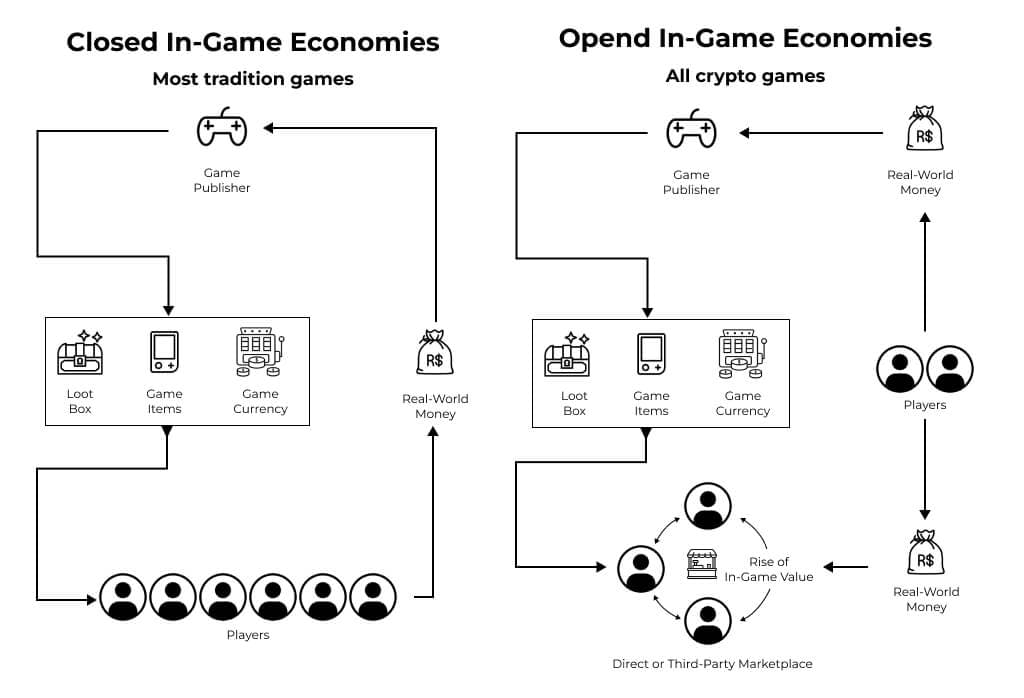
Game items, rewards, achievements, and other assets are represented as tokens and NFTs, can be traded with market prices, and often also locked into DeFi for a yield. Eventually, the game is turned into a full-scale interconnection of virtual worlds, called metaverse, with its own economy and thousands of ways to spend time with fun. Even different games can have shared virtual worlds and interchangeable assets, as long as they can be exchanged.
Social interactions
Almost all blockchain-based games are online or multiplayer, and social interactions compose an important part of them. Many of them offer various social events with rewards and achievements, which are, similar to game assets, realized as onchain tokens and NFTs and can be traded.
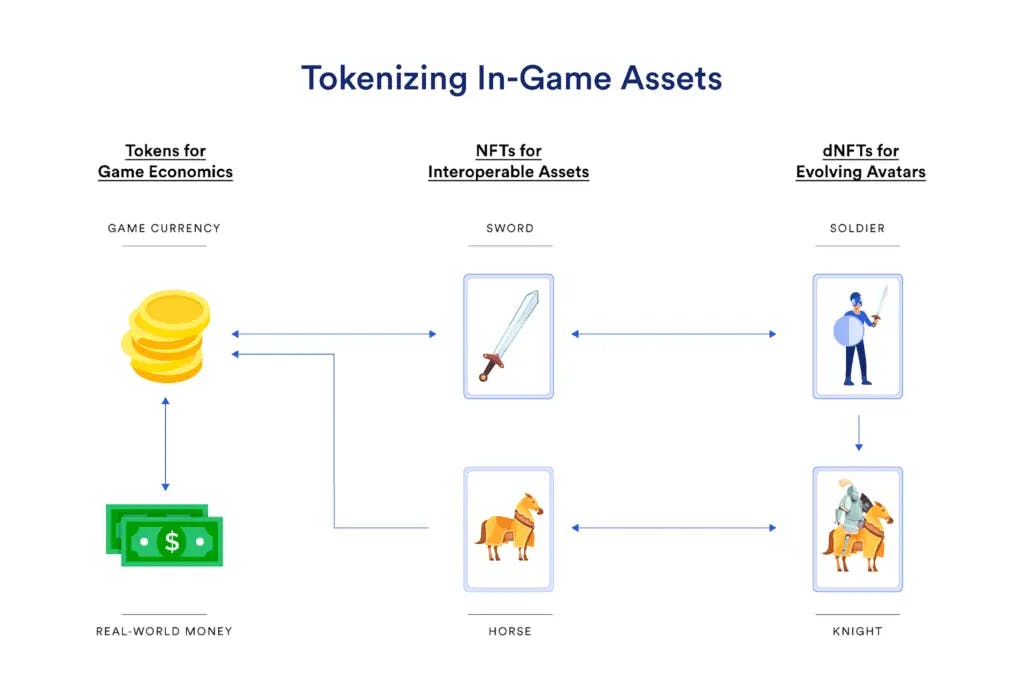
Additionally, players’ identities are represented via their wallets, and while their true identities are protected, this in-game personality can be used for reputation management. Achievements are connected to the player’s wallet, and many of them represent the player’s overall activity and trustworthiness.
All of that fuels the transition of crypto games into a full-scale connection of virtual worlds.
How did we choose the best crypto games?
Unlike our other Top/Best lists, gaming deals with user experience, which is highly subjective and cannot be directly measured. Different people can love different games, and none of those mentioned here can appeal to some of our readers.
Moreover, this industry is highly dynamic. New projects are rising, while mature ones can lose traction and close. If you search for top lists for 2023 or even 2024, it will be totally different.
Still, we have reasons for our selection, and it isn’t based on subjectivity. We tried to evaluate each project based on its in-game ecosystem activity and potential, so our readers will see which of them is worth their attention more.
Do you have anything interesting to add here? Contact us now and go ahead.
Let’s look closer.
Overall project activity
How many people know about the project and use it? This is a simple question that matters here. The number of unique website visitors and usual in-game players is essential to understanding the potential of the project. While it isn’t the full story, and many good games are either designed for a small audience or are in the early stages, it’s still a good metric to start with.
Trustworthiness
Blockchain games, similar to all other computer games, are built to evoke emotions. Sometimes it means manipulating them to ensure that a user will pay money to the game. This approach can be used by scams that trick users into paying without providing any good content.
Overall, all good blockchain games have indicators that show their trustworthiness:
They don’t offer you “the tool to earn money quickly,” it’s not the purpose of blockchain games at all. They offer a way to have fun and do something interesting.
They focus on building a healthy and active user ecosystem around them, where players can communicate, participate in activities, and trade game assets.
They have audited smart contracts and provide responsive support, ready to answer questions and explain everything that is unclear.
Here, we are explicitly omitting high-risk projects, such as gambling and betting. Some of them are trustworthy, but it’s still a separate category that cannot be merged with ordinary games. As a general rule, GetBlock advises you to be very careful with games where you need to pay without a clear understanding of what you’ll get in return.
Project potential
Last, every good project has an idea behind it and works to realize it. There are several markers that indicate a strong idea with great potential, and we’re trying to consider them when choosing the best crypto games. Let’s explore them.
The total funding received by the project explicitly shows how large market players are interested in the game, and their opinion is worth considering. All games here received funding from various investors, often tens of millions of dollars.
The project’s vision and mission explain why the project exists. One can evaluate the project’s values and how it succeeds in realizing them. The games we’ve mentioned here all have robust missions and work according to them.
The project roadmap shows how the game is developing, its future plans, and its successes in realizing the past ones. Usually, the best blockchain games have clear roadmaps and share their development path with users.
Therefore, our choice is based mainly on the project’s value and potential, rather than our subjective feelings towards it.
Best Web3 games: Diving deeper
Now, we can explore the projects of our choice closely. Here is a quick reminder of them:
Axie Infinity
The Sandbox
Decentraland
Alien Worlds
Illuvium
World of Dypians
Gods Unchained
Star Atlas
Let’s see the peculiarities of each of these titles and which opportunities they present to players.
Axie Infinity
Website: https://axieinfinity.com/
Genre: Digital pet collector and turn-based card game
Launch year: 2018
Axie Infinity is a digital pet game where players create and develop characters called Axies, which look like cute, highly customizable creatures. They can participate in various activities, including PvPs with a turn-based card system. Every Axie and all players’ in-game items are recorded onchain as NFTs and can be upgraded and traded. It’s one of the oldest and most stable crypto games, and while its peak activity was during the NFT boom in 2021, it remains quite high today.
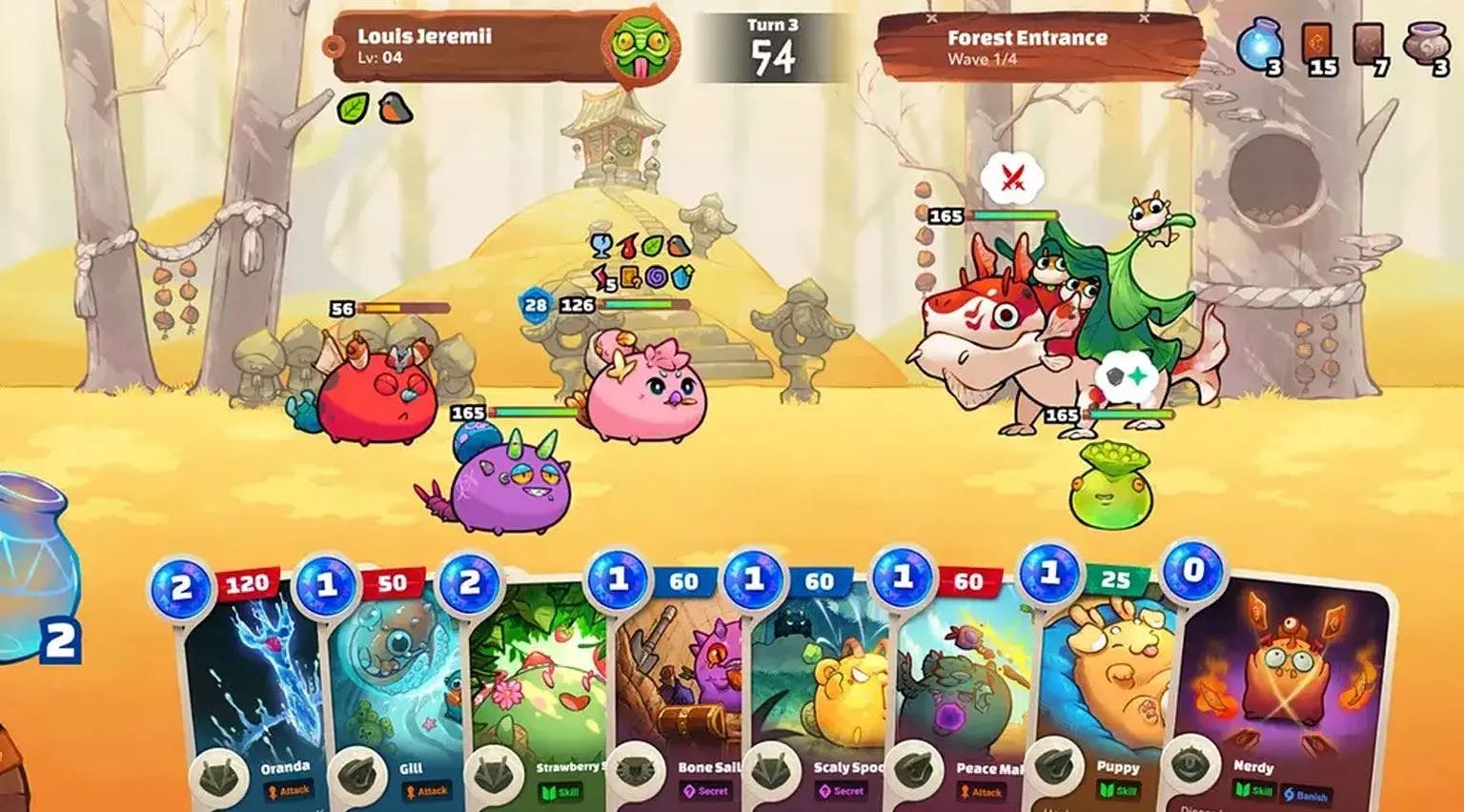
Source: Axie Infinity
Overall, the game was funded with more than $300 million by various investors. The game developer, Sky Mavis, also created their own blockchain, Ronin, specifically designed for blockchain games. GetBlock supports Ronin RPC nodes, so we invite all Web3 game developers to join us and try it.
The Sandbox
Website: https://www.sandbox.game/
Genre: Sandbox metaverse game with in-game property, events, and 3D design toolset
Launch year: 2012 as a Web2 game, 2021 as a metaverse platform
The Sandbox is one of the oldest blockchain games, which began as an ordinary sandbox game in 2012, featuring pixel graphics similar to those of Minecraft. In 2018, it was acquired by the blockchain company Animoca Brands and then re-released in 2021 as a metaverse platform. It has a built-in creator tool called VoxEdit, and all the stuff that can be found in its virtual worlds is created by users. Each item is recorded onchain as an NFT and can be fully owned by players.
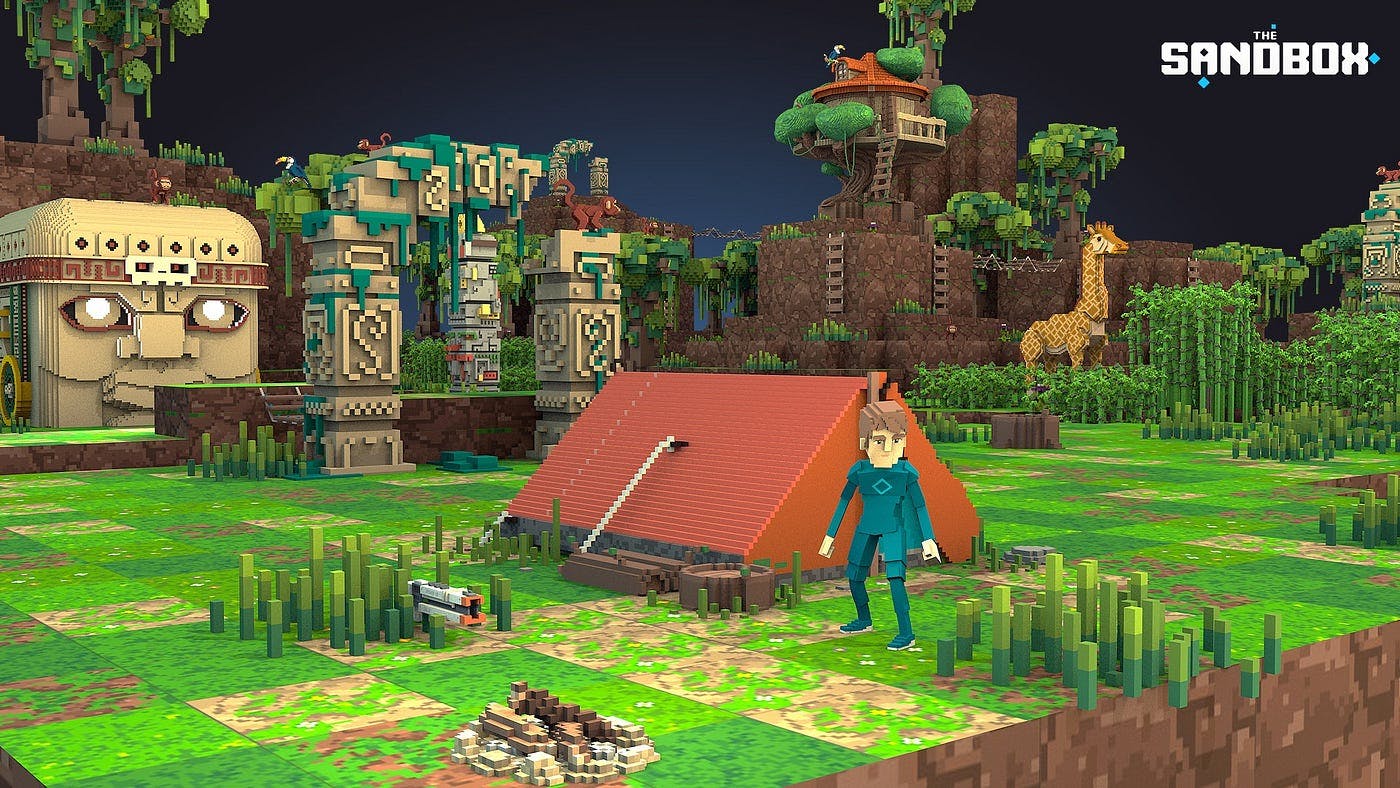
Source: The Sandbox
The Sandbox was funded with more than $100 million, and its overall valuation is estimated at more than $1 billion. While its peak was in 2021, similar to many other NFT and metaverse companies, it’s thriving in 2025, too. With a robust creator ecosystem and cooperation with various brands, it expands blockchain and metaverse technologies to various uses. Along with our next pick, Decentraland, it’s one of the largest blockchain companies.
Decentraland
Website: https://decentraland.org/
Genre: Sandbox metaverse game with in-game property, events, and 3D design toolset
Launch year: 2020
Decentraland is similar in many ways to Sandbox, and they both are the top players on the public metaverse market. It offers a creator hub where users can build various 3D assets, from cloth and furniture to animated characters and immersive experiences. It uses an Ethereum-based token, MANA, for in-game activities, and players can trade virtual land, estates, and other items, or create their own.
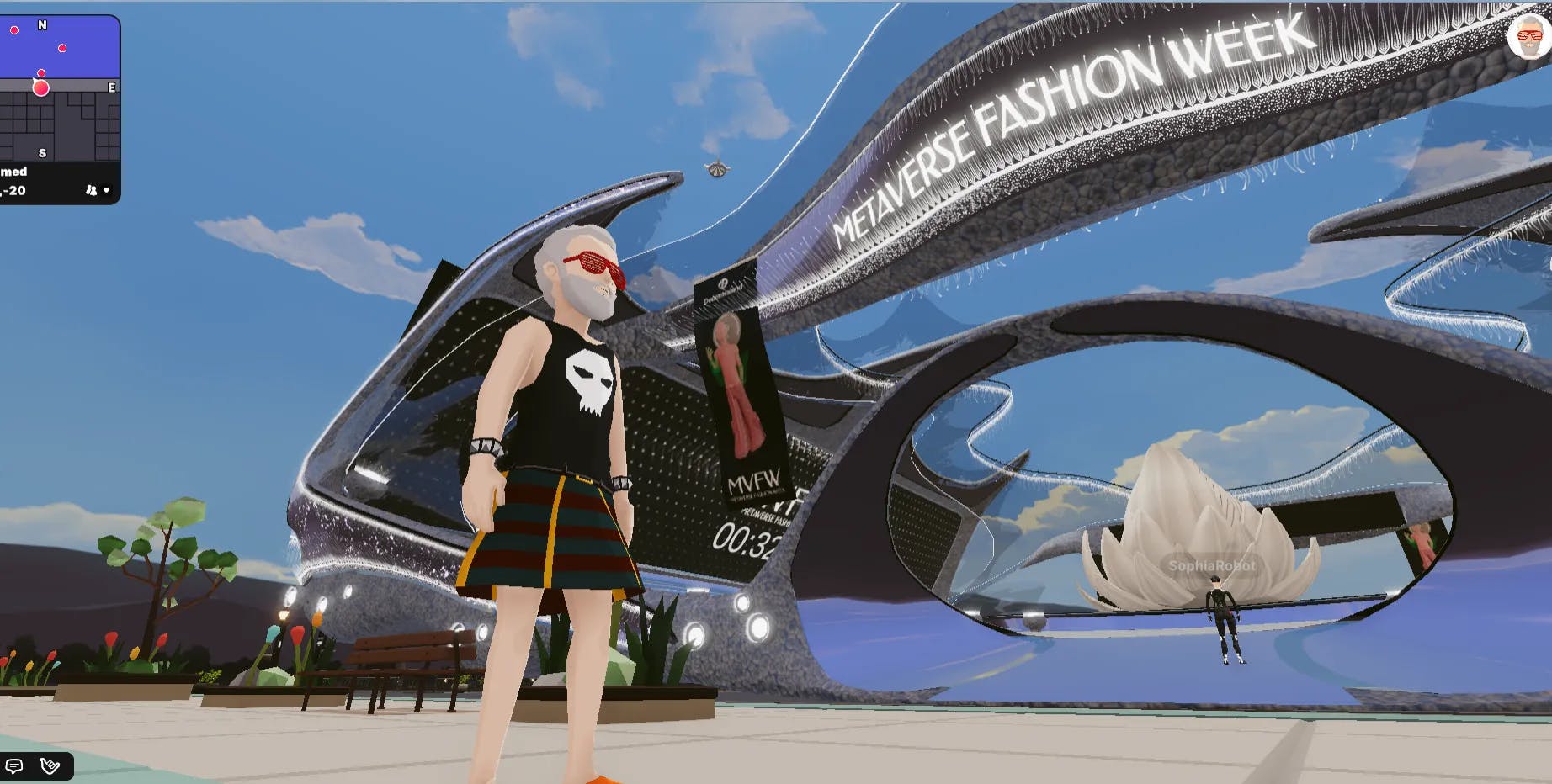
Source: Decentraland & Vogue
While neither Decentraland nor Sandbox is a blockchain game in the proper sense, they are still relevant here. They feature a player-built economy in virtual worlds, with various dynamic events for entertainment. Decentraland has a robust creator economy around it and often cooperates with fashion companies. With a valuation of over $1 billion, it’s one of the largest blockchain companies that brings the metaverse for various uses.
Alien Worlds
Website: https://alienworlds.io/
Genre: Virtual economy and planet exploration simulator with RPG and card game elements
Launch year: 2020
Alien Worlds is a browser game where players use cards to mine resources and build different infrastructure to process them. It uses the Trillium (TLM) token as an in-game currency, which can be mined and used to purchase avatars, weapons, tools, and other items, which are recorded onchain as NFTs. The game uses the WAX blockchain, designed specifically for in-game identities, but also supports Ethereum.
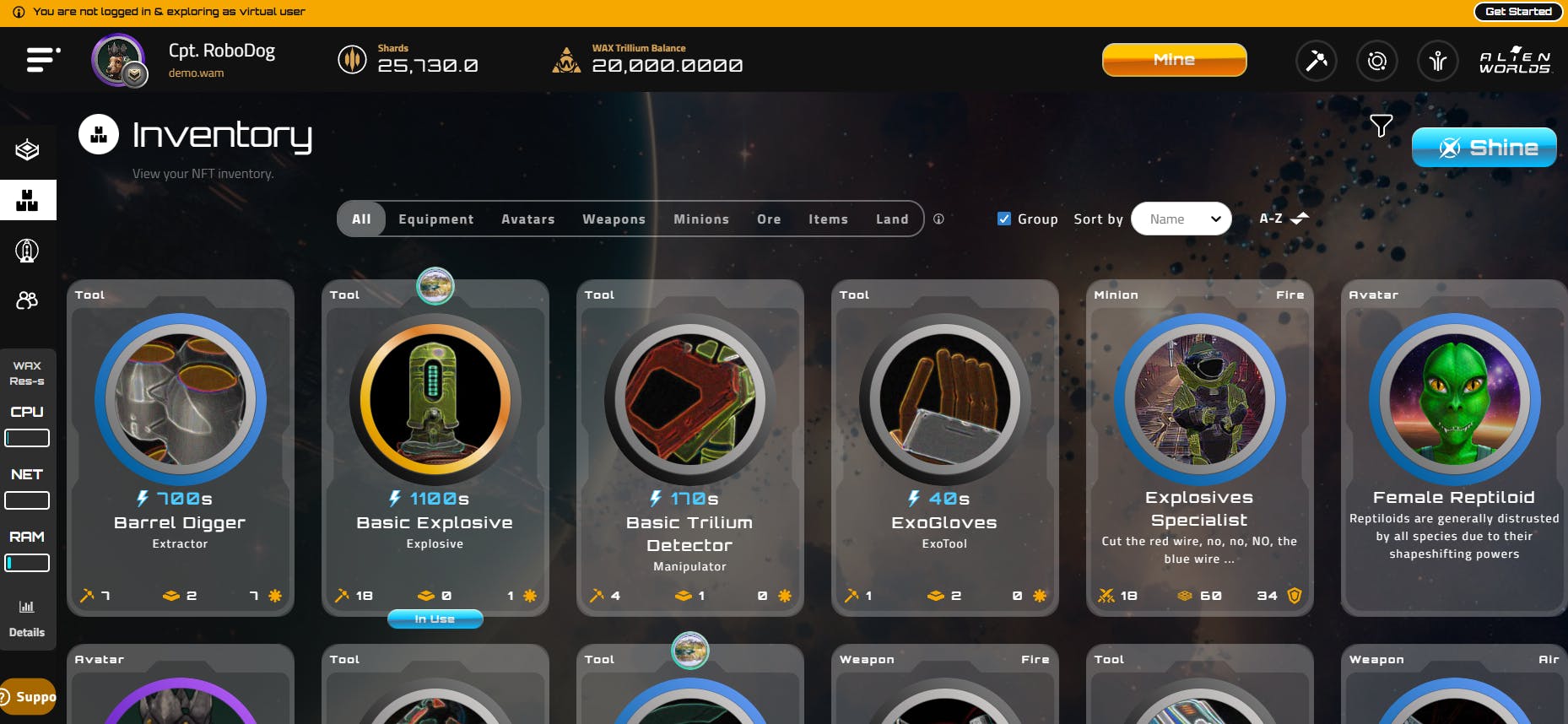
Source: Alien Worlds
With tens of thousands of active users, it’s one of the most active blockchain games. It also attracted the attention of various investors and was funded with at least $3 million. So, this quite simple game has an active player economy and offers a variety of ways to manage in-game crypto assets.
Illuvium
Website: https://illuvium.io/
Genre: 3D shooter with RPG and pet collector elements, and various virtual worlds
Launch year: 2024
Illuvium is a shooter game, where players explore various virtual worlds and search for mysterious creatures called Illuvials, which can be hunted and collected. It features various play modes, such as Arena for PvP battles, Zero for building, and Overlord for exploring the world and hunting Illuvials. Players can start for free, while in-game assets can be traded on a specially designed IlluviDEX.
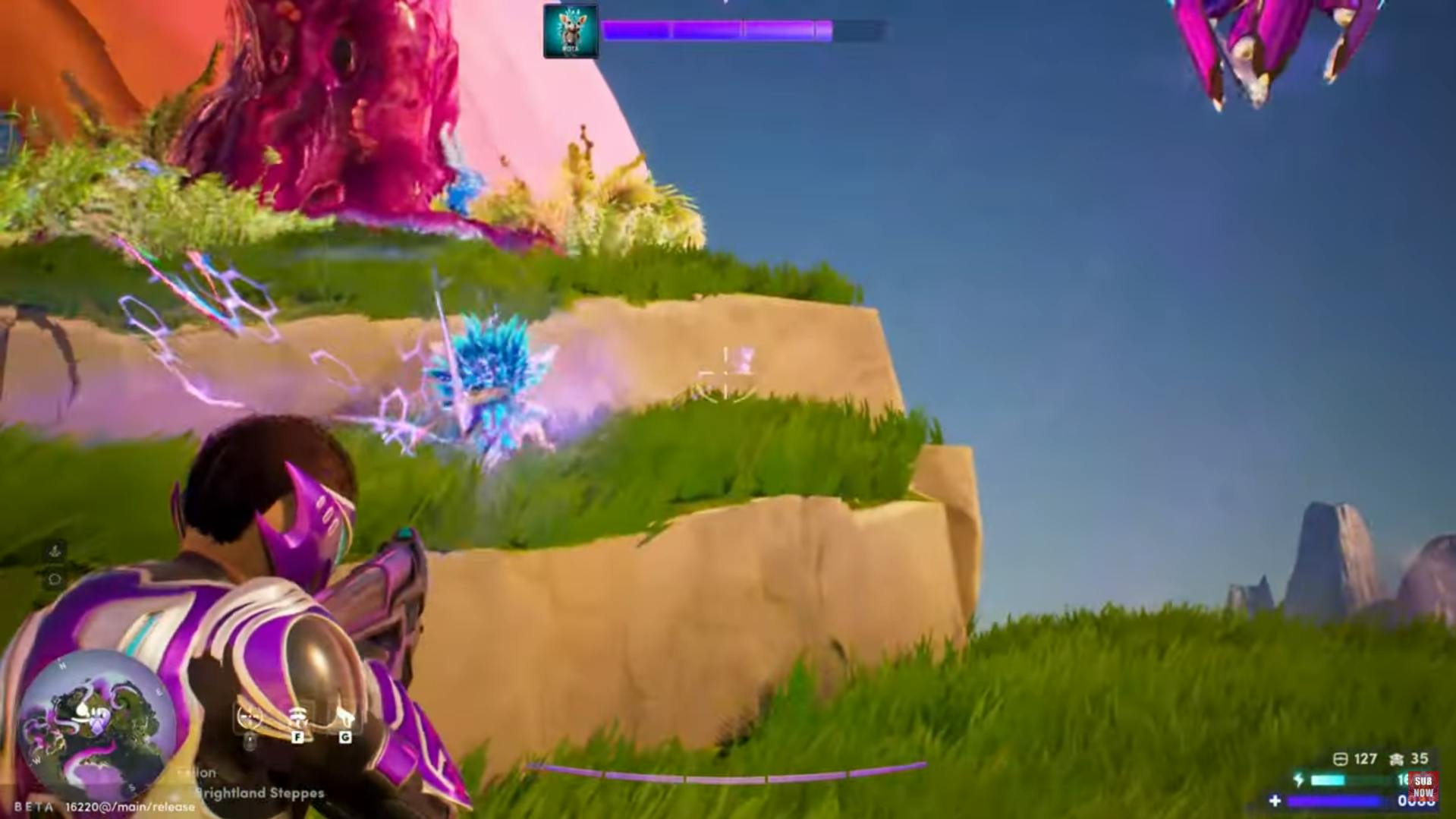
Source: Illuvium
Illuvium allows various in-game activities and high interactivity, with vibrant graphics and RPG elements. All game assets are fully player-owned and stored on the Ethereum blockchain. It secured more than $60 million in funding and attracted thousands of players, which highlights its success.
World of Dypians
Website: https://www.worldofdypians.com
Genre: Action MMORPG with an open virtual world and player economy
Launch year: 2023 (early access)
World of Dypians is a fantasy action MMORPG, currently in development and available via early access. It features an open in-game world with various activities available, from PvP and PvE to special in-game events, resource gathering, and building virtual world assets. It uses the WOD token to drive the in-game economy, originally launched on the BNB Smart Chain, but now the game supports many other chains, including Ethereum, Base, Sei, and Core.
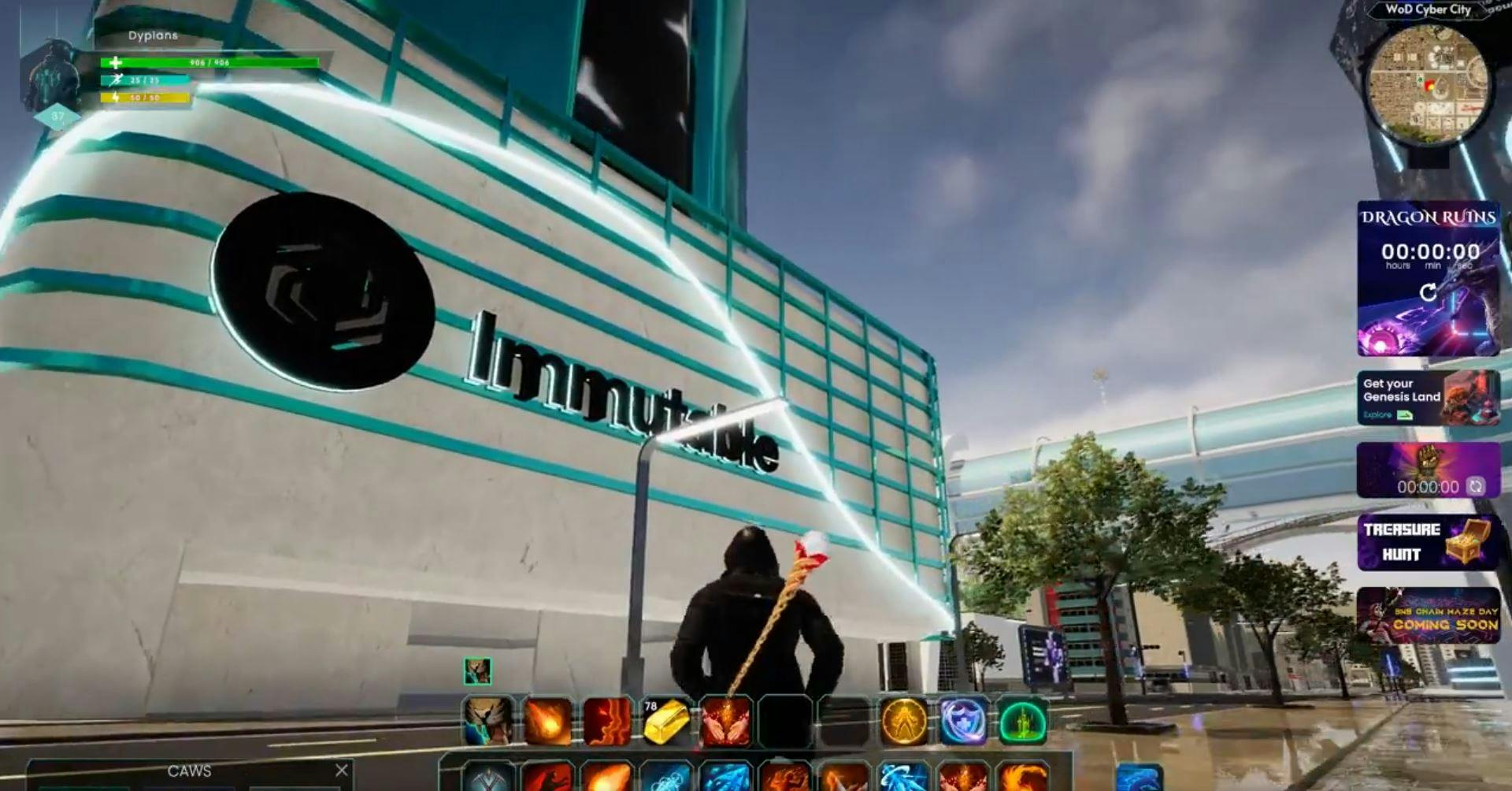
Source: World of Dypians
The game attracted the attention of various investors and was funded with more than $10 million. It already attracted thousands of users around the world, while in early access. With its vibrant graphics and active virtual world, it redefines the future of massive multiplayer online games.
Gods Unchained
Website: https://godsunchained.com/
Genre: Turn-based tactical card game
Launch year: 2019
Gods Unchained is a tactical card game where players need to beat each other using cards with specific properties, similar to popular titles like Magic: The Gathering and Hearthstone. Here, however, players fully own their cards, which are recorded onchain using Ethereum and Immutable blockchains. They can be traded, and new cards can be crafted, using the GODS token, which drives the game player economy.
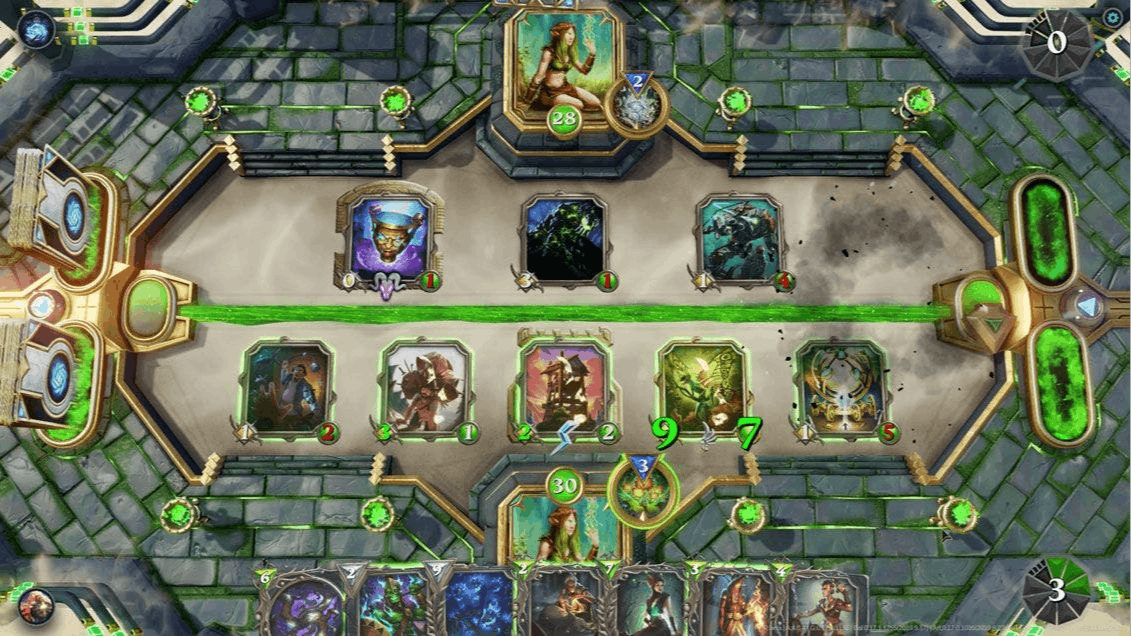
Source: Gods Unchained
The game was developed by Immutable, the company that later launched its own blockchain for Web3 game development, Immutable zkEVM. With an active player community and more than $15 million in funding, the game is a bright example of tactical card crypto games. Note that GetBlock supports Immutable RPC nodes, so Web3 game developers are free to choose among platforms if working with us.
Star Atlas
Website: https://staratlas.com/
Genre: Virtual economy and space exploration simulator with MMORPG elements
Launch date: 2025 (early access)
Star Atlas is a massive exploration sci-fi game, currently in development, with available early access. It’s set up in the far future with space exploration, resources to harvest, and various technologies that can be built and upgraded. All these assets and in-game money are recorded onchain as Solana tokens and are, therefore, in full player ownership.
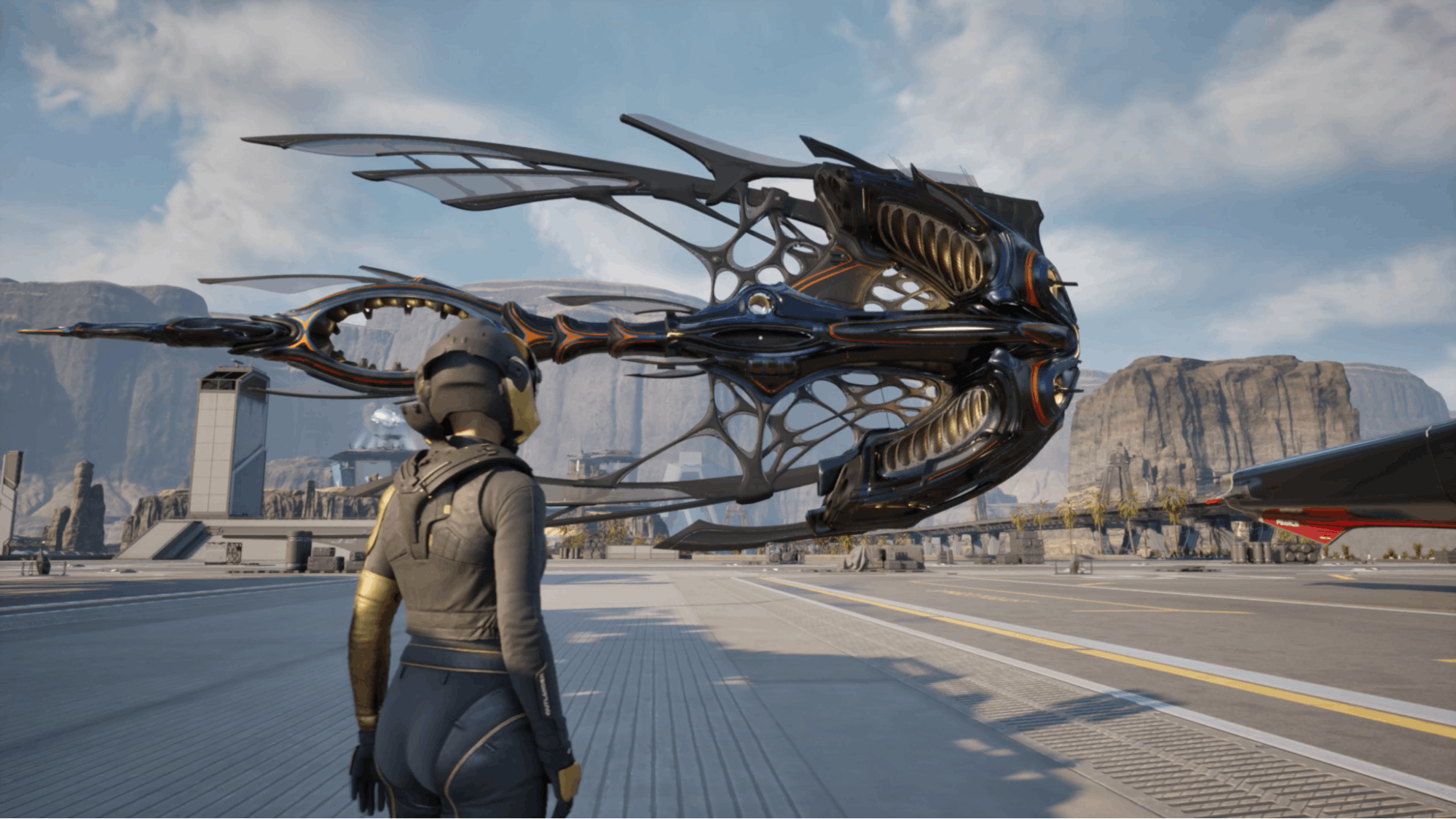
Source: Star Atlas
Overall, Star Atlas is a big and extensive project, and a large part of it is still in development, which began as early as 2020. It also received more than $20 million in total from investors, as well as about $12 million during its initial coin offering (ICO). Many details of the large virtual world aren’t ready yet, but the game has already attracted thousands of players and has an active player economy.
How to choose a Web3 game
To summarize our selection, here is a quick checklist of how you can select the best Web3 game depending on how you want to spend your time.
Do you want to spend time with people and participate in activities? If yes, select the metaverse project, such as The Sandbox or Decentraland.
Do you want more action? Select Illuvium or another Web3 shooter-like game for highly interactive experiences.
Do you want an easy and relaxing gameplay experience? Select the virtual pet game like Axie Infinity, where you’ll spend time with cute creatures you’ll raise yourself.
If you’re eager to explore the game world with its peculiarities, select the Web3 MMORPG with a well-elaborated open world, such as World of Dypians or Star Atlas
If you look for solving interesting puzzles with a simple interface, look for elaborated tactical card games, like Gods Unchained or Alien Worlds.
Also, here are points to check the project’s trustworthiness.
Check the tokens used by the game: search the information about them, monitor their price, and look at NFT marketplaces to see how healthy its in-game economy is.
Explore the game community and ecosystem, read its documentation, and look for its development roadmap: these will show you the project’s potential.
Search for the game’s security audit reports, which are crucial to ensure that your in-game assets cannot be accessed by malefactors.
Playing Web3 games may seem a bit less intuitive compared to more traditional Web2 games, but once you understand the basics of blockchain-based services, it becomes even more fun and interesting. As you own your game assets, you can benefit from them, while in traditional games, their developers and publishers are the only ones who reap benefits.
Why Web3 games need reliable infrastructure
As one can see, blockchain games support the whole in-game economy that consists of numerous user assets and tokens used as in-game currency. Each asset transaction or creation is an action that requires sending RPC requests to call the blockchain method and record the data onchain. Hence, the need for a robust infrastructure is crucial.
For large and aspiring Web3 game developers, RPC node providers can be the best partners, as they ensure the stable functioning of all components of their game ecosystems, while their players can have fun and get assets. And if we’re talking about GetBlock, you can also get a popularity boost by cooperating with our marketing team.
And not only that. Contact us now to learn more, and let’s build together!
Conclusion: Future of player-centered gaming
With the development of blockchain technology, games become truly player-centered, enriching their experiences and giving them opportunities to actually benefit from their activities. Achievements become connected with the player’s onchain identities, and all items received from killing monsters and gathering resources are minted and recorded onchain. In-game property, from pets to real estate, becomes tokenized, too.
As a result, game economies become actually alive and interconnected, instead of being just simulations fully dependent on the game companies. Developers, on the other hand, get much more creative freedom in building their gaming ecosystems. With the growth of the industry, experienced gamers and Web3 users alike will find much more satisfaction and opportunities.
GetBlock isn’t just passively observing the rise of blockchain gaming: we provide games with the highly resilient Web3 infrastructure to secure their players. And not only that: we support projects with our technical expertise and marketing opportunities, helping them attract players and find funding. We’re open for collaboration with innovative gaming projects on all stages of development, and if you feel it’s a match—sign up now to check the GetBlock infrastructure!
FAQ
How are Web3 games different from traditional games?

Are Web3 games safe and legit?
How do play-to-earn games pay rewards?
What do I need to start playing Web3 games?
Can I play Web3 games on mobile?


Popular Posts

June 9, 2021
4 min read

November 9, 2021
5 min read

May 24, 2022
5 min read

March 18, 2021
4 min read


