
Best Solana RPC Node Providers 2026

Deen Newman
February 6, 2026
11 min read
Solana RPC shopping has gotten more complicated in 2026 because workloads have gotten more demanding. Fortunately, the provider ecosystem is broad enough that you can choose infrastructure based on what your application actually needs.
This guide lists the top ten Solana RPC node provider options based on performance benchmarks, scalability, updated pricing, and specialized tooling for interacting with the chain more efficiently.
The goal is not to rank providers, but to discover which trade-offs each provider makes and which use cases they are best suited for.
Top 10 Solana RPC providers list
Here’s a high-level comparison of the prominent Solana RPC providers in 2026.
Metrics include:
Solana RPC performance: observed latency and throughput scalability
Pricing models & pricing based on publicly available plans as of February 2026
Free tier capacities, critical for seamless onboarding, adequate testing, or early development
Notable tools and services for advanced RPC functionality
Provider | Pricing Model | Paid Tiers (Shared RPC) | Free Tier Limits & Features | Free Solana RPC latency (p50/p95) | Global Solana Pro Latency (avg) | Max Throughput (Shared Plans) | Specialized Solana Tooling |
GetBlock | CUs, monthly | $49, $199, $499, $999 + 20% annual discounts | 50K CUs/day, 20 RPS – MEV protection, geo selection, professional support | 58 ms / 161 ms | 110-130 ms | 1,000+ RPS | fast tx delivery, low-latency streams, MEV protection, gRPC / Yellowstone, indexed archive |
Helius | Credits, monthly | $49, $499, $999 + 16% annual discount | 1M credits/m, 10 RPS — Webhooks, archive data | 97 ms / 197 ms | 100-140 ms | 500 RPS | Staked Connections, Sender, LaserStream gRPC, archive APIs, webhooks |
QuickNode | API credits, monthly | $49, $249, $499, $999 + 15% annual discounts | 10M API credits/mo, 15 RPS (31-day trial) — Streams, Webhoks, archive data | 74 ms / 232 ms | 60-70 ms | 500 RPS | gRPC, Transaction Fastlane, MEV protection, webhooks, marketplace add-ons |
Alchemy | CUs, PAYG | $5 - $2,000 | 30M CUs, 25 RPS — | 66 ms / 170 ms | ~40-60 ms | 300 RPS | Archival & streaming tooling, Smart Wallets |
Triton One | Monthly plans | $500+ | No free plan | – | 50-100 ms | varies, default: 1,200 req / 10 sec | Project Yellowstone components, indexes, trading plumbing, hybrid deployment |
dRPC | CUs, PAYG | From $6 per 1M requests (~ 20M CUs) | Currently, doesn’t offer free Solana endpoints | – | 140-150 ms | up to 5,000 RPS | MEV protection |
Ankr | API credits, PAYG & monthly | from $10 per 100M credits | 200M credits, ~30 RPS — Devnet only | 71 ms / 254 ms (devnet) | 100-200 ms | up to 4,000 RPS | — |
Chainstack | Request Units, monthly | $49, $199, $349, $990 + 16% annual discounts | 3M RUs, 25 RPS | 82 ms / 140 ms | 200-400 ms | 600 RPS (custom with Enterprise) | Yellowstone gRPC, Warp transactions |
Blockdaemon | CUs, monthly | Custom | 3M CU/mo, 5 RPS | 350 ms / 576 ms | 160-250 | 200 RPS | HA clusters |
Validation Cloud | CUs, PAYG | $0.35-0.50 per 1M CUs | 50M CUs | 145 ms / 289 ms | ~130 ms | No rate limits for most methods | DeFi APIs |
*We benchmarked free-tier Solana RPC endpoints using the MilliNet tool. Each provider was tested with 1,000 requests, 1.1s spacing, identical JSON-RPC payload. Reported median and tail-latency metrics are aggregated across runs.
Global Solana RPC latency figures are mainly sourced from CompareNodes’ Solana PRO public dashboards covering paid plans. Any alternative sources are mentioned per provider below.
Verify these results. Sign up for GetBlock and set up endpoints in your nearest region. See which one delivers the lowest latency for your case – <58 ms Solana latency even on the free tier.
1. GetBlock – Multi-chain provider with strong Solana RPC optimizations
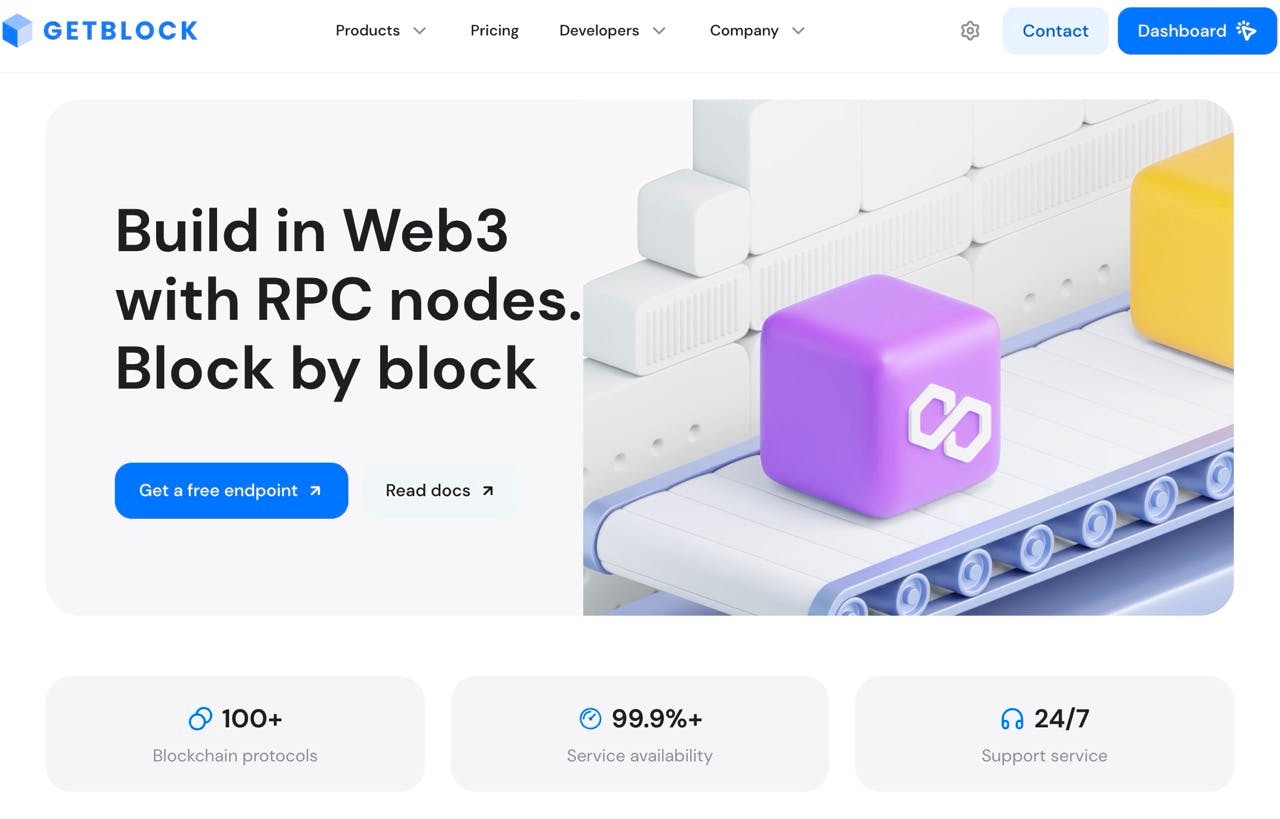
GetBlock is a multi-chain infrastructure service offering low-latency, region-targeted Solana RPC access, turnkey dedicated infrastructure, and specialized tools for transaction optimization, data streaming, and trading.
Key strength:
Geo customizability: Users choose which regional endpoint or node to connect to
Verified low-latency Solana performance across multiple regions – the fastest provider in Europe, Asia, and Africa
Dedicated Node service with free Yellowstone gRPC, highly customizable
Specialized tools for transaction landing and low-latency Solana streaming (StreamFirst, LandFirst)
Professional trading infrastructure
Additional tooling via add-ons (Jito bundles, DAS API, etc.)
Archive nodes and indexed archive API
Scalable throughput on shared tiers
Powerful free tier with geo optimization and MEV protection
Fast support at all tiers, hands-on engineering assistance on top tiers
Solana is supported alongside 100+ other networks
Pricing:
Free tier: 20 RPS, 50k daily CUs
Subscriptions: From $49/mo (200 RPS) to $999/mo (custom tuning to over 1,000 RPS)
Dedicated Solana nodes: $2,200-$3,200
Solana RPC performance:
Global average latency: 110-130 ms (EU: below 20 ms, MEA: ~100 ms, Asia: ~147 ms)
Free endpoints latency: 57.5 ms (p50), 160.6 (p95)
Uptime: 99.9%+ SLA on paid tiers
Cons:
Most Solana-specific advanced features are tied to dedicated nodes
Best for: High-volume apps that need low-latency, region-selectable Solana access, turnkey dedicated node service, and engineering assistance for complex custom configurations.
Deeper dive: Read more on how GetBlock achieved #1 EU Solana performance and expanded to the APAC region with impressive performance improvements.
2. Helius – Solana-native infrastructure leader
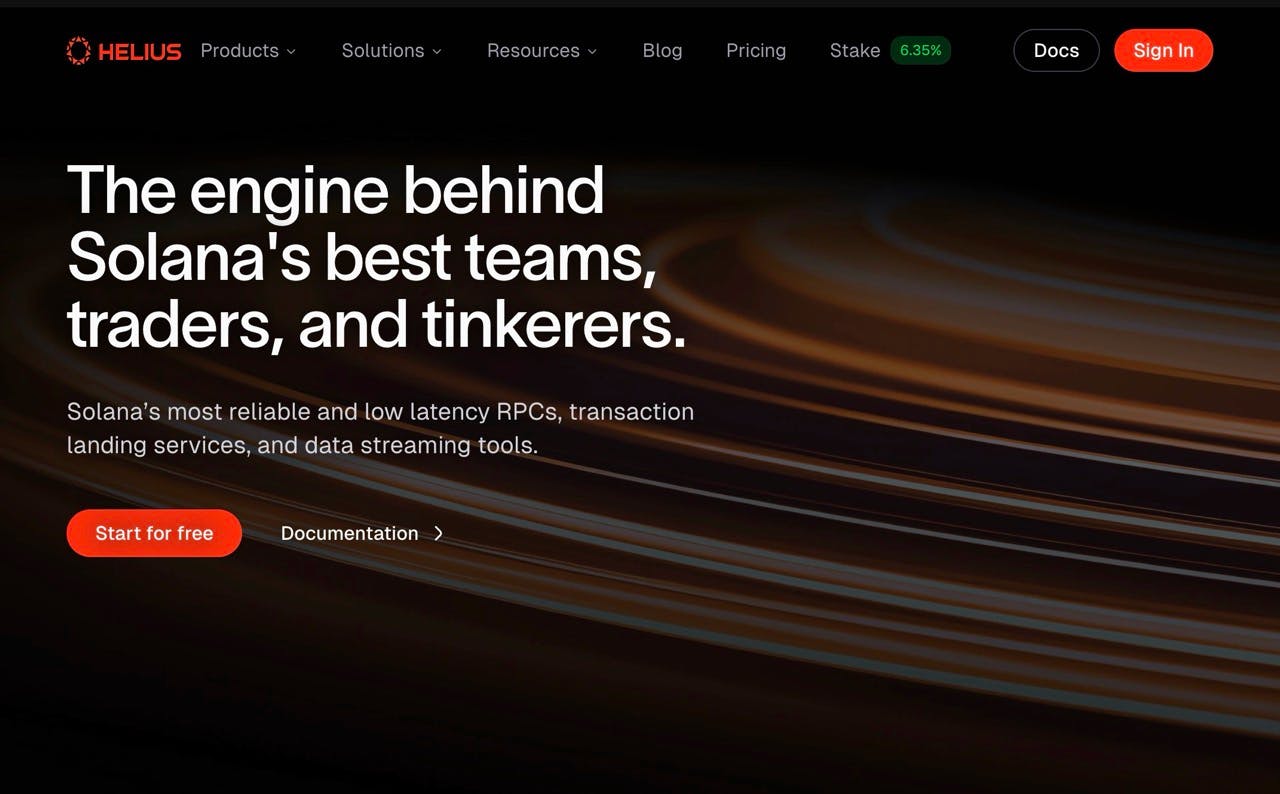
Helius is a Solana-exclusive RPC and data platform purpose-built for the Solana ecosystem. It operates as one of the largest Solana validators while providing comprehensive infrastructure services.
Key strengths:
Multi-region coverage: auto-routing to 11 global endpoints across 3 continents
Solana-native expertise
Staked validator routing
Webhooks, SDKs, custom archival methods & APIs, low-latency transaction delivery (Sender), and data streaming tools (LaserStream gRPC)
Pricing:
Free tier: 1M credits/mo, 10 RPS
Monthly subscriptions: from $49/mo (50 RPS) to $999/mo (500 RPS);
Custom Enterprise pricing
Dedicated low-latency streaming nodes: from $2,900/mo
Performance:
Global average latency: Some external benchmarks report around 140ms
Free endpoints latency: 96.5 ms (p50), 196.9 ms (p95)
Uptime: 99.99% for Enterprise
Cons:
Solana-only – no multi-chain support for teams building across ecosystems
Lower included RPS at comparable pricing tiers relative to some competitors
Large pricing gap between entry and business plans
Lacks public latency benchmarks
Best for: Solana-exclusive projects and builders requiring ready-made Solana-specific endpoints.
3. QuickNode – Multi-chain platform with rich Solana add-on ecosystem
QuickNode is a multi-chain blockchain infrastructure provider supporting 80+ blockchains with emphasis on speed and reliability.
Key strengths:
Multi-region load balancing and automatic failover across regions
Archive data, streams, webhooks, IPFS services, and SDK
Dedicated setups for enterprise customers
Extensible functionality with Add-ons Marketplace, including Yellowstone gRPC, Jito bundles, Transaction Fastlane, and helper APIs
Multi-chain breadth: 80+ blockchains for cross-ecosystem development
Pricing:
Free trial: 10M API credits, 15 RPS
Monthly subscriptions: from $49mo (50 RPS) to $999/mo (500 RPS)
Custom Enterprise pricing
Performance:
Average Solana RPC latency: 40-70 ms (Data from QuickLee dashboard - low-frequency getBalance calls from multiple cloud regions)
Free endpoints latency: 74.2 ms (p50), 232.4 ms (p95)
Advertises 99.99% uptime
Cons:
No ongoing free tier: Only trial credits available, then paid plans required
No third-party latency verification of low-performance claims
Overages are billable, which can increase monthly costs
Best for: Multi-chain teams requiring unified infrastructure and tooling extensibility via add-ons.
4. Alchemy – Archive-optimized infrastructure
Alchemy is a Web3 infrastructure platform specializing in multi-chain developer tooling. Since 2025, the platform has been expanding deeper into Solana infrastructure, following the DexterLab acquisition.
Key strength:
Multi-region infrastructure with autonomous failover
Purpose-built stack for optimized archival RPC and streaming performance
Additional Solana tooling includes webhooks, NFT & token APIs, Smart Wallets, an MCP server, and gRPC
Verified low-latency performance in N. America and Asia
Pricing:
Free: 30M CUs, 25 RPS
Pay-as-you-go: from $5 to $2,000 (up to 5B CUs, 300 RPS)
Enterprise: Custom
Performance:
Average latency: ~40-60 ms global response time average due to strong performance in N. America and Asia (EU: ~30 ms)
Free endpoints latency: 66.2 ms (p50), 169.8 ms (p95)
Targets 99.99% uptime
Cons:
Throughput is limited to 300 RPS even on the highest shared plans, which may cause unpredictable latency under concurrency
Scaling requires an Enterprise deal
Does not offer a dedicated node product
Best for: Data-heavy applications and multi-chain teams needing consistent tooling across chains.
5. Triton One – Premium infrastructure vendor
Triton One is a Solana-focused (also Sui, Pythnet) infrastructure provider founded by early Solana believers, reinforcing its credibility via technical innovation leadership, e.g., Project Yellowstone that revolutionized Solana's RPC layer.
Key strength:
Infrastructure and tooling built around Solana’s execution and networking model
Geo-distributed cluster with performance-based routing
Hybrid deployment options that isolate frontend and backend workloads
Custom indexes, APIs, SDKs, plus streaming and transaction delivery reliability tooling
24/7 engineer-led support
Pricing:
Shared RPC: $500/mo (1,200 req per 10 seconds, heavy methods limited separately)
Dedicated nodes: from $2,900/mo (custom limits)
Hybrid Shared + Dedicated: from $3,400/mo
Performance:
Average reported latency: 50–100 ms, depends on specific optimizations
Cons:
Enterprise-oriented pricing and access
Shared endpoints are available for frontend usage, but are not positioned for high-throughput backend workloads
Most tools beyond standard RPC add extra costs
Best for: Enterprise applications, backend-heavy Solana workloads such as trading systems, high-frequency MEV strategies, and indexers.
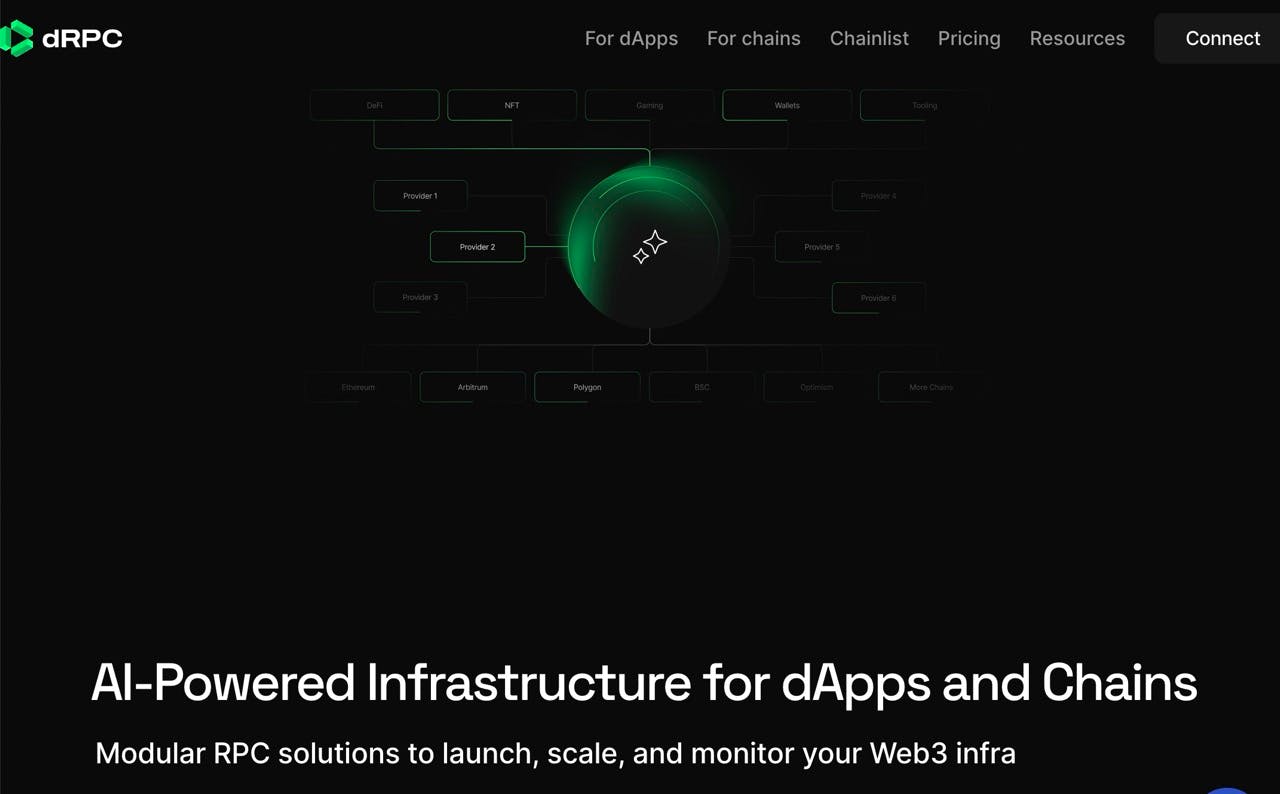
6. dRPC - Raw-throughput-focused RPC aggregator
dRPC is a decentralized RPC infrastructure aggregator that supports access to over 100 blockchain networks.
Key strength:
Distributed routing across a global network of 60+ independent node operators
AI-driven load balancing to optimize reliability and availability
Paid plans support extreme throughput, built-in frontrunning protection, and archive queries
Straightforward pay-as-you-go pricing
Broad multi-chain coverage
Open-source NodeCore stack for custom deployments
Pricing:
Pay-As-You-Go: $6 per 1M requests (~5,000 RPS)
Custom Enterprise pricing
Performance:
Global average latency: ~140-150 ms
99.99% uptime target for paid plans
Cons:
A rotating operator pool may introduce performance variability
Limited Solana-specific tools, focus on generic RPC
Temporarily not providing free Solana RPC endpoints
Best for: Projects prioritizing decentralization or high-throughput basic HTTPS/WSS access over Solana-specific optimizations.
7. Ankr – Multi-chain provider with basic Solana access
Ankr is a multi-chain RPC and infrastructure provider that exposes Solana JSON-RPC through its Node API service.
Key strength:
Multi-operator node fleet (DePIN model) with region routing
Fixed predictable Solana credit cost – 500 credits per request
Scalable throughput on paid plans
Performance:
Market comparisons place average Solana RPC latencies in the ~100–200 ms ballpark
Free endpoints latency: 71.2 ms (p50), 253.8 ms (p95)
Uptime: 99.9% SLA (Enterprise)
Pricing:
Free: ~30 RPS, 200M API credits/mo
Pay-as-you-go: from $10 per 100M API Credits (can burst up to 4,000 RPS)
Monthly subscriptions: from $500 (per 6B API Credits) to $3,000
Enterprise: Custom
Cons:
Solana mainnet RPC access requires a paid plan
Does not focus on Solana-native features
Advanced API and gRPC services do not cover Solana
While extremely scalable, PAYG pricing can make sustaining 4k RPS for a month expensive
A decentralized model results in variable performance
Best for: Easy multi-chain coverage and testing workloads. Inconsistent performance reports make it a high-risk choice for reliable production.
8. Chainstack – Multi-chains platform with standard Solana coverage
Chainstack is a multi-protocol blockchain platform supporting 70+ chains across its product line, positioning itself as a developer-friendly infrastructure platform with a straightforward pricing model.
Key strengths:
Geo-load-balancing with auto routing to the nearest available region
Trader Nodes and Dedicated Nodes
Yellowstone gRPC Geyser Plugin
Solana MCP server
Simple request-based pricing – Request Units (RUs)
Pricing:
Free: 3M requests, 25 RPS
Monthly subscriptions: from $49/mo (250 RPS) to $990/mo (custom RPS)
Billed separately: Unlimited Node with RPS-capped unlimited requests – from $149/mo (25 RPS); Trader Node – $0.15 per transaction; Dedicated Solana Node (full): ~$3,577/mo, per hour billing
Performance:
Average Solana RPC response times per region: EU – 298 ms; SG – 207 ms; US West – 406 ms (Data from Chainstack Compare Dashboard - Growth plan)
Free endpoints latency: 81.8 ms (p50), 140.1 ms (p95)
SLA (Enterprise): 99.9% quarterly uptime
Cons:
Limited Solana-specific tools
Support costs extra: $1,000/year for 24/7 support, $10,000/year for a dedicated account manager
Requires a paid subscription before you can purchase Dedicated, Unlimited, and Trader Nodes – these are not standalone products you can buy without a qualifying plan
Best for: General blockchain development where Solana is one component among many protocols, not the primary focus.
9. Blockdaemon – Unified staking & RPC platform
Blockdaemon is a full-stack institutional infrastructure platform offering validator and staking operations combined with RPC API services across multiple chains, including Solana.
Key strengths:
Validator & staking ecosystem integration
Load-balancing and failover tooling built into the RPC stack
Focus on custom enterprise deployments and high availability RPC clusters
DeFi APIs, Wallet SDK
Pricing:
Free: 3M CU/mo, 5 RPS
Monthly subscriptions: Custom pricing from $63.75 (200–400 RPS)
Enterprise: Custom
Dedicated nodes: from $1,799-4,799
Performance:
Average global latency: 160-250 ms
Free endpoints latency: 350.0 ms (p50), 576.0 ms (p95)
Uptime: 99.9% SLA (dedicated nodes)
Cons:
Pricing is not public on the website
Low free-tier RPS
Shared RPC tiers are low on throughput
Less suitable for early-stage apps or budget-conscious developers
Limited Solana tooling
Best for: Institutional applications or projects wanting to combine RPC with validator and staking services.
10. Validation Cloud – Usage-based RPC economics with minimal rate limiting
Validation Cloud is a blockchain infrastructure platform offering a suite of tooling and services, including RPC access across dozens of blockchains with Solana support.

Key strengths:
Multi‑region, globally distributed node network with automatic routing
Also operates as a top-tier Solana validator and provides staking-as-a-service
Volume-based pricing
No per‑second rate limits on general usage except for specific heavy methods
Pricing:
Free: up to 50M CUs
Pay‑as‑you‑go: from $0.50 to $0.35 per 1M CU, depending on volume
Private: Custom CU pricing
Performance:
Average global latency: ~130 ms
Free endpoints latency: 144.8 ms (p50), 288.6 ms (p95)
Uptime: Advertised 99.99% availability
Cons:
Standard JSON-RPC only, minimal Solana-specific features
No crypto payments
Best for: Solid basic Solana RPC access with unique pricing economics and unrestrictive rate-limiting policies.
Wrapping up: How to choose the best Solana RPC node provider
Choosing a node provider depends on specific priorities – no universal winner exists. Evaluate based on your primary constraint (speed, cost, feature depth) and test across providers.
One approach is to identify where each provider shows distinct strengths, for instance:
Speed: QuickNode, GetBlock, Alchemy, Triton One
High-throughput scaling: dRPC, Ankr, GetBlock, Validation Cloud
Free Solana RPC (prototyping, PoCs): Alchemy, Validation Cloud, GetBlock, Ankr, Chainstack
Highly customizable Solana infrastructure: GetBlock, Helius, Triton One
Archival & analytics: Alchemy, Helius, QuickNode, GetBlock
Low-latency streaming or trading: Helius, Triton One, GetBlock, QuickNode, Chainstack, Alchemy
The best validation method is testing providers with your actual workload patterns. Start with GetBlock: Get a Solana endpoint and benchmark against your current provider.
Or contact the GetBlock team directly to talk custom configurations, dedicated nodes with our optimized gRPC suite, advanced transaction landing tools, professional trading infrastructure tailored to your requirements.


Popular Posts

June 9, 2021
4 min read

November 9, 2021
5 min read

May 24, 2022
5 min read

March 18, 2021
4 min read


