

Best Play-to-Earn Games in 2026

Vance Wood
February 16, 2026
16 min read
Web3 games compose an essential component of the blockchain ecosystem. We’ve already explored them to see that they offer direct player ownership of their in-game assets, and as such, they can be used as Play-to-Earn games. Here, we’ll explore how players can earn crypto playing games and the potential risks and drawbacks of these activities. GetBlock offers robust infrastructure for all Web3 projects, so as always, we continue to explore emerging crypto markets.
Spoiler: No, you usually cannot earn yourself for a living while playing the game. Earnings are real, but not quite small and unstable, so it’s much better to view them as a nice addition to your primary income, especially since you earn them while playing. Let’s start exploring!
Summary
Here is the list of the most popular and reliable Play-to-Earn games that can be used as an introduction to this type of game. Many of them may already be known to you, but here we’re going to explore specific ways of earning real-value tokens there.
Axie Infinity
The Sandbox
Decentraland
Gods Unchained
Alien Worlds
Splinterlands
Walken
Honeyland
Crypto Kitties
Crypto Dragons
Forest Knight
League of Kingdom
Skyweaver
All of these games offer different gaming styles and earning rewards.
What are Play-to-Earn games?
You can start your exploration of Web3 games in our dedicated article. Here, we’ll expand this topic further, showing how various games offer ways to earn blockchain tokens, which then can be traded and exchanged on fiat money. Virtually all Web3 games can be described as Play-to-Earn (P2E for short), as they include interacting with in-game currencies and NFTs, which may have real-world trading value if the game is well-accepted by gaming communities.
Core mechanics of P2E
So, it can be said that Web3 games turn gameplay into a form of digital labor or even investment by tying in‑game actions, like PvPs, PvEs, quests, and so on, to tokens and NFTs with real‑world value. See the scheme below for details.
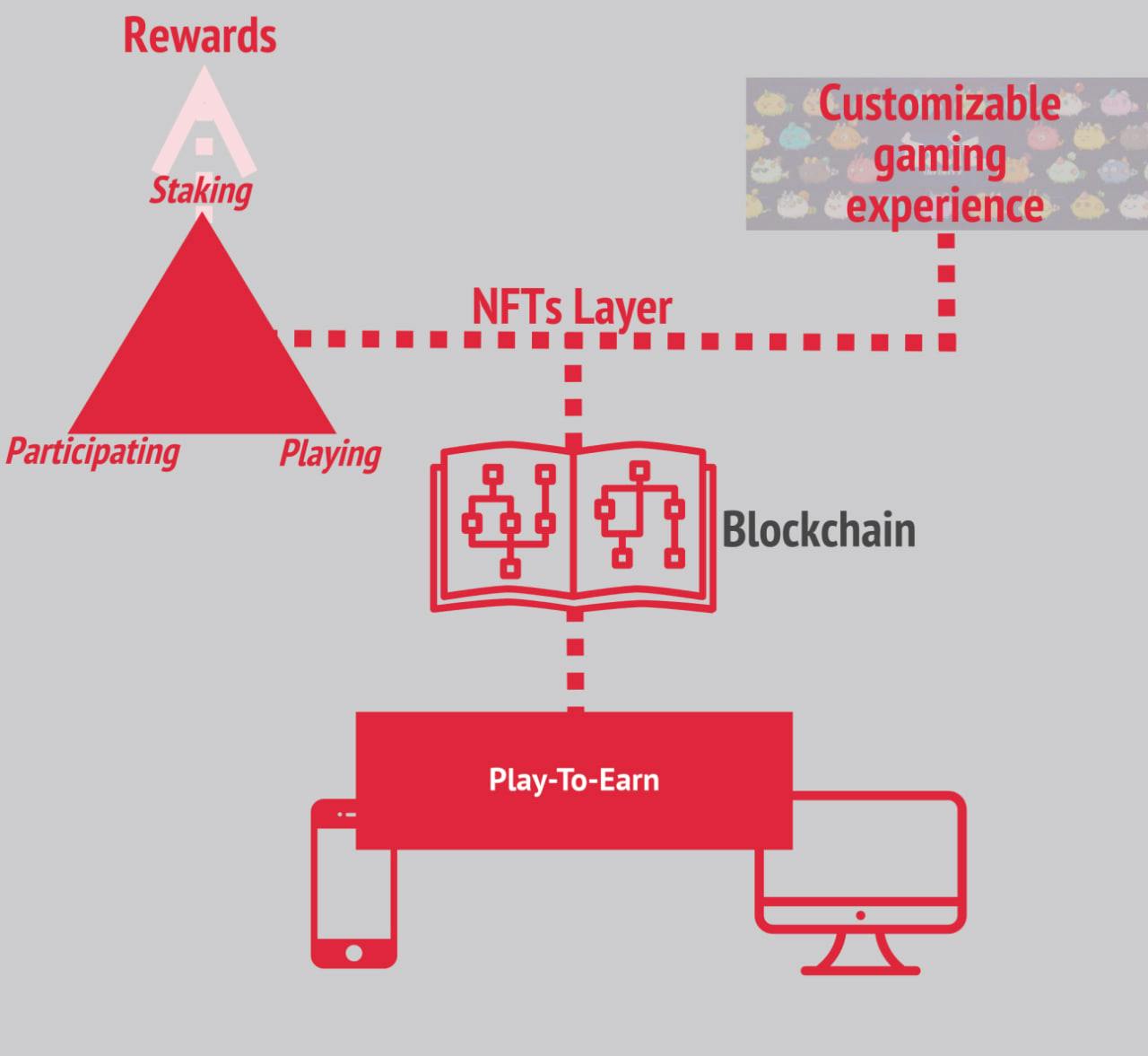
Typical earning features for quests and PvP/PvE include:
Time‑limited missions, daily or weekly, that reward a fixed amount of tokens after completion.
Tiered objectives (“easy,” “medium,” “hard”) that reward tokens depending on the difficulty.
Story‑driven campaigns that grant rare NFT cosmetics or character upgrades as rewards.
Match‑based token payouts: a fixed amount of tokens or a small chance at rare NFT drops per win.
Tournaments and leaderboards: players pay an entry fee in tokens, with the prize pool distributed to the top finishers.
As Web3 games ensure direct user ownership of their in-game assets, be it game currencies or character NFTs, they can freely trade them and often even use them in other games, as these assets are tied to blockchain, not a specific game.
All Web3 games have one crucial component: an RPC infrastructure. If you need it, too, sign up to GetBlock now and select the plan that suits you best.
Blockchain, tokens, and NFTs' role
As mentioned above, players have direct ownership of game assets, which are basically of two types:
Fungible tokens: ordinary tokens/coins, issued on a specific blockchain, which are used for in-game actions, have fixed tokenomics that govern their distribution, and can be traded on exchanges.
Non-fungible tokens (NFTs): unique collectibles, also issued on a specific blockchain, but only in a single exemplar, which can be traded on marketplaces and their price usually depends on their rarity.
What makes P2E Web3 games very distinct from traditional games, even those that also label themselves as P2E, is that earned assets are represented as fungible tokens or NFTs that live onchain, outside the game client. This means:
Players can sell or trade earned NFT items on external marketplaces (Magic Eden, OpenSea, Immutable, or game‑specific NFT shops)
Both tokens and NFTs can often be used across multiple games or DeFi ecosystems, as they conform to common standards (such as ERC-20 or ERC-721)
Various economic loops resembling the real world emerge, such as players renting or staking NFTs to generate income without actively playing every day.
Combined with quests and battles, these mechanics create a spectrum of earning paths: from casual daily‑login players to hardcore grinders, all plugged into the same on‑chain economy. It means much more satisfaction and cool experiences compared to traditional Web2 games, where players usually cannot earn anything or must rely on centralized, controlled economies without free markets.
Best Play-to-Earn games in crypto
Let’s explore several top Web3 crypto games that pay real money to players.
1. Axie Infinity: Iconic P2E pioneer with Axies
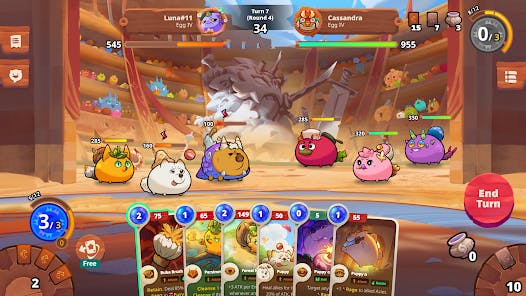
Axie Infinity runs on Ethereum (with Ronin sidechain) and pioneered the P2E space with its Axie NFT creatures that battle in turn-based card combat. Players breed Axies with genetic traits, forming strategic teams, and the game features Origins mode with enhanced mechanics like Meta Morph and Part Evolution.
Source: Axie Infinity
Players earn AXS governance tokens from leaderboards and staking, plus SLP tokens from daily quests and battles.
Arena PvP battles reward SLP based on MMR
Daily quests and Adventure mode grant SLP tokens
AXS staking yields passive token rewards
Top seasonal leaderboard ranks earn thousands of AXS
Breeding Axies creates marketplace-sellable offspring NFTs
High breeding costs and SLP inflation have created economic volatility, while guild structures can lock players into revenue-sharing agreements. Still, Axie remains the iconic P2E pioneer with deep strategic gameplay and a recovering ecosystem, which makes it one of the best Play-to-Earn games.
2. The Sandbox: Metaverse creator economy
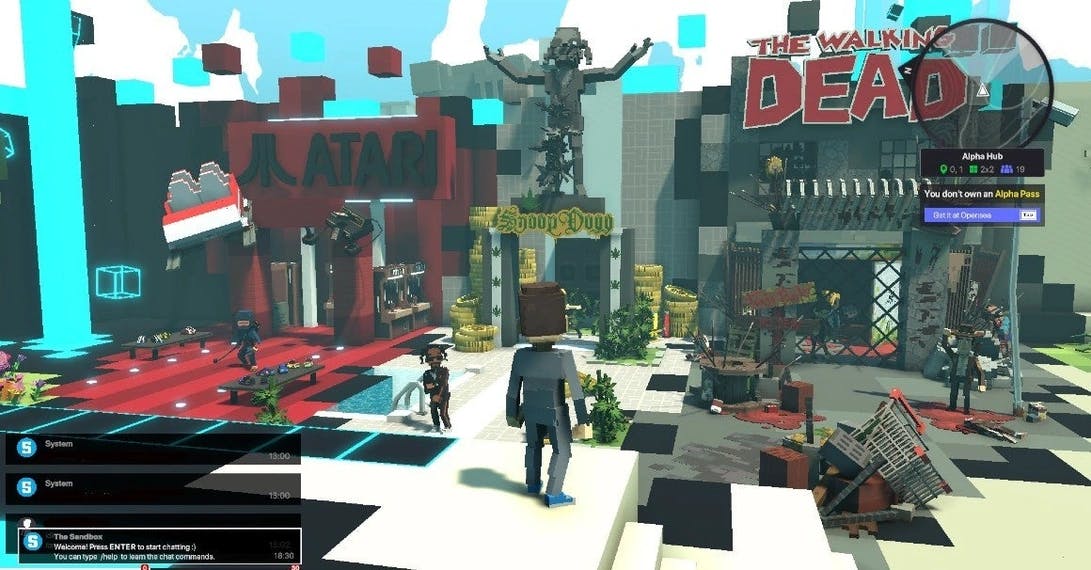
The Sandbox operates on Ethereum and centers on voxel-based world building where players own LAND NFTs and transact with SAND tokens. User-generated games and experiences drive the earning model, with creators monetizing assets through the in-game marketplace and hosting events on their parcels.
Source: The Sandbox
Creators earn SAND by selling voxel assets, hosting experiences, and renting out LAND to other builders.
Voxel asset creation and marketplace sales
LAND NFT rentals generate passive income
Event hosting on owned parcels
LAND owner staking pools reward 7 SAND weekly
Game Maker Gallery launches monetizable experiences
Monetization features are still rolling out, and LAND prices can be prohibitively high for newcomers. The Sandbox excels as a creative platform with strong community-driven content and expanding earning opportunities.
3. Decentraland: Virtual world ownership
Decentraland runs on Ethereum with its MANA token economy and parcel-based LAND ownership system that supports virtual events like concerts and branded experiences. The 3D metaverse emphasizes social and VR interactions, with 90,601 parcels available across its grid.
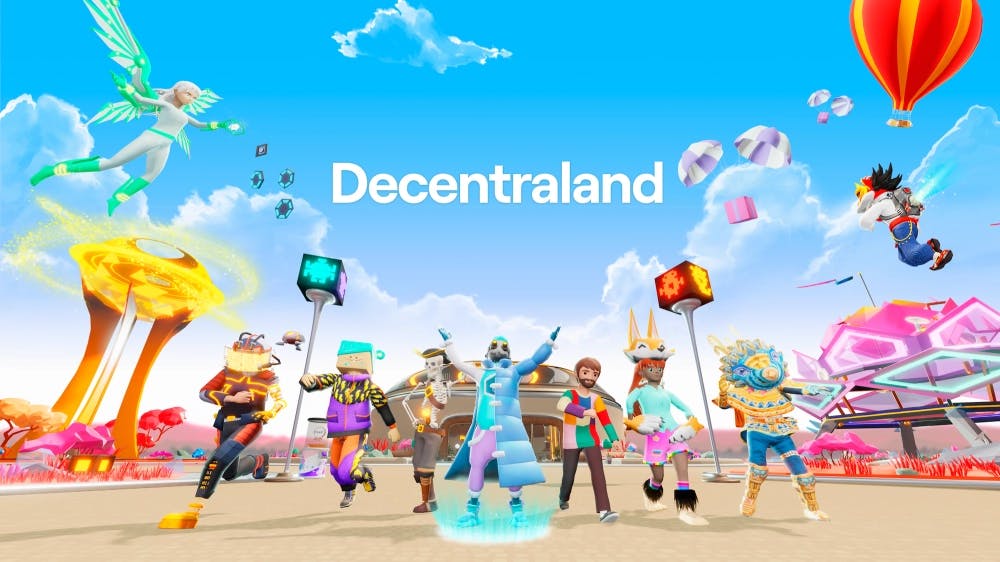
Source: Decentraland
Players earn through LAND appreciation, event ticket sales, and revenue-sharing from branded experiences hosted on their parcels.
LAND parcel value appreciation over time
Event hosting with ticket sales revenue
Branded experience and advertising partnerships
NFT marketplace transactions (2.5% MANA burn)
Premium location parcels command higher prices
High entry costs for prime LAND and lower player traffic compared to competitors limit accessibility. Decentraland remains a pioneering metaverse with strong governance and true digital real estate ownership.
4. Gods Unchained: Trading card mastery
Gods Unchained is a free-to-play tactical card battler on Ethereum and Immutable X, where every card becomes a tradable NFT through the forging system. Players use GODS tokens for crafting upgrades and governance voting while competing in ranked matches.
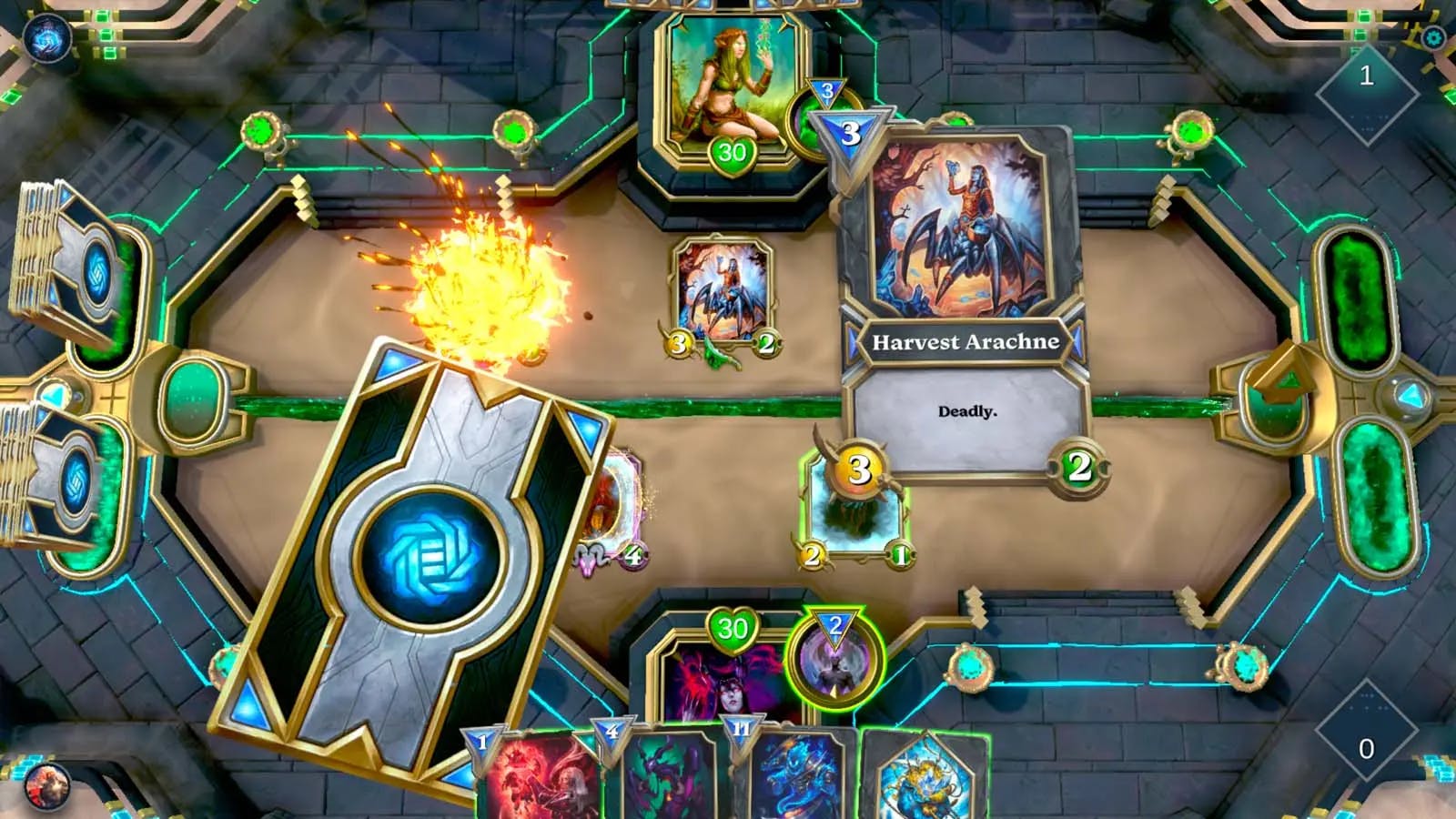
Source: Gods Unchained
Players earn GODS tokens through daily play-and-earn events (first 10 ranked games) based on rank and win rate, plus tournament rewards.
Daily ranked battles reward GODS fragments
Tournament prizes include GODS and rare cards
Card crafting and NFT marketplace trading
Weekly leaderboard competitions with GODS payouts
Governance staking for voting power and rewards
Reaching earning ranks requires grinding to Twilight Shadow (rank 7), and shiny cards boost earnings, creating pay-to-accelerate pressure. Gods Unchained delivers competitive TCG gameplay with genuine card ownership and skill-based rewards.
5. Alien Worlds: Mining and governance
Alien Worlds runs across multiple blockchains (WAX, BSC, Ethereum) featuring TLM token mining on virtual planets using tool NFTs, with DAO voting for planetary governance. Players stake WAX for CPU time, which determines mining frequency and NFT drop chances.
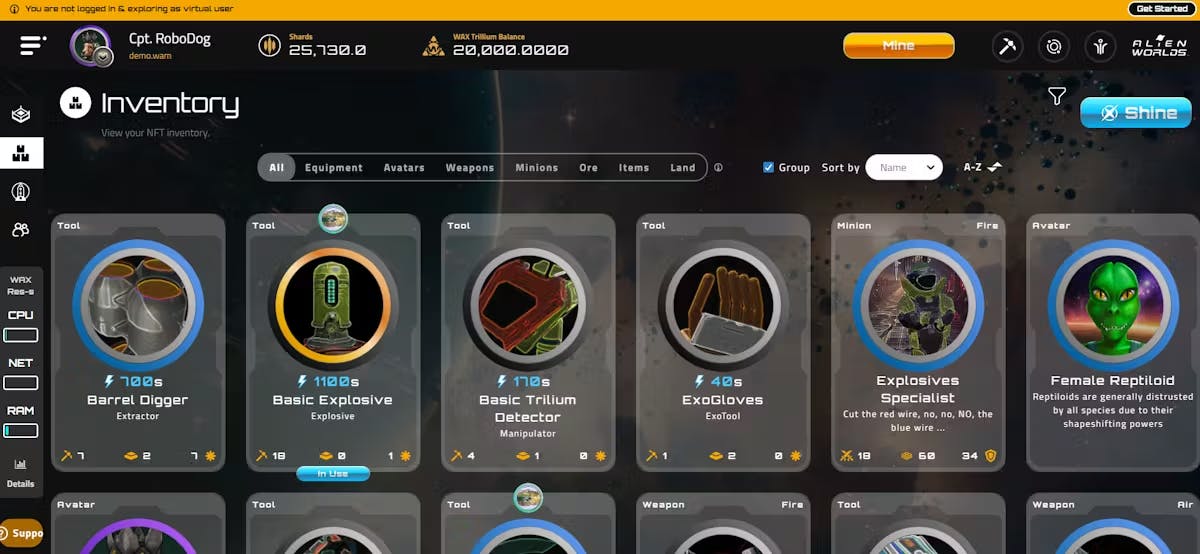
Source: Alien Worlds
Miners earn TLM (Trilium) tokens by clicking land parcels, with yields influenced by tool stats and land multipliers.
Daily TLM mining on planetary lands
Tool NFT upgrades boost Trilium yields
NFT luck modifiers for rare drops
DAO governance voting with TLM tokens
Multi-chain support for flexibility
Mining can feel repetitive with long cooldowns, and earnings heavily depend on tool investment and staked WAX for CPU. Alien Worlds offers accessible entry with multi-chain mining and democratic planetary governance.
6. Splinterlands: Strategy card battles
Splinterlands operates on Hive blockchain with SPS governance and DEC utility tokens, featuring spell and monster cards as tradable NFTs in ranked league battles. The game emphasizes strategic deck building with rental mechanics that let players monetize unused cards.
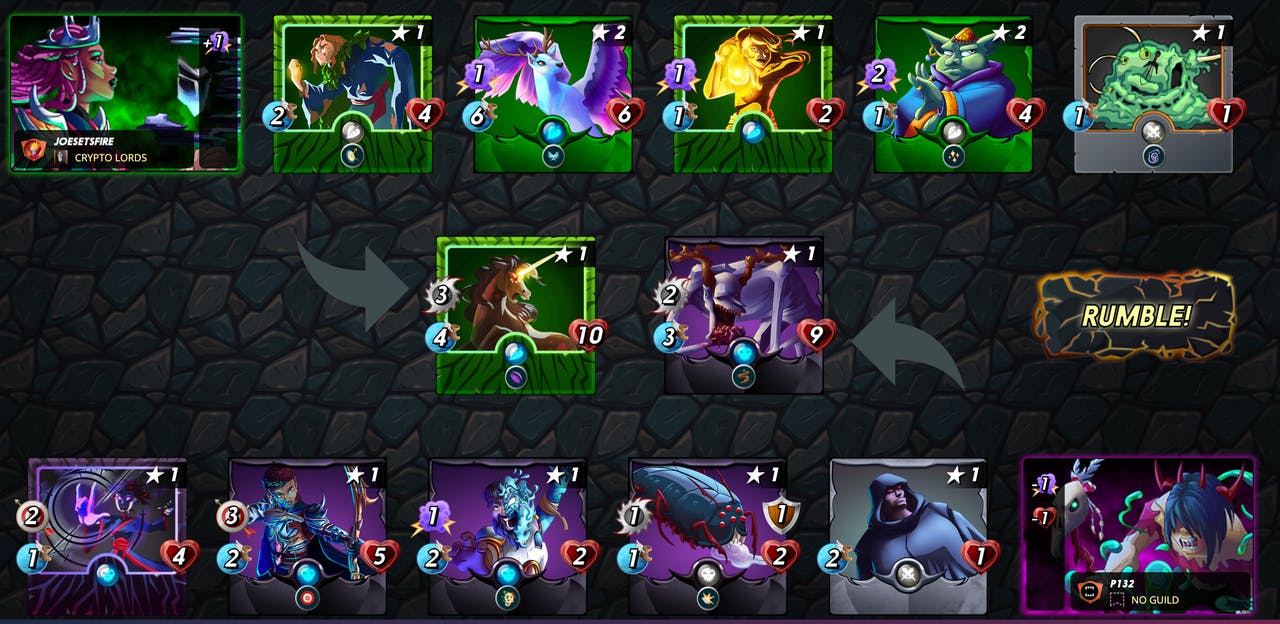
Source: Splinterlands
Players earn DEC from winning battles, daily/seasonal reward chests, and can generate SPS through airdrop holdings and staking.
Ranked battle victories reward DEC tokens
League season-end chests contain cards and tokens
Card rental marketplace generates passive income
Card burning converts to DEC tokens
SPS airdrop points from holding DEC
DEC lost its soft-peg stability during high demand, and competitive play requires significant card investment or rental costs. Splinterlands thrives with an active rental economy and fast-paced strategic battles.
7. Walken: Move-to-Earn fitness
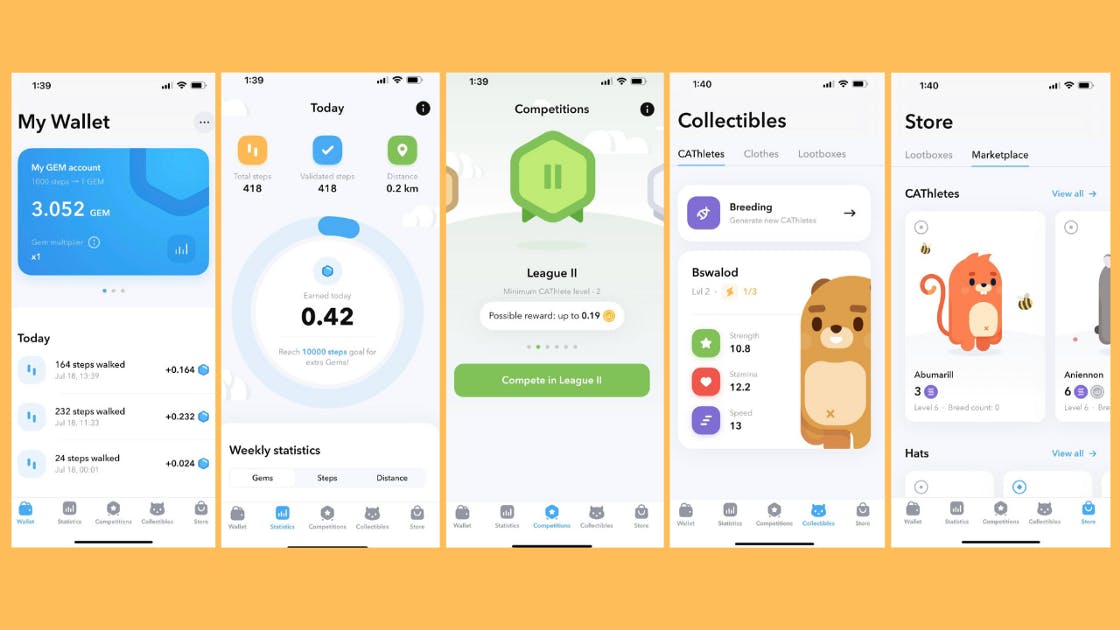
Walken is a Solana-based move-to-earn fitness app combining GPS-tracked walking with NFT CAThlete characters that battle using accumulated GEMs from daily steps. Players upgrade CAThletes through leveling systems and wearable NFT items that boost battle stats.
Source: Walken/NFT Tech
Walking generates GEMs that fuel battles, which reward WLKN tokens tradable on DEXs or usable in the in-app marketplace.
Step-based GEM accumulation from GPS tracking
CAThlete battle victories earn WLKN tokens
NFT CAThlete and wearable trading/marketplace
Daily challenges and league competitions
WLKN staking for enhanced rewards
Earnings require consistent daily activity and competitive CAThlete stats, with withdrawal minimums (20 WLKN) and NFT ownership prerequisites. Walken successfully gamifies fitness with accessible move-to-earn mechanics and engaging character progression.
8. Honeyland: Casual bee strategy
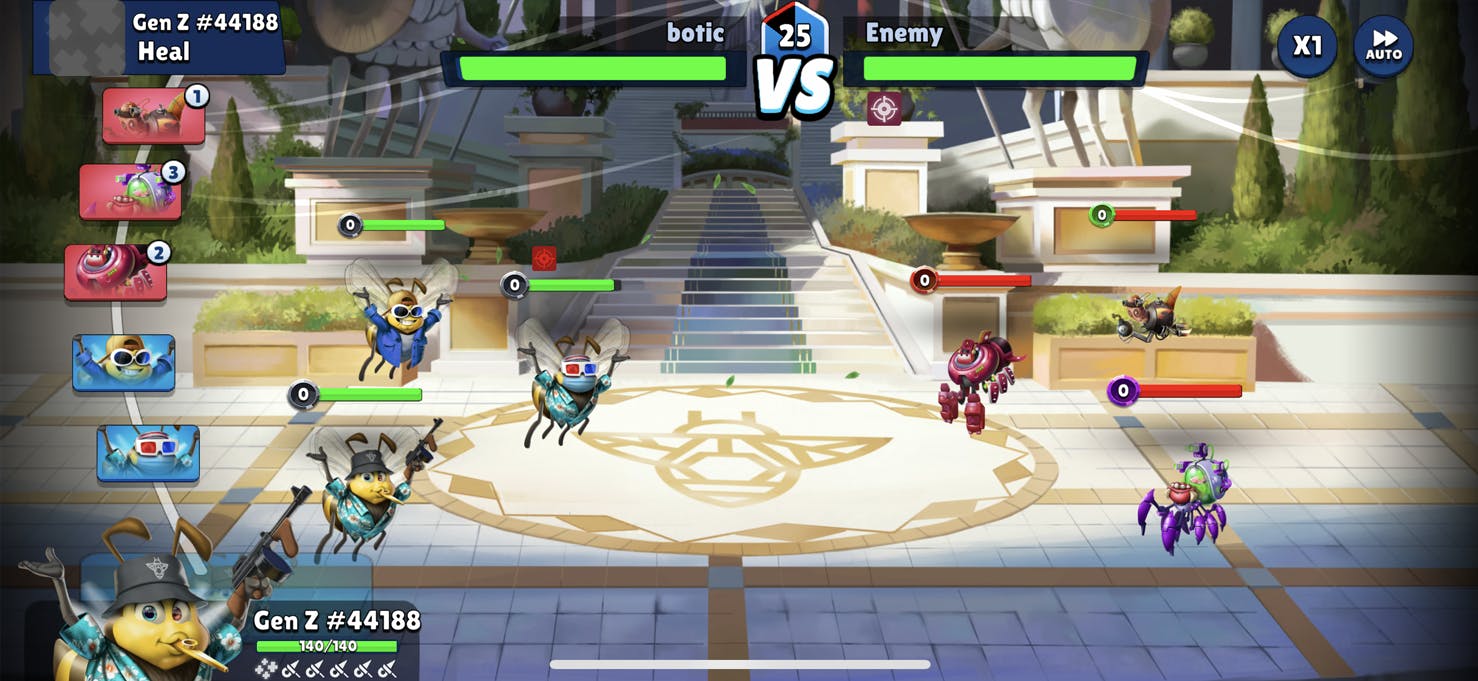
Honeyland runs on Solana as a mobile-first free-to-play game focusing on bee colony management, harvesting, and PvP raids with simplified onboarding for crypto newcomers. Players breed bees with inheritable traits and send them on harvesting missions or competitive hive raids.
Source: Honeyland
Players earn HXD tokens (Honey) through harvesting missions, hunting for shard-filled Honeypots, and winning PvP raids against other hives.
Bee harvesting missions collect HXD tokens
Queen bee NFT breeding with trait inheritance
PvP hive raids steal Honey from opponents
Hunting missions find shards for item upgrades
Defensive strategies protect your own hive
PvP raids create high-variance earnings and require strategic defense investment, potentially frustrating casual players. Honeyland excels with approachable gameplay loops and genuine strategic depth in colony management.
9. CryptoKitties: Kitty breeding and collection
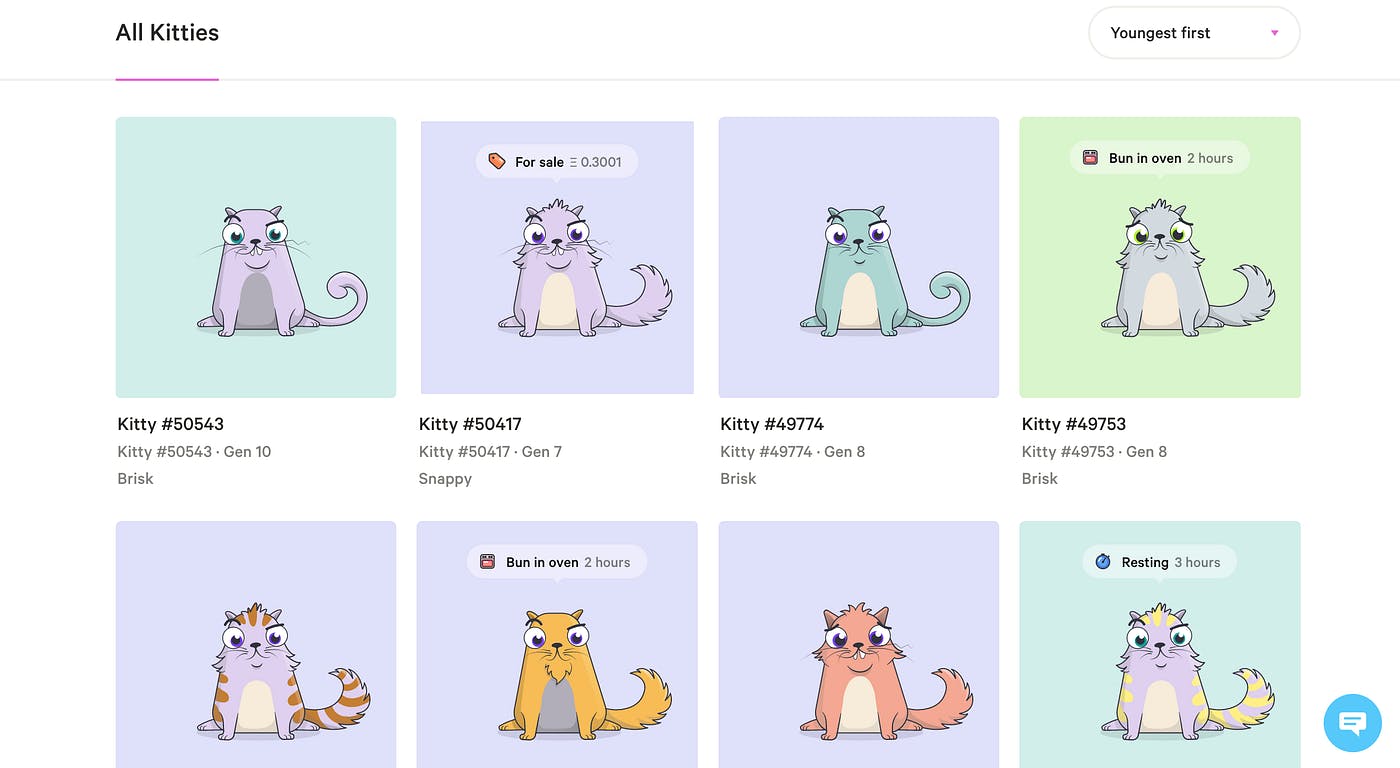
CryptoKitties pioneered NFT gaming on Ethereum where players purchase, breed, and trade unique digital cats with genetic "cattributes" passed through breeding mechanics. Each kitty contains dominant and recessive genes determining visual traits and rarity tiers.
Source: CryptoKitties NFTs
Profits come from breeding rare trait combinations and selling them on marketplace, or renting high-value cats for breeding fees (siring).
Breeding two owned kitties creates offspring NFTs
Marketplace sales of rare “cattribute” combinations
Siring auctions rent breeding rights to others
Purebred kitties command premium breeding prices
Generation and cooldown tiers affect breeding strategy
Breeding costs increase with each kitty's breed count (max seven), and market saturation has reduced profitability since peak hype. CryptoKitties remains the foundational NFT collectible with charming genetics gameplay.
10. Crypto Dragons: Dragon battles
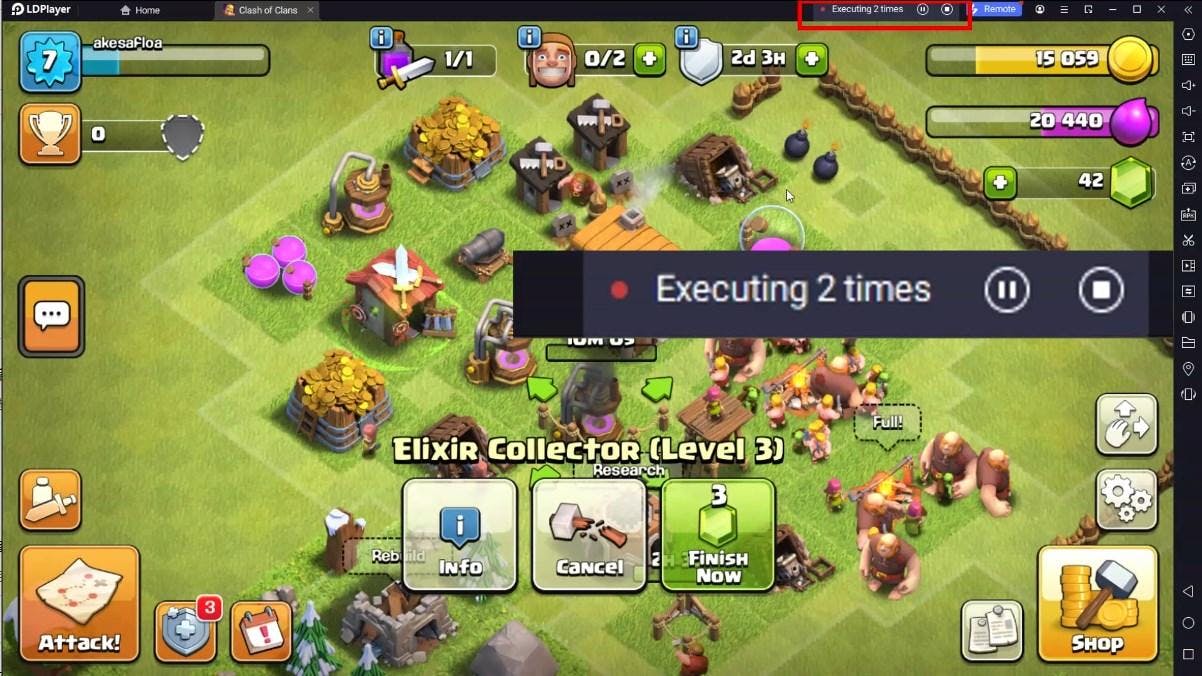
Crypto Dragons runs on Realis Network featuring merge mechanics across 156 dragon characters with quests, bosses, and immersive world progression through dragon evolution. The game uses LIS tokens as in-game currency and connects on-chain NFT dragons with mobile gameplay.
Source: CryptoDragons
Players earn LIS coins both online and offline (up to 24 hours of idle time), with rewards from daily quests, capsule openings, and NFT dragon trading.
Passive LIS earning continues 24 hours offline
Daily quest completion rewards crypto tokens
Dragon merging unlocks new worlds and characters
Daily capsules contain LIS tokens and NFT cards
NFT dragon trading on a blockchain marketplace
Offline earnings cap after 24 hours, and progression relies heavily on merge-game grinding mechanics familiar from mobile games. Crypto Dragons bridges casual mobile gaming with accessible blockchain integration and regular content updates.
11. Forest Knight: Turn-based RPG
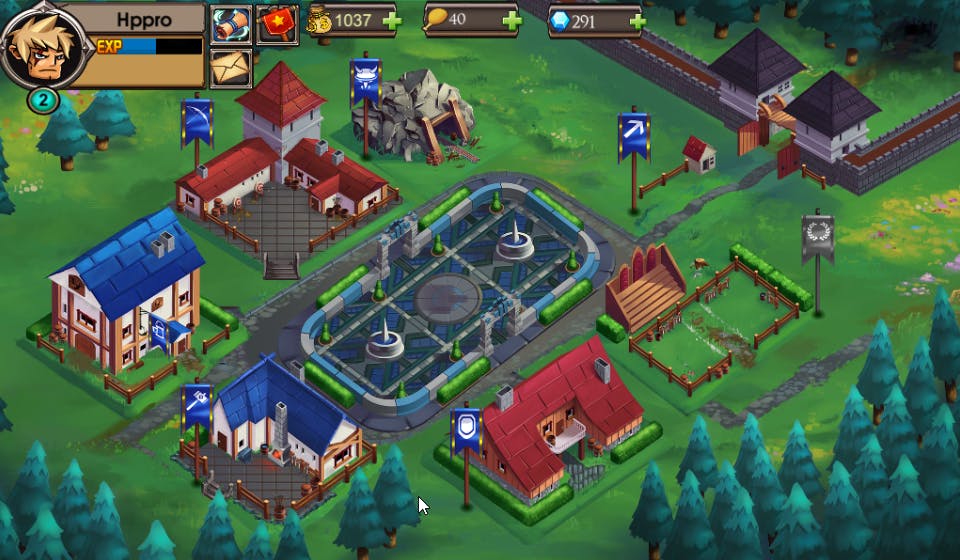
Forest Knight operates on Polygon blockchain set in the fantasy world of Eragoth, blending PvE adventure campaigns with PvP arena battles and hero team building. Players collect, upgrade, and merge NFT equipment while choosing from diverse hero classes with unique abilities.
Source: Forest Knights
KNIGHT tokens are earned from completing story missions, winning PvP battles, and can be used to purchase heroes, land, and special buildings.
PvE mission completion rewards KNIGHT tokens
PvP arena battles with leaderboard rankings
NFT equipment and hero trading/merging
KNIGHT staking for passive income
DAO governance participation with tokens
Entry requires purchasing initial NFT assets or heroes, and competitive PvP demands significant hero investment and upgrades. Forest Knight delivers deep RPG mechanics with strategic combat and a player-driven economy.
12. League of Kingdoms: MMO strategy
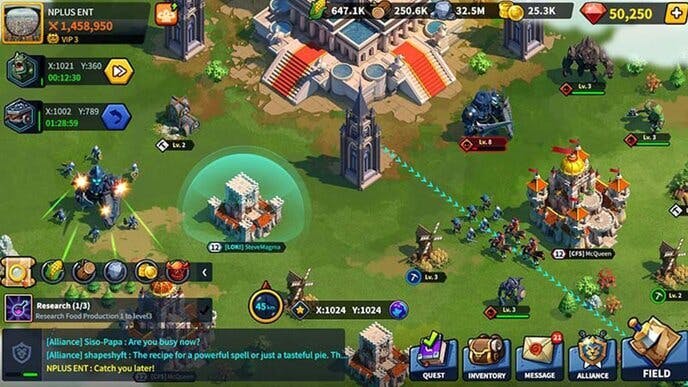
League of Kingdoms runs on Ethereum, featuring kingdom building, alliance warfare, and epic battles with tradable LAND NFTs that generate passive income. The game uses dual tokens: LOKA for governance and marketplace purchases, DST for breeding Drago characters.
Source: League of Kingdoms
Players earn passive income from owned LAND parcels, plus LOKA and DST tokens through governance staking and Drago-related activities.
LAND NFT ownership generates passive income streams
LOKA governance token staking for rewards
DST tokens used for Drago breeding
Alliance battles and epic warfare events
In-game item purchases via LOKA pledging
LAND NFTs require substantial upfront investment, creating barriers for free-to-play participants in the core earning loops. League of Kingdoms combines traditional MMO strategy with blockchain asset ownership and alliance-driven gameplay.
13. Skyweaver: Cross-platform trading cards
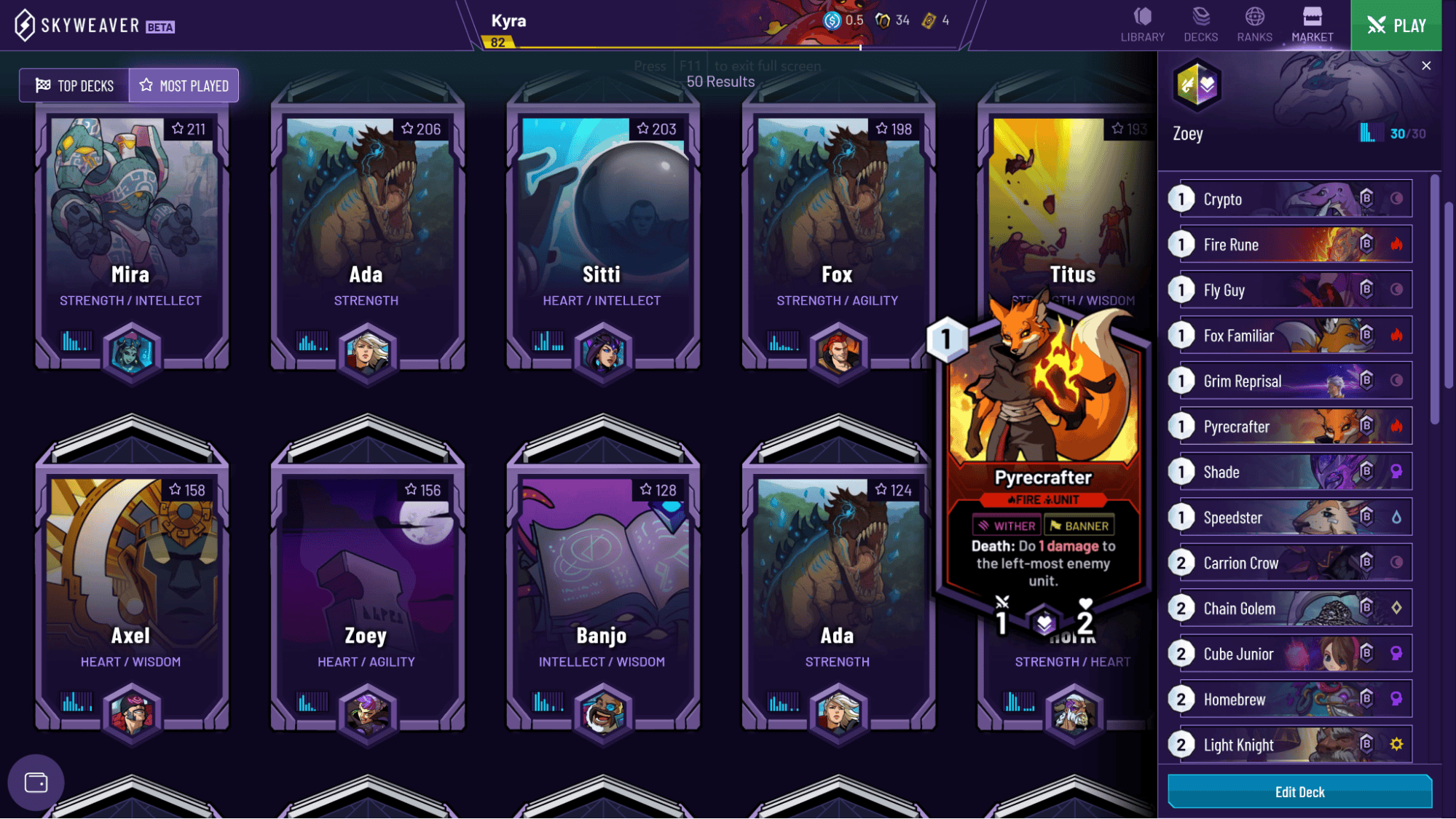
Skyweaver is a free-to-play browser and mobile TCG on Ethereum with 500+ eternal cards (never rotating out) featuring Discovery and Conquest competitive modes. Players build custom decks from six prisms (color combinations) with strategic unit placement and enchantment mechanics.
Source: Skyweaver
Competitive play rewards tradable Silver NFT cards via weekly leaderboards, while Conquest mode (win 3 matches) grants limited-edition Gold NFT cards.
Weekly ranked leaderboard Silver NFT card rewards
Conquest mode three-win streaks earn Gold NFTs
Silver cards are tradeable in a peer-to-peer marketplace
Conquest tickets are purchasable with Silver cards
Basic 500-card collection is free
Conquest requires win streaks without losses, creating high-skill barriers, and free players must grind extensively to compete with paying deck builders. Skyweaver delivers polished TCG gameplay with genuine card ownership and skill-based earning potential.
How Play-to-Earn games work technically
For those who want to dive deeper, now it’s time. Let’s explore specific schemes and earning loops showing how players usually participate in game economies to earn, and how DeFi apps may help in that.
Earning loops and game economies
P2E game economies typically employ dual-token models that separate utility from governance functions. The utility token handles in-game transactions, rewards, and breeding costs, while the governance token manages staking, voting, and long-term investment. To get governance tokens, users must actively participate in various game-related activities and contribute to the game development.
Marketplaces and liquidity providers
Generally, P2E earnings convert to real-world value through NFT marketplaces and DeFi protocols that provide liquidity and trading infrastructure. Major platforms like OpenSea and Magic Eden enable players to list earned NFTs for sale, converting digital assets into cryptocurrency. Players can also amplify earnings by providing liquidity on decentralized exchanges (DEXs) or staking them in DeFi services.
Last, earned tokens can be swapped on DEXs for stablecoins (USDT, USDC) to lock in value, and then withdrawn to various P2P exchangers for fiat off-ramps.
Future of Play-to-Earn gaming
Play-to-Earn games offer a bunch of new experiences and possibilities for gamers, freeing them from the limits of traditional games, where they usually must pay to play, while all their game assets belong to the game itself and have no value behind them. In many games, especially MMOs, players buy and sell their items to each other, and often game developers try to prohibit this practice. In Web3 games, it’s not only allowed, but it’s one of the basic elements of the gameplay.
Still, the market of Play-to-Earn games is already very competitive. Many good titles, such as Blast Royale, were shut down after being unable to cope with emerging challenges. While the potential is still tremendous, it’s essential to come up with a fresh in-game economy idea and develop a truly immersive game to lure players into.
GetBlock is eager to help Web3 game developers build, maintain, and promote their virtual worlds, and for that, we offer the best Web3 infrastructure across 110+ blockchains - and much more! We offer help with marketing and funding for aspiring builders, connecting them with venture funds and promoting them on conference. If you have a fresh Web3 game idea, don’t waste time and schedule a meeting with us.
FAQ
How do Play-to-Earn games work — what do you earn?

Do I need to invest money to start playing a P2E game?
Are P2E games legal and safe to use?
How do I choose a good P2E game — what criteria should I check?
What is "tokenomics" and why is it important for P2E games?


Popular Posts

June 9, 2021
4 min read

November 9, 2021
5 min read

May 24, 2022
5 min read

March 18, 2021
4 min read


