
Best RPC Node Providers of 2026: Performance, Features & Pricing

Deen Newman
January 9, 2026
12 min read
Your RPC provider is essentially your backend: it determines whether your dApp loads instantly, fails under load, or bleeds money through inefficient infra. With more high-throughput L1s and L2s going live, the good enough node provider often becomes the bottleneck once you hit real usage.
This guide compares 7 top-tier blockchain node providers in 2026 based on speed, feature richness, and pricing.
Last updated: Feb 25, 2026
Best RPC providers: 2026 list
GetBlock
Alchemy
dRPC
QuickNode
Ankr
Chainstack
Infura
How to evaluate RPC providers in 2026
Before comparing names, here's what we think defines the best-in-class RPC infrastructure services for Web3 builders and businesses in 2026:
Performance & reliability: Top-tier providers now routinely commit to 99.9–99.99% availability. Additionally, look at latency to your main user regions and uptime backed by SLAs. Geographically distributed nodes or endpoints can drop latency significantly.
Chain coverage: Make sure a provider supports any niche networks your dApp requires or is willing to deploy them for you.
APIs: Confirm support for JSON-RPC, REST, WebSocket, GraphQL, and, in some cases, gRPC, plus access to archive nodes for historical queries and analytics.
Pricing & pricing model: 2026 has a mix of per-request, API credit, and compute units (CU) models, which may cause some confusion. Many providers have free or low-cost tiers for testing, too.
Security and deployment options: Dedicated nodes on private servers and MEV-protection integrations are increasingly standard for serious DeFi and trading setups.
Beyond standard endpoints, leading infrastructure providers are now expected to offer custom and specialized node deployments tailored to specific use cases
Support: Evaluate support responsiveness (e.g. 24/7 vs business hours) and contract flexibility.
SOC 2 certification has become a baseline expectation for enterprise-grade providers. This audit standard verifies that providers maintain rigorous security controls, proven through independent verification.
Alternatively, spin up endpoints from multiple providers and run tests. It's the only way to know what works for your case.
Start with GetBlock. If you're testing latency across regions, you can set endpoints to Frankfurt, New York, or Singapore, even on a free tier. Sign up with just your wallet, no email or credit card needed.
Top 7 RPC providers in 2026
Choosing an RPC provider isn't straightforward. Everyone prices differently, markets different features, and claims to be the fastest. Our provider review focuses on universal multi-chain providers that support major blockchains. We wanted to ensure the comparison reflects infrastructure choices available to various teams.
Here's how we compared these providers. We reviewed leading multi-chain RPC providers on coverage and standout features, most up-to-date pricing, and measured latency. Performance metrics are based on our internal benchmarks (p50 latency data as of January 7, 2026), measured across APAC, EU, and US endpoints, unless otherwise stated.
1. GetBlock – Best for low-latency apps and transparent scaling
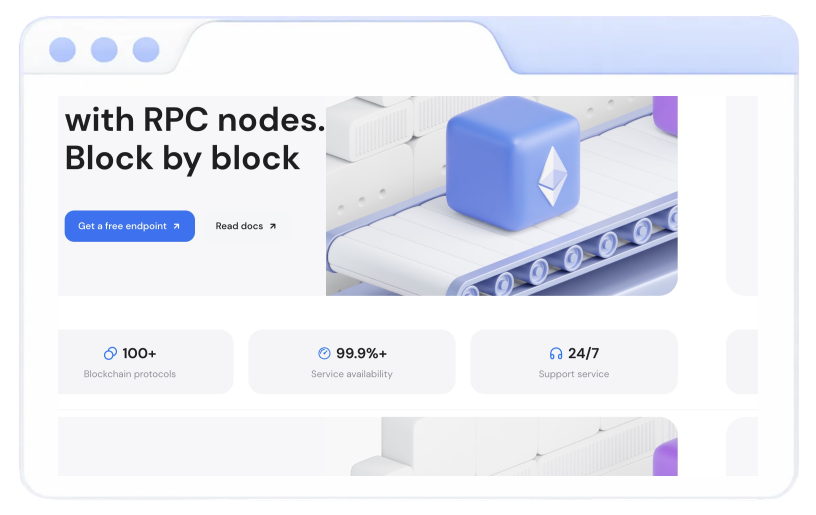
GetBlock is a multi-regional Web3 infrastructure provider offering 100+ blockchains and flexible plans designed for teams that need top-tier performance without opaque enterprise contracts.
Key features:
100+ supported blockchains. Latest integrations: Taiko, Core, Stellar, Sei, Gravity, Monad, Zilliqa. Deploying custom blockchains available via a Dedicated Node service
Geo-selectable endpoints and nodes in Frankfurt, New York, and Singapore for lower latency
Full and archive node access
Self-service dedicated (private) node deployment for demanding use cases with a range of free add-ons
Built-in MEV protection: Node-layer protection for sensitive DeFi order flows
Specialized Solana node performance optimization layers for fast landing, data streaming, trading, etc
Partner integrations for faster transaction propagation, real-time streams, indexed data access, etc (e.g. bloXroute, Jito, Yellowstone, etc)
Performance metrics:
Throughput limits: from 20 RPS to 1,000+ RPS on Shared Plans; custom for Dedicated Nodes
Median latency across regions: 18.6 ms (APAC), 107 ms (EU), 34.6 ms (US),
Pricing structure: Subscription-based pricing. Shared Node usage measured in Compute Units (CUs). Dedicated Nodes offer unlimited scaling. Up to 20% discounts apply to multi-month and annual subscriptions.
Pricing tiers:
Free: 50K CU/day, 20 RPS
Starter: $49/month, 50M CU, 100 RPS
Advanced: $199/month, 220M CU, 300 RPS
Pro: $499/month, 600M CU, 500 RPS
Enterprise: $999/month, Custom CU & RPS (1,000+)
Dedicated full node: from $1,000/month
Dedicated archive node: from $1,500/month
Pros:
Broadest blockchain coverage: 100+ protocols under one account
Ranked among the fastest multi-region RPC providers for tier-1 blockchains by third-party monitoring services
Various flexible plans for teams of all sizes
Full self-service dashboard for managing all the services
Strong focus on custom solutions
Feature-complete free plan suitable for light-prod: full chain and method access, geo endpoints, customer support
SLA applicable to all paid plans, professional customer support at all tiers
SOC 2 audit in final stages
Cons:
CU-to-requests conversion can confuse teams used to per-request pricing models
Limited ready-made proprietary dev tools compared to other providers
Best for: Multi-chain teams needing top-tier performance, highly bespoke enterprise setups with custom tuning, projects with SLA requirements, and developers who value transparent pricing.
Yes, we’re biased. But when you’ve spent the past year scaling infrastructure and pushing performance boundaries, you earn the right to be confident. Don't take our word for it – test it yourself.
Start for free, test our endpoints, or book a call with our team to explore custom deployments and request a dedicated node trial.
2. Alchemy – Best in developer tools
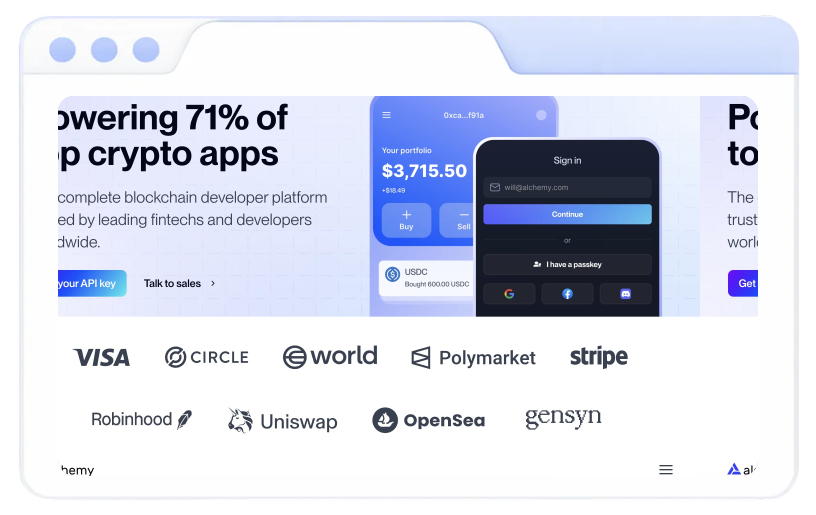
Alchemy is one of the largest and most well-funded RPC platforms. It provides developer-friendly APIs and tools for many blockchains.
Key features:
80+ supported blockchains. Latest additions: TRON, Tempo, ADI Chain, World Chain, Lens, Stable
Cortex engine powering AI-trained intelligent routing
Enhanced APIs: NFT API, Token API, Portfolio API, Transfer API, Webhooks, Smart Wallets, Gasless transactions
Developer SDKs: JavaScript SDKs, Request Explorer, Mempool Visualizer
Additional data products: Transaction Simulation, Private Transaction support, Full Archive access
Performance metrics:
Throughput: Up to 300 RPS on self-service plans
Median latency: 104ms (EU), 65.3 (US), 35.9ms (APAC)
Pricing structure: Usage-based PAYG model with CU-based pricing.
Pricing tiers:
Free: 30M CU/month, 25 RPS
Pay As You Go: from $5 to $2,000, all limited to 300 RPS
Enterprise: Custom, not disclosed
Pros:
Richest developer tools
Strong documentation
SOC2 ready
Generous free tier
Cons:
Pricing can scale quickly, while throughput limits are not scalable beyond 300 RPS without going enterprise
Opaque enterprise pricing
Significant method restrictions on the free plan
Added onboarding friction - requires phone verification at signup
Longer support response times; a dedicated support line reserved for enterprise clients
Best For: Developer teams valuing tools, big projects needing enterprise-grade reliability and deep tooling, or those comfortable with Alchemy’s ecosystem.
For a more detailed Alchemy deep dive, see our Alchemy vs GetBlock comparison guide.
3. dRPC – Best for decentralized RPC
dRPC is a network of independent RPC node operators within a unified service.
Key features:
100+ supported blockchains; Monad, Arc, Doma, Plasma, ZKsync are the latest integrations
Intelligent load balancer, routing requests across independent node operators distributed globally
Archive queries supported
MEV protection on paid tiers for select chains
IP, domain, and contract address whitelisting settings
Pricing structure: Pay-as-You-Go with per-request pricing. After the mid-2025 update, all RPC methods cost 20 CUs (Compute Units)
Pricing tiers:
Free (public nodes): 210M CU/month, 100 RPS
Growth: $6 per 1M requests (20M CU) standard rate; 5,000 RPS
Custom Enterprise: From 300M requests/month, unlimited RPS
Performance metrics:
Throughput: from free 100 RPS to 5K RPS on paid plans
Latency: Operator-dependent, varies
Pros:
Broad chain coverage
Generous free tier
Decentralized architecture
Simplified pricing with a fixed CU rate per request across all methods and chains
Cons:
Since it aggregates many providers, actual performance may vary by region and chain
Data consistency also depends on operator node quality
Free tier opens access to public nodes only
Some major chains are available only on paid plans (e.g. TON, TRON, XRPL, Polkadot)
Best for: Teams comfortable trading consistency for decentralized resilience.
4. QuickNode – Best for additional tooling
QuickNode provides high-performance RPC nodes with a global edge network and a rich marketplace of add-ons.
Key features:
70+ supported blockchains. Latest integrations: Monad, Arc, X Layer.
Global anycast routing with real-time failover
Archive node data access
Dedicated Clusters as a separate premium RPC service
Webhooks, raw data streams
IPFS integration
Performance metrics:
Throughput: Scales from 15 RPS (free) to 500 RPS, up to custom rate limits for Enterprise clients
Latency: 25ms global average (QuickNode’s internal benchmarking)
Pricing structure: Subscription model with API credit bundles. 15% discount applies to annual subscriptions.
Pricing tiers:
Free: 10M credits, 15 RPS
Build: $49/month, 80M credits, 50 RPS
Accelerate: $249/month, 450M credits, 125 RPS
Scale: $499/month, 950M credits, 250 RPS
Business: $999/month, 2B credits, 500 RPS
Enterprise: Custom pricing
Pros:
Rich marketplace of add-ons with custom tooling and partner integrations for DeFi, analytics, MEV protection, etc.
SOC 1 Type 2, SOC 2 Type 2, and ISO 27001 certified
Dedicated SLA-backed support, excluding a free tier
Cons:
Higher cost on paid plans for comparable throughput vs other providers
Significant jump in price from the entry paid tier to the next tier
Some features are add-ons rather than included
No independent public latency benchmarks
Best for: Multi-chain dApps, enterprises with SLA requirements. Teams that need rich, ready-made tooling and are willing to pay for such premium features.
5. Ankr – A token-incentivized Decentralized node ecosystem
Ankr is a multi-chain RPC provider that blends managed and decentralized node infrastructure, offering wide protocol coverage, turning node provisioning into an incentivized, ANKR token-driven ecosystem.
Key features:
80+ blockchains supported. Latest additions include DogeOS, Monad, Midnight, Etherlink, Fraxtal
Decentralized architecture with a multi-operator model
Includes staking tools and its platform token
Archive node access for select chains across all tiers
SDKs and specialized APIs (Query, Token & NFT APIs)
Performance metrics:
Throughput: Scales to 1,500 RPS
Latency: 114 ms (EU), 29.8 ms (US), 28.3 ms (APAC)
Pricing structure: Ankr uses API credit-based billing pegged to USD. Base rate is $0.10 per 1M API credits. Discounts apply for payments in ANKR tokens.
Pricing tiers:
Freemium: free, 30 RPS, ~1M requests/month
Pay-as-you-go: from $10, 100M API Credits (or ~500K requests); 1,500 RPS
Deal plan: $300–$3,000/month (from 6B to 36B prepaid API credits); 1,500 RPS (fiat payment only)
Enterprise: Custom pricing and terms
Pros:
Broad chain coverage
The multi-operator model for infrastructure diversity
Enables native token based staking to support node operators
High RPS ceiling even on entry- and mid-tier plans
Advanced API provides optimized endpoints and helpers
Cons:
Performance can vary depending on operator node quality
WebSocket & gRPC metering can surprise streaming apps
Ankr’s pricing referencing both API credits and requests may be fairly confusing
No published explicit uptime guarantees for non-enterprise plans
Useful functionality (trace API, WebSocket connections, direct support, access to some chains) requires the Premium plan
Ankr’s pricing per 1M request is measured as one of the highest in the industry
Best for: Projects that prioritize decentralization and resilience by design.
6. Chainstack – Best for flexibility
Chainstack is a blockchain infrastructure provider that positions itself as an enterprise-grade RPC service for builders who prioritize operational stability and transparent pricing over cutting-edge performance or extensive developer tooling.
Key features:
70+ supported blockchains with over 30 protocols available on the free tier
Dedicated node service within existing subscription plans
Automatic load balancing and routing across regions
Archive queries on paid tiers
MCP server, IPFS storage
Performance metrics:
Throughput: Scales from 25 RPS (free) to 600+ RPS on Business+ plans
Median latency: 120 ms (EU), 55.9 ms (APAC), 64.7 (US)
Pricing structure: Chainstack uses Request Units (RU) as the billing metric across all services. 16% discount exists for annual plans.
Pricing tiers:
Developer (Free): 3M request units/mo, 25 RPS
Growth: $49/mo, 20M RUs, 250 RPS
Pro: $199/mo, 80M RUs, 400 RPS
Business: $349/mo, 140M RUs, 600 RPS
Enterprise: $990/mo, 400M RUs, custom RPS
Pros:
Request-based pricing might be simpler to calculate than credits or CUs
Multi-region routing with automatic failover
Unlimited Node add-on enabling unrestricted requests within selected RPS limits
SOC 2 Type 2 certified
Cons:
Per-million RU overage charges apply
Not all blockchains are available to free plan users
Dedicated node costs can be high
Best for: Enterprise teams, apps with steady and high sustained throughput.
7. Infura – Tailored for the Ethereum ecosystem
Infura, backed by ConsenSys and integrated with MetaMask, is a veteran Ethereum-focused provider.
Key features:
20+ supported blockchains, including Ethereum, and major L2s: Arbitrum, Optimism, Polygon, Base, etc., plus Solana access limited to select customers
Decentralized Infrastructure Network (DIN): decentralization via partnerships with leading providers
Advanced APIs like Gas API
IPFS service support
Archive queries for a select few chains
Pricing structure: Credit-based
Pricing tiers:
Core (Free): 3M credits/day, 500 credits/second (~ 5 RPS)
Developer: $50/month, 15M daily credits, 4K credits/second (~37 RPS)
Team: $225/month, 75M daily credits, 40K credits/second (~371 RPS)
Growth: $1,000/month, 375M daily credits, 200K credits/second (~1,800 RPS)
Enterprise: Custom pricing, credits, and throughput
Additional credit packs starting from $200/mo
Performance metrics:
Throughput: Scales from 500 credits/sec (~ 5 RPS) up to 200K credits/second (~1,800 RPS)
Median latency: 419ms (EU), 1.03s (APAC), 54.7ms (US)
Pros:
ConsenSys backing
Native integration with Ethereum tools (MetaMask, Hardhat, ethers.js, etc.)
Strong compliance and regulatory standing
Cons:
EVM-focused - smaller blockchain coverage vs competitors
Free and entry-paid tier restrictions can force upgrades faster than competitors
Latency performance is significantly slower than competitors
Less flexible payment methods: crypto payments only for Enterprise clients
Best for: Ethereum-first enterprises needing ConsenSys partnership credibility, or projects optimizing for reliability over raw speed and performance
Wrapping up: Leading RPC providers in 2026 compared
The table below gives a high-level snapshot of major RPC providers, core players in the node-as-a-service segment.
Provider | Chains | Entry Paid Plan | Pricing Model | Performance (Median Latency) | Standout Features | Audits |
GetBlock | 100+ | $49/mo | Subscription (CU-based) | 18.6ms (APAC), 34.6ms (US), 107ms (EU) | Geo-selectable endpoints, low latency, advanced features even on entry-level plans | SOC 2 Type 1 completed; SOC 2 Type 2 in progress |
Alchemy | 80+ | From $5 | PAYG (CU-based) | 35.9ms (APAC), 104ms (EU), 65.3ms (US) | Richest developer tools, strong uptime track record | SOC 2 certified |
dRPC | 100+ | $6 per 1M requests | PAYG (per-request) | Varies | Decentralized multi-operator network | Not disclosed |
QuickNode | 70+ | $49/mo | Subscription (API credit-based) | 25ms average (claimed) | Biggest add-on marketplace | SOC 1 Type 2, SOC 2 Type 2, and ISO 27001 certified |
Ankr | 80+ | From $10 | PAYG (credit-based) | 28.3ms (APAC), 114ms (EU), 29.8ms (US) | High RPS limits even on lower-tier plans | Not disclosed |
Chainstack | 70+ | $49/mo | Subscription (RU-based) | 55.9ms (APAC), 120ms (EU), 64.7ms (US) | Simplest request-based pricing | SOC 2 Type 2 |
Infura | 20+ | $50/mo | Credit-based | 1.03s (APAC), 419ms (EU), 54.7ms (US) | Enterprise credibility | Not publicly disclosed |
How to choose a provider
The providers in this guide cover most of the serious options available to Web3 teams in 2026. The right choice depends on your stack: trading bots and games will optimize for latency, data platforms for archive access and throughput, and enterprises for compliance.
GetBlock focuses on all of these. If you are at the stage where you want predictable performance, clear economics, and the option to grow into custom setups, GetBlock might be a good fit to explore.
Spin up an endpoint in the dashboard, mirror a slice of your traffic, and compare latency and costs with your current setup.
You can start with free or Shared Node endpoints, test latency from Frankfurt, New York, or Singapore, try all the features, and then decide whether you need dedicated or bespoke deployments for your next milestone.
If still unsure, book a short call with GetBlock’s team to map out options.


Popular Posts

June 9, 2021
4 min read

November 9, 2021
5 min read

May 24, 2022
5 min read

March 18, 2021
4 min read


