

Best Ethereum (EVM) Wallets: GetBlock's Comparison

GETBLOCK
February 28, 2026
16 min read
Ethereum wallets are crucial for most Web3 users. They serve the whole Ethereum Virtual Machine (EVM) ecosystem, which unites hundreds of different chains, including Ethereum’s L2s, sidechains, and separate L1s. GetBlock is a top Web3 RPC node provider that aims to empower the EVM ecosystem, so we monitor the development of EVM wallets closely. Let’s explore the best EVM wallets and determine which one is the best for which user category.
Quick list: Top 8 Ethereum wallets at a glance
Here, we’re going to overview the eight EVM wallets:
MetaMask
Rabby Wallet
Trezor
Ledger
Safe
Trust Wallet
Coinbase Wallet
Exodus
Each of them offers unique features and can be selected as the best based on its own strengths. For example, MetaMask has robust portfolio management features and dApp connectivity, while Rabby offers stronger identity management tools, and Safe is better for managing large treasuries with its complex smart contract-based protection. We’re going to overview all these peculiarities soon, but first, let’s explore the basics of EVM wallets.
What is an Ethereum wallet, and how does it work
Ethereum wallets provide an interface for easy and seamless interaction with EVM blockchains and tokens stored on them. They don’t store anything by themselves: all assets are onchain and secured by the blockchain’s consensus mechanism. Therefore, each Web3 wallet is basically a programmable gateway into Web3, and its access must be protected, so no third party can access it.
Read more about Web3 wallets and how they work here.
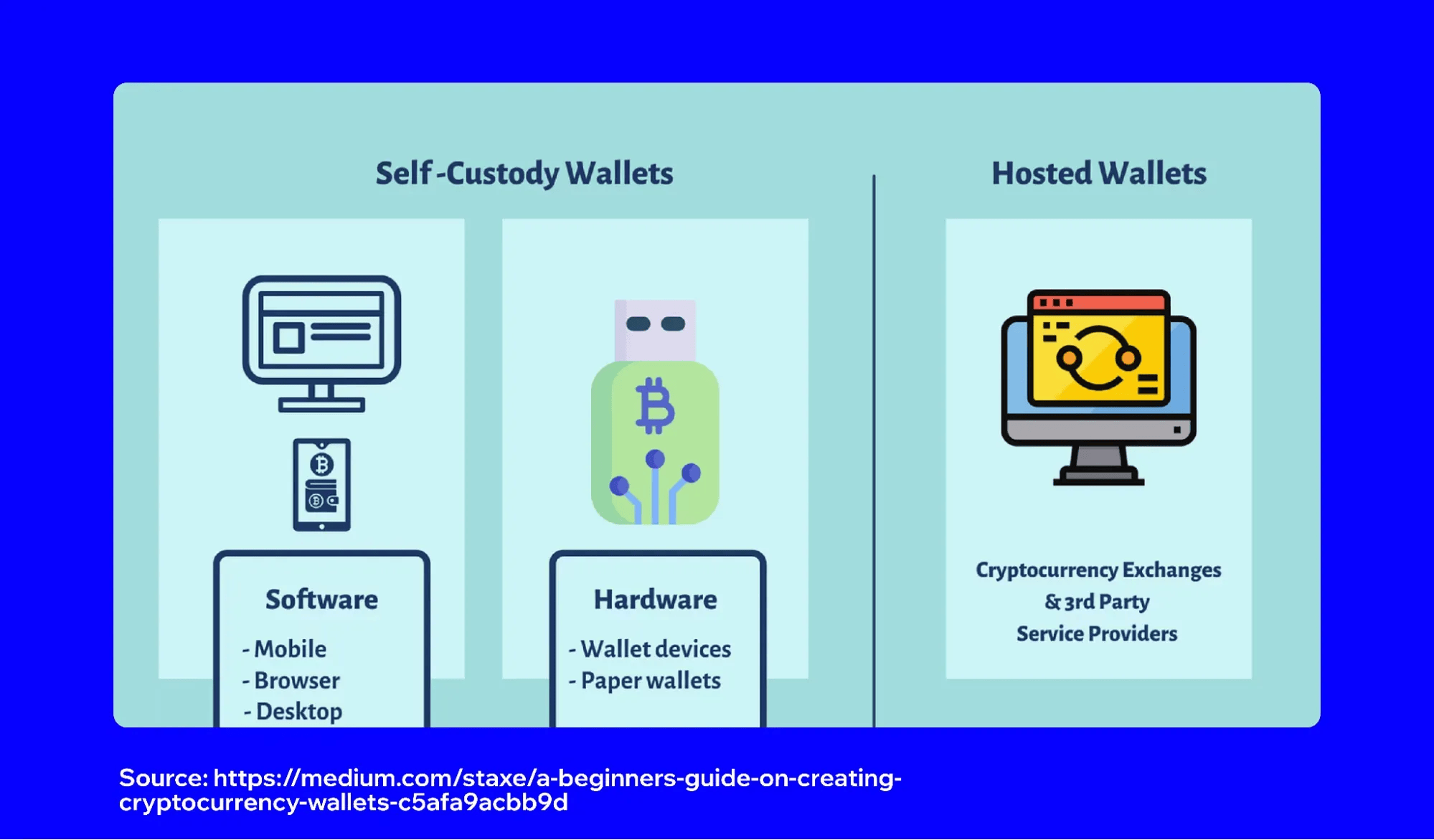
As we’ll see, there are also custodial wallets, managed by a trusted third party, but they’re closer to traditional Web2 financial services. Non-custodial Web3 wallets are more widely used and accepted in the ecosystem, and there are various types of them depending on how they protect user assets.
Types of Ethereum wallets
Let’s look closer at all these types before exploring each wallet in detail.
Self-custodial wallets with a seed phrase
These are Externally Owned Accounts (EOAs) using a 12-24 word seed phrase to derive private keys via standards like BIP39. Users sign transactions directly with the private key, so it’s essential not to share it with anyone. In modern EVM wallets, users can control multiple derived addresses across chains: an Ethereum address, for example, can be used to control Arbitrum, Optimism, Polygon, BSC, and most other EVM chains.
Source: Trust Wallet
Wallets like MetaMask and Rabbe Wallet support 20+ predefined EVM chains natively, but almost every EVM chain can be easily added using the network credentials:
RPC URL endpoint
Gas token symbol
Chain ID
Read more in a GetBlock dedicated guide on how to add a network to MetaMask.
Account abstraction (AA) wallets
These smart contract wallets use the account abstraction method (ERC-4337) that replaces seed phrases with programmable logic, using the UserOperations object and verified via EntryPoint contracts. Features include:
Custom authentication schemes defined by smart contract, including biometrics, multi‑factor auth, or threshold signatures
Social recovery, which allows users to recover the lost access via several trusted guardians, who can recover it by jointly signing in
Bundled transactions, when several onchain actions use a single UserOperation object, reduce fees greatly
Private keys exist "under the hood" but are abstracted, and smart contract logic can be adjusted to define the authentication methods, spending limits, and many other parameters. This wallet type is more secure compared to traditional self-custodian wallets, but its usage is more complex and requires at least a basic understanding of how smart contracts work.
Hardware wallets
Hardware (cold) wallets store private keys offline on secure chips, signing transactions via USB/Bluetooth connection to software interfaces, and usually cannot be connected to the Internet at all. They rely on a few core hardware components to keep private keys secure while allowing signing and user interaction:
Secure element (SE) is a tamper‑resistant chip that stores seeds, private keys, and performs cryptographic operations isolated from other components
Microcontrollers manage the user interface and send transactions to the secure element, so it can sign them
I/O layer includes display, buttons, and other components that allow a user to interact with the wallet and track their balance
Security layer may include random number generators, secure boot, and memory encryption components that increase security further
They pair with corresponding mobile apps, supporting Ethereum ERC-20 tokens and various EVM chains. Custom EVM chains can usually be added manually using RPC details in companion apps. They aren’t as affordable as other wallet types and cost money (at least $70), but their security and reliability are unparalleled compared to other wallet types.
Custodial centralized wallets
A custodial wallet is any wallet where a third party holds and manages private keys. Users access funds through the service’s account system (email/password, 2FA, etc.), not via their own seed phrase or key. In practice, this includes centralized exchange accounts, custody services, and fintech apps, such as banks that support crypto payments. Basically, they are much closer to ordinary Web2 financial apps than to Web3 dApps.
Custodial vs non-custodial wallets
Here is a quick comparison of custodial and non-custodial wallets.
Custodial wallet | Non-custodial wallet |
Private keys are managed by a centralized entity that is responsible for their security | Private keys are held only by a user, and their security is the user’s responsibility |
Based on the user agreement, the centralized entity can recover user funds in some cases | Funds cannot be recovered, as a user is solely responsible for them, but |
Users are required to verify their identity using KYC/AML before accessing an account | Users just need to access a wallet or retrieve the existing one using a seed phrase or AA |
An entity can restrict access as per its rules, based on a location, citizenship, etc. | No one can restrict access, as a user holds private keys and can access funds anytime |
Non-custodial wallets are much closer to Web3 principles of decentralization and self-governance, so they are becoming increasingly popular. Even centralized exchanges like Binance started to use non-custodial wallets to attract more genuine Web3 users. They require users to be more responsible, as they manage funds by themselves, but they shouldn’t rely on a centralized entity that can be breached or restrict access to funds.
How we chose the best Ethereum wallets in 2026
The purpose of EVM wallets is to help you manage your funds and interact with other onchain services easily, from DeFi to games, without exposing access to potential malefactors. Therefore, there are three primary criteria of the best EVM wallet: security, usability, and EVM network support
Security features are the most crucial. For most wallets, the moment a user submits a seed phrase is the greatest vulnerability, as a malefactor can intercept it. Different wallets solve this issue differently, while AA wallets don’t use seed phrases at all, and hardware wallets are the most secure - but they have their own drawbacks.
Usability includes all other aspects of user experience (UX), such as the ease of use, NFT support, dApp connection, and additional features for securing payments and reducing gas fees.
EVM support refers to how many different EVM chains can be added to the wallet. Some wallets allow custom RPC URLs, basically supporting an unlimited number of EVM chains.
Wallets presented there all excel in these parameters, but offer different ways that suit various user categories. We’ll explore all of them, compare their primary features, and see which wallet is the best for which use case.
Detailed reviews of the best Ethereum wallets
Now we can explore these EVM wallets more closely. Let’s start.
1. MetaMask: Best ETH wallet for DeFi and dApps
MetaMask is a non-custodial EOA (Externally Owned Account) wallet, which de facto is the standard for Ethereum development and dApp interaction. It natively supports custom RPC URLs, so any EVM chain can be added in seconds. Its portfolio dashboard and built-in DEX aggregator make it a complete DeFi environment in one extension.
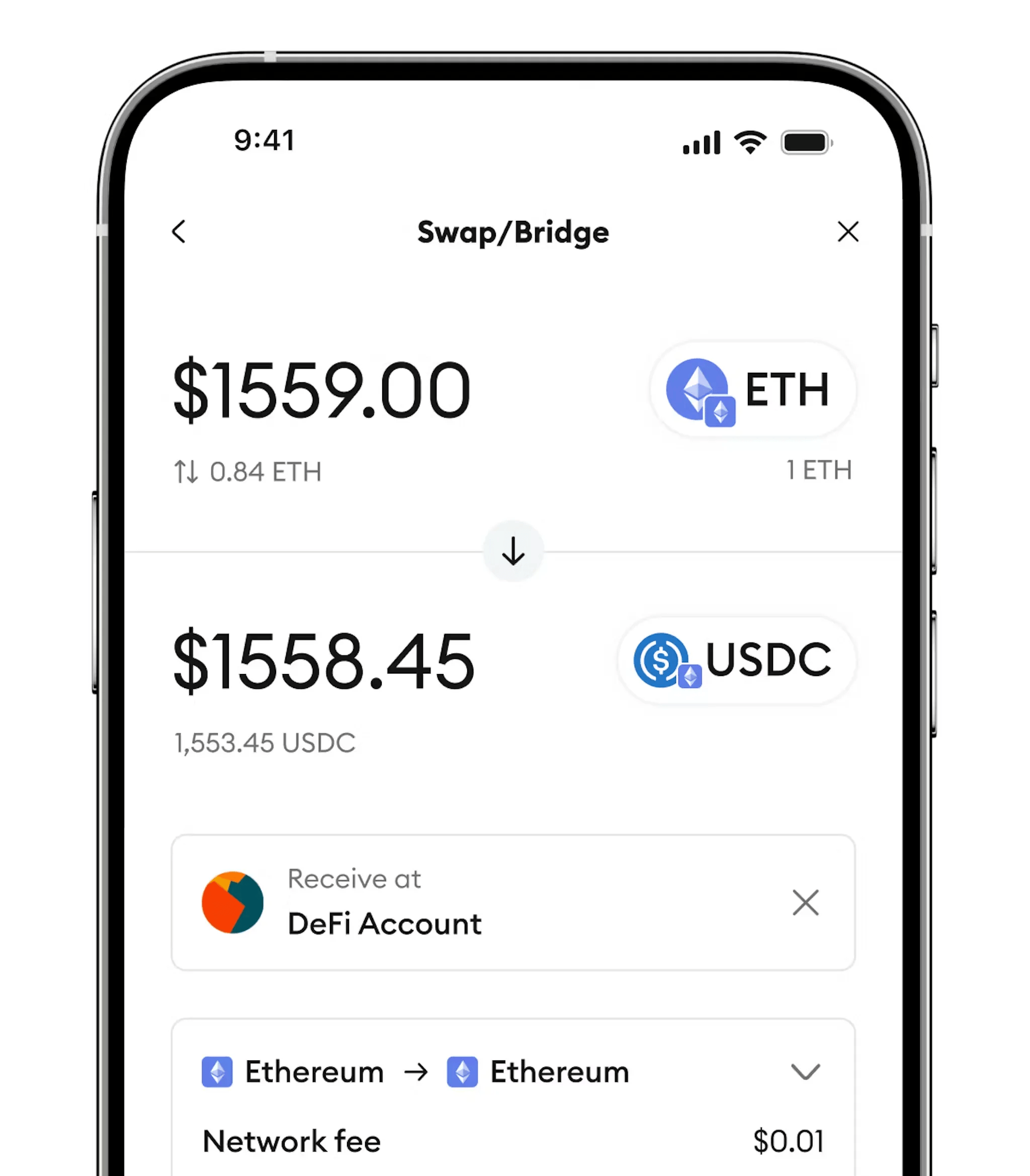
MetaMask's core features include:
Custom RPC URL addition for any EVM network
Portfolio tracking dashboard across connected chains
Gas Station: agas fees included in swap quotes
Built-in DEX ggregation for competitive token swaps
Smart Transactions for MEV protection and fee optimization
MetaMask excels for DeFi power users managing assets across many EVM chains, with maximum dApp compatibility. It uses telemetry for privacy handling, and its UX is quite complex for Web3 newcomers. As the most widely integrated EVM wallet, it remains the essential tool for on-chain interaction.
2. Rabby Wallet: Best for digital identity management
Rabby is another popular EVM wallet, developed by DeBank, that focuses on security transparency, distinguishing itself with transaction pre-simulation and a comprehensive token-approval manager. Like MetaMask, it supports custom RPC URLs and auto-switches networks when connecting to dApps.
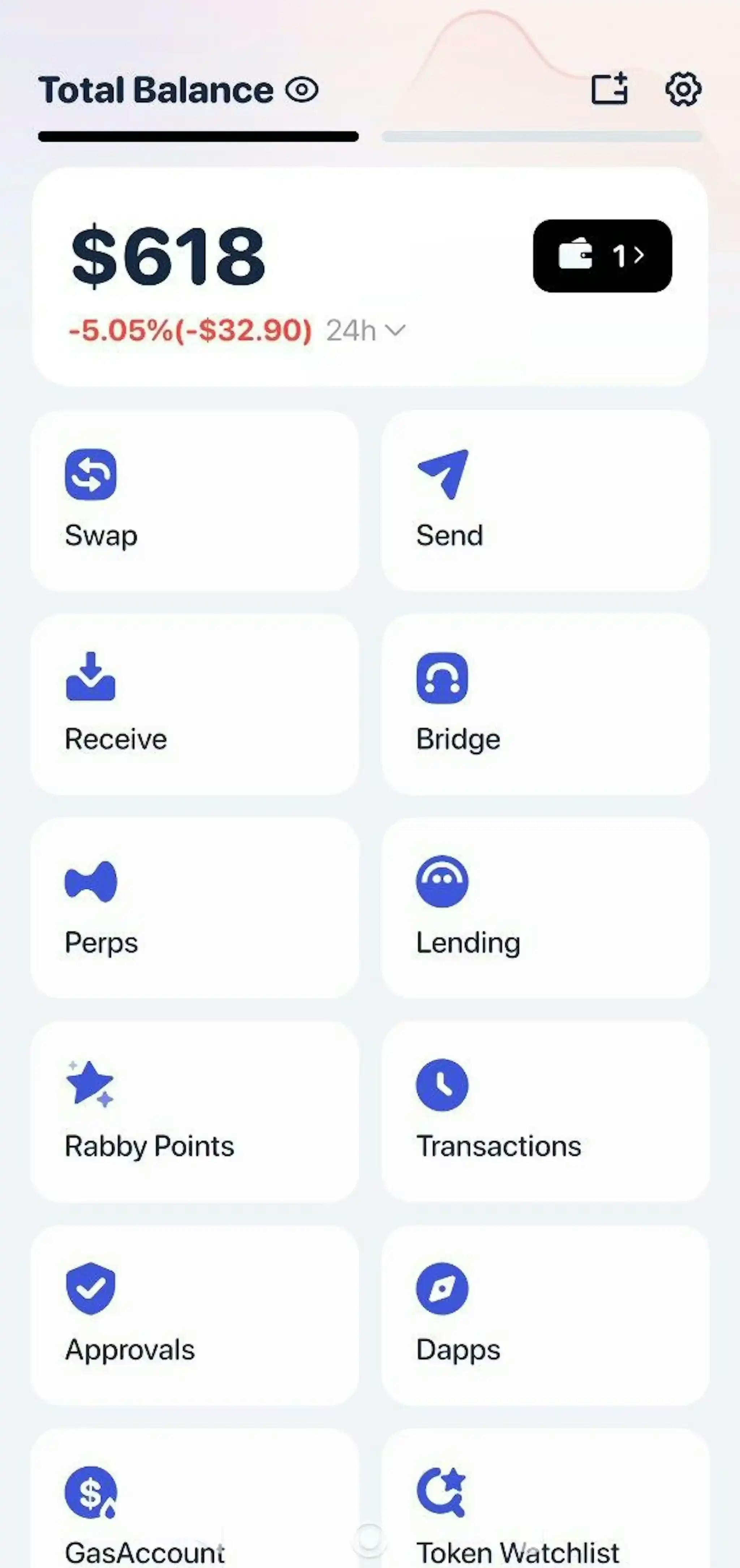
Rabby's core features include:
Pre-simulation of every transaction before signing
Token approval manager with batch revoke
WalletConnect session tracking and revocation
Risk alerts for suspicious contracts and transactions
Hardware wallet signing (Ledger, Trezor) as the signing layer
Rabby is a strong pick for DeFi users who want full visibility into approvals and on-chain permissions. Its main limitation is the lack of a native mobile app. For security-conscious DeFi interactions and identity management, Rabby's transparent transaction layer makes it a robust choice.
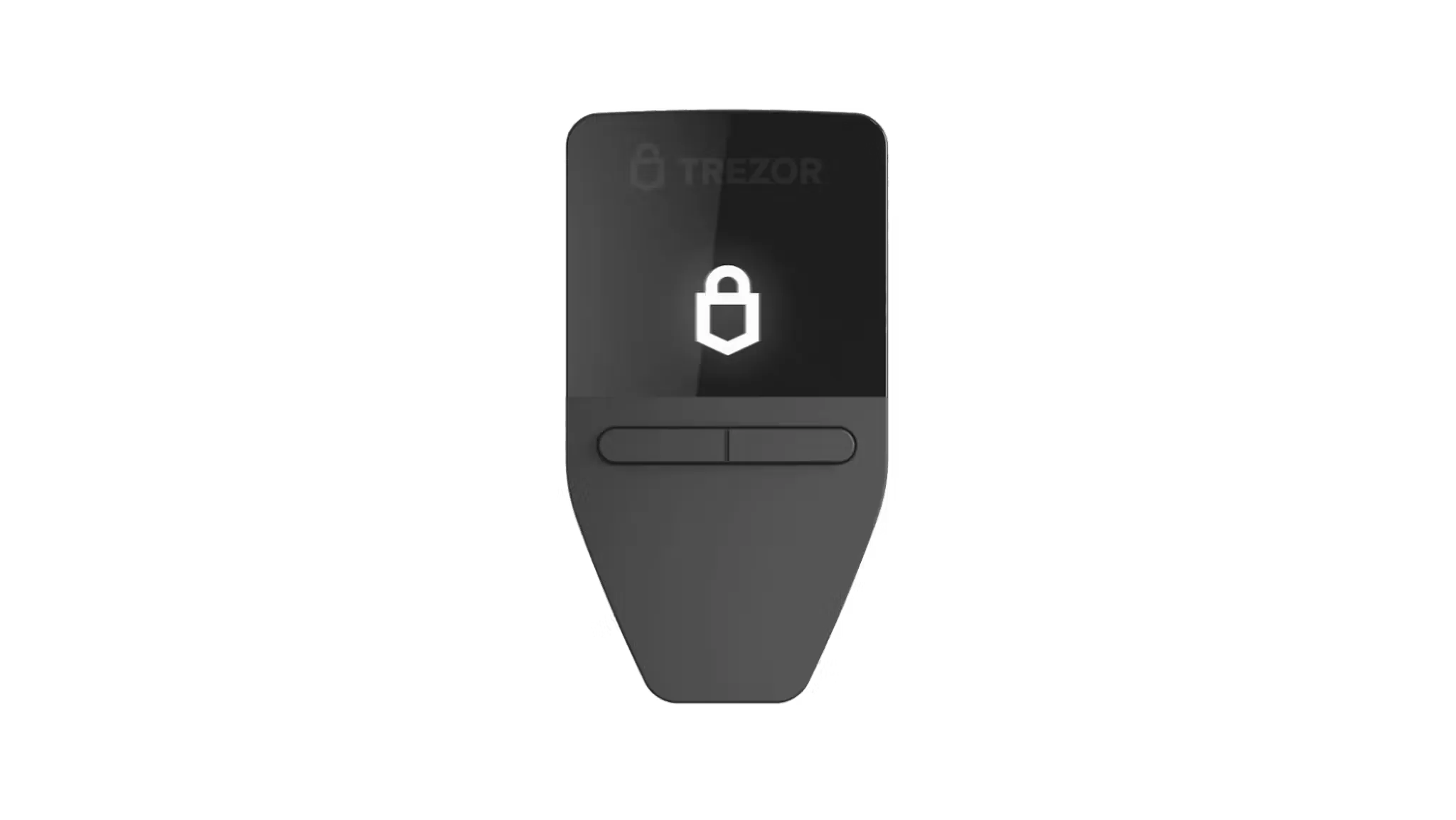
3. Trezor: Best hardware wallet for long-term storage
Trezor, one of the first hardware wallets ever made, stores private keys offline using fully open-source firmware and hardware, which is a key differentiator from competitors. Available as several models, it pairs with Trezor Suite (desktop/web) or third-party wallets like MetaMask or Rabby via USB-C.
Rabby's core features include:
Pre-simulation of every transaction before signing
Token approval manager with batch revoke
WalletConnect session tracking and revocation
Risk alerts for suspicious contracts and transactions
Hardware wallet signing (Ledger, Trezor) as the signing layer
Trezor is ideal for long-term holders who prioritize code transparency over feature richness. Trezor Suite is less featured than Ledger Live, especially around NFTs and staking options. For users who want full auditability and self-sovereign key storage, Trezor's open-source ethos is a strong pick.
4. Ledger: Secure alternative for long-term ETH storage
Ledger is a widely used hardware wallet with a proprietary CC EAL5+-certified secure element, available in several models. It pairs with Ledger Live, a comprehensive app offering staking, swaps, and NFT management across 300+ EVM chains, with feature-rich UX.
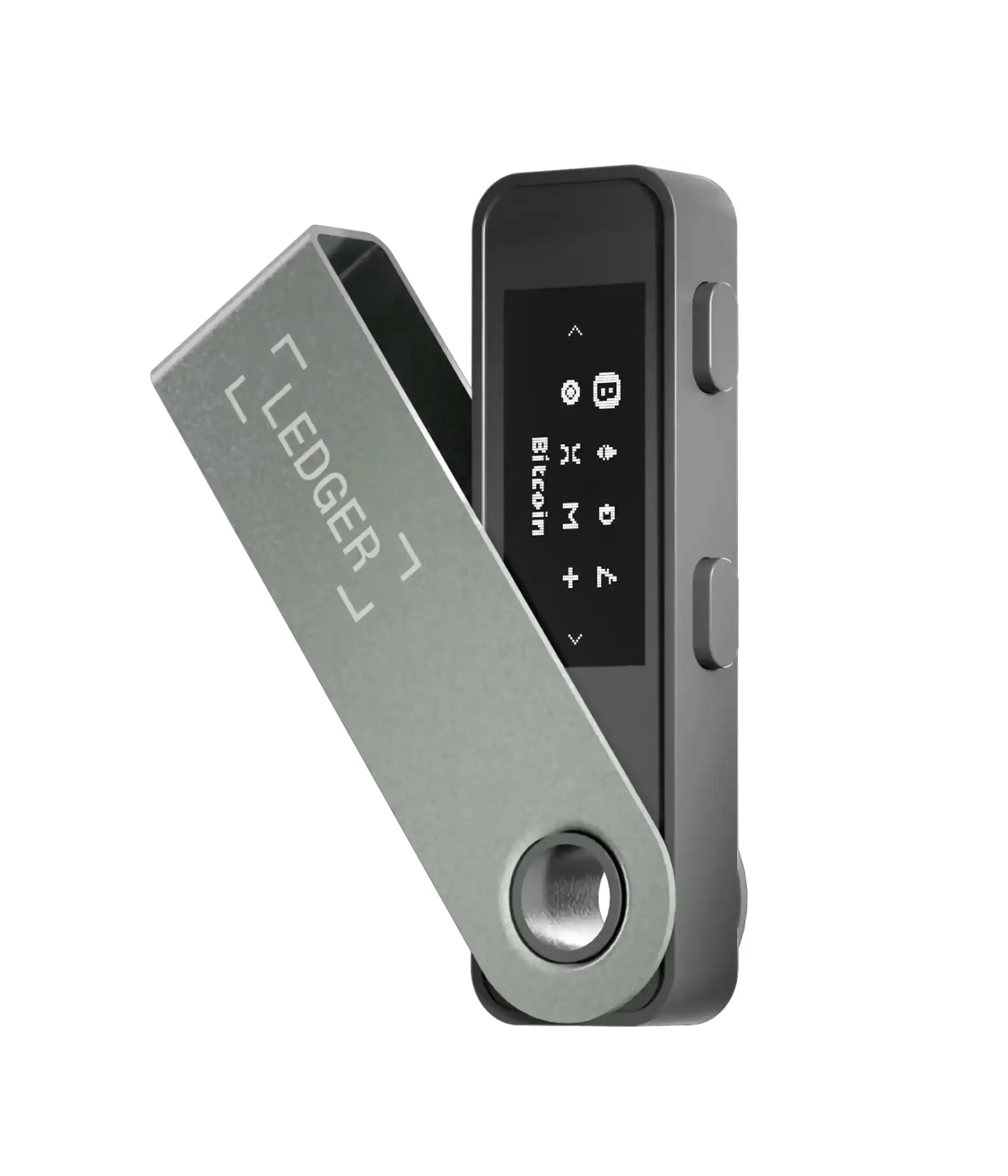
Ledger's core features include:
CC EAL5+ secure element for private key isolation
300+ EVM chains supported natively
Earn dashboard: ETH staking via Lido, Kiln, and validators
NFT viewing and management across EVM networks
Built-in DEX swaps and chain bridges via Ledger Live
Ledger suits users who want maximum security with rich built-in functionality like staking, NFT management, and fiat on-ramp. Its firmware is partially closed-source, however, which some users find concerning. For those holding a wide range of assets and using them for various DeFi tasks, Ledger is the robust hardware wallet choice.
5. Safe: Smart contract wallet for advanced users
Safe Wallet (formerly Gnosis Safe) is a programmable multi-signature smart contract wallet and the gold standard for DAOs, teams, and institutional on-chain asset management. It requires a configurable M-of-N signer threshold per transaction, deployed on Ethereum and most major EVM chains, with a modular plugin architecture.
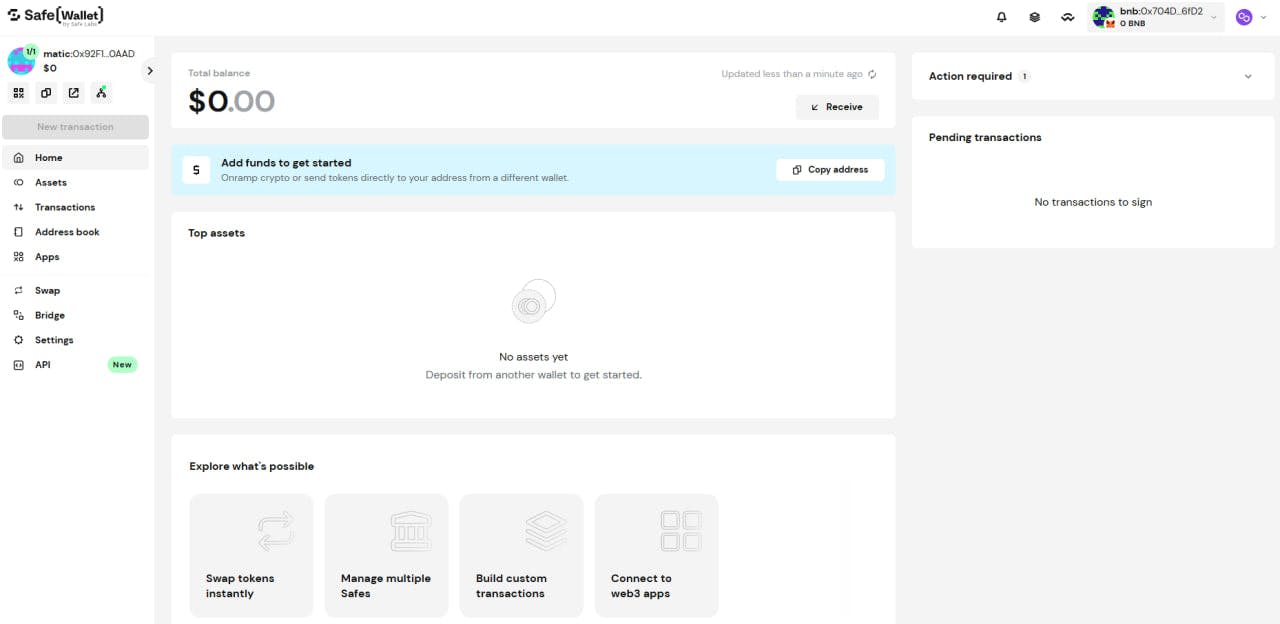
Safe's core features include:
Configurable multi-signature transaction approval
Smart contract modules for automation and custom logic
Spending limits and role-based access control
Transaction queuing, batching, and on-chain history
Guards (hooks) for pre- and post-execution checks
Safe excels for DAOs, development teams, and institutional users needing shared custody with fine-grained programmable control. However, its complexity leads to quite a steep learning curve for casual users. As the definitive EVM multi-party account abstraction wallet standard, Safe is the infrastructure layer behind most serious on-chain treasury operations.
6. Trust Wallet: Best mobile multi-chain wallet
Trust Wallet is a mobile-first non-custodial wallet backed by Binance, supporting 100+ blockchains, including all major EVM networks alongside non-EVM chains like Solana and TON. Its clean mobile UI makes it approachable for beginners while still covering staking, NFTs, and custom EVM chain addition via RPC.
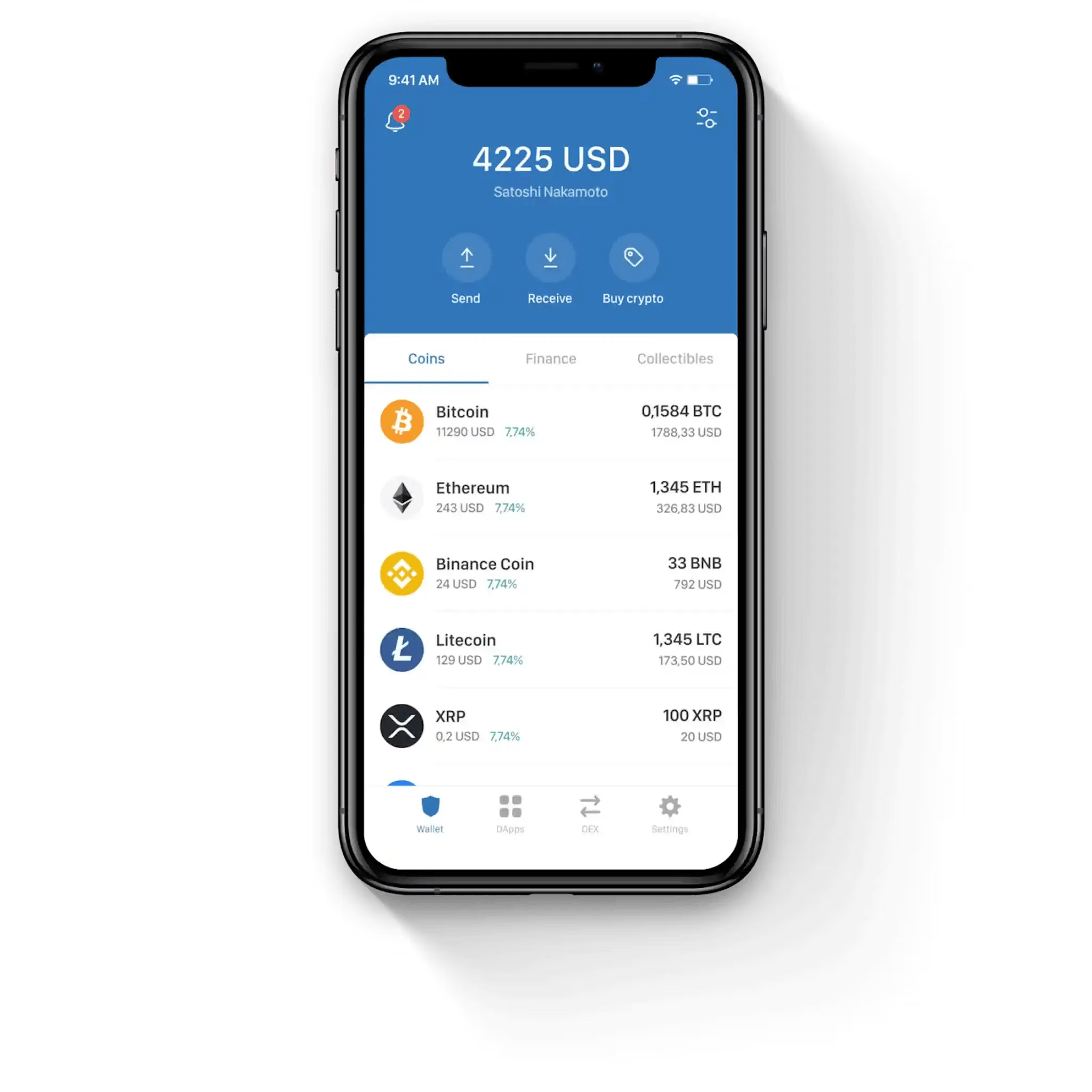
Trust Wallet's core features include:
100+ blockchains, including all major EVM chains
Custom EVM chain addition via RPC URL
Built-in dApp browser for Web3 interaction
NFT collection viewing and management on mobile
In-app staking for ETH, BNB, and other assets
Trust Wallet works best as an everyday on-the-go wallet for users active across multiple ecosystems. It has quite a minimalistic interface, but it’s well-suited for most everyday operations. For a beginner-friendly, all-in-one mobile gateway to multi-chain Web3, Trust Wallet is a strong default choice.
7. Coinbase Wallet: Beginner-friendly option
Coinbase Wallet is a non-custodial mobile wallet developed by Coinbase, separate from Coinbase's custodial exchange wallets. It bridges CEX familiarity and self-custody by offering easy onboarding, optional encrypted cloud key backup, and direct fiat on-ramp from the Coinbase exchange.
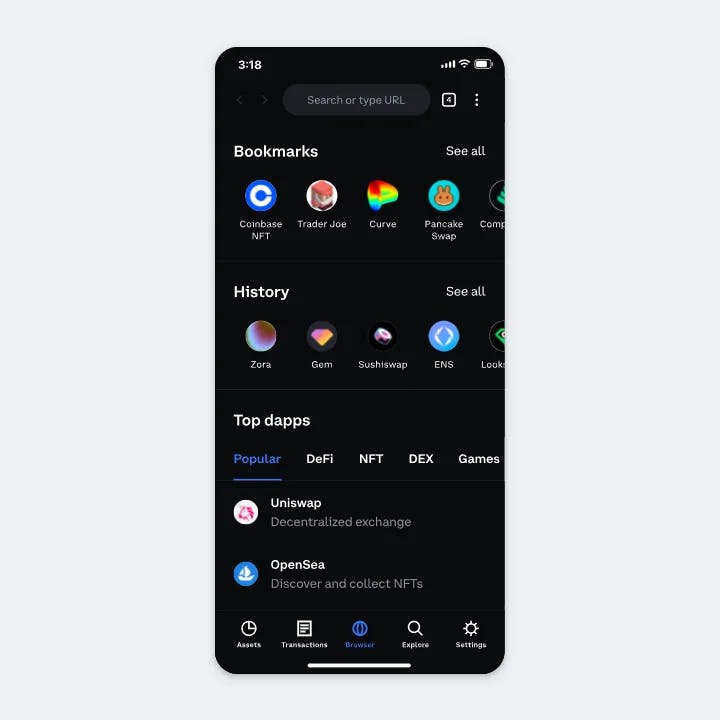
Coinbase Wallet's core features include:
Encrypted cloud backup for wallet recovery
Direct fiat on-ramp from the Coinbase exchange
Built-in DEX swaps and EVM chain bridge
DeFi portfolio view for Ethereum positions
NFT storage and display across EVM chains
Coinbase Wallet excels for Coinbase users making their first steps into self-custody, offering smooth fiat-to-DeFi access. While still reliant on a centralized Coinbase ecosystem, it’s a robust transitional wallet between centralized exchange accounts and full on-chain independence.
8. Exodus: Everyday wallet with friendly UX
Exodus is a universal wallet known for its polished graphical interface, live portfolio charts, and integrated cross-chain swap feature powered by third-party liquidity providers. It is fully non-custodial and requires no KYC or account creation, making it privacy-friendly.
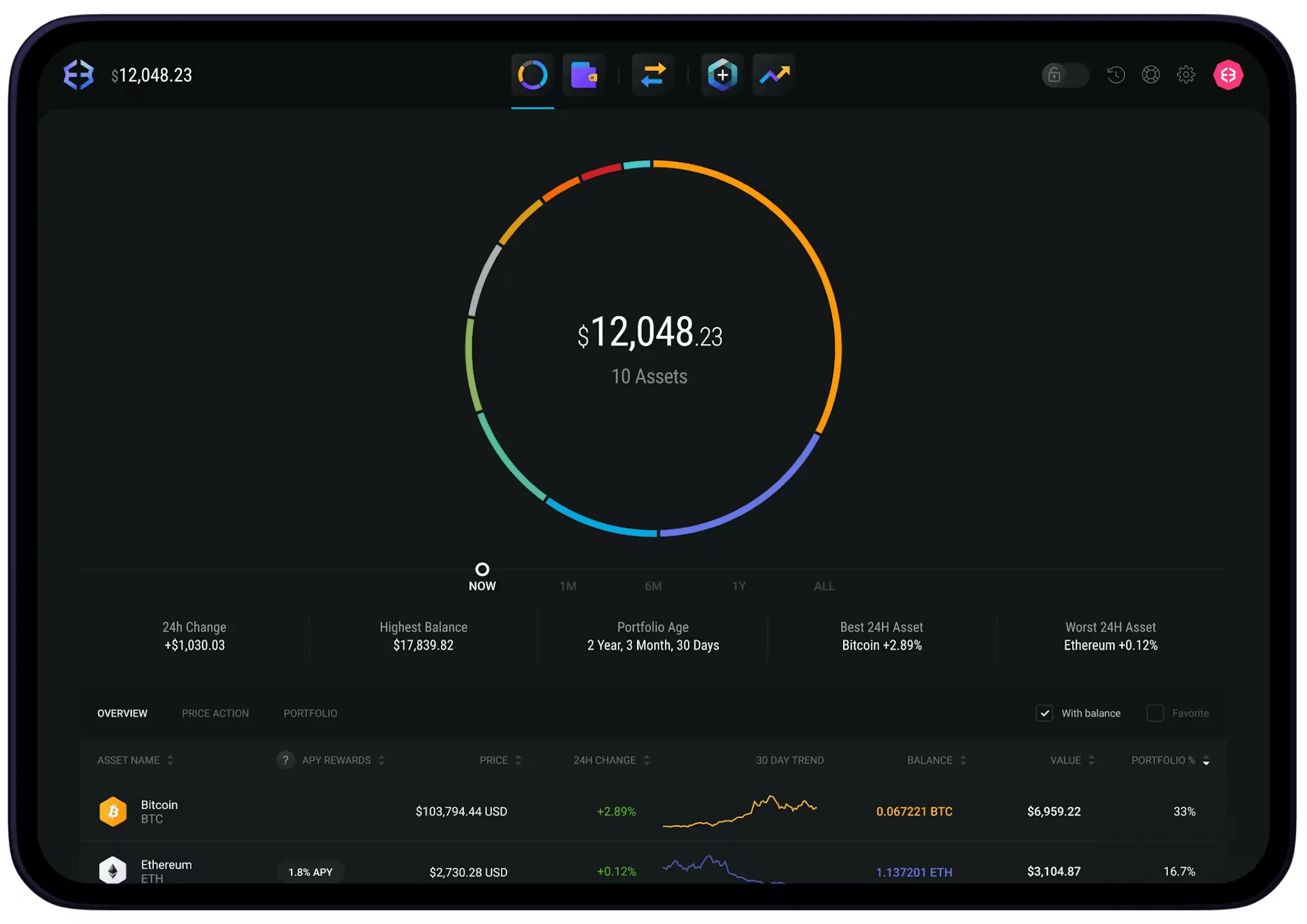
Exodus's core features include:
Rich graphical portfolio dashboard with live price charts
Built-in instant cross-chain token swaps
Thousands of tokens with custom asset addition
No KYC, no account required for any feature
ETH and other asset staking via integrated providers
Exodus is ideal for long-term holders who want a visually clear, unified view of their assets without switching tools. Its swaps can be costlier than direct DEX usage, but for those needing a polished, feature-rich, all-in-one everyday wallet, Exodus delivers a strong user experience.
Comparison table of key features
Let’s summarize our comparison in a table below.
Wallet | Type | Supported EVM Chains | Specific Features | Best For |
MetaMask | Seed phrase (EOA), smart contract wallet in development | All EVM (custom RPC) | Portfolio dashboard, Gas Station, DEX aggregation, Smart Transactions | DeFi users and dApp developers |
Rabby | Seed phrase (EOA) | All EVM (custom RPC) | Transaction simulation, Approval control, Risk alerts, HW signing | Security-conscious DeFi users |
Trezor | Hardware | 10+ EVM, custom RPC can be added via MetaMask | Open-source firmware, Shamir Backup, WalletConnect, HW signing | Long-term holders, open-source advocates |
Ledger | Hardware | 300+ EVM (native) | Staking, NFT management, Built-in swaps, EAL5+ secure element | Long-term holders wanting rich built-in features |
Safe | Smart contract wallet with AA (multi-sig) | 14+ major EVM chains | Multi-sig, Modules, Spending limits, Transaction queuing | DAOs, teams, and large treasury funds |
Trust Wallet | Seed phrase (EOA) | All EVM (custom RPC) | dApp browser, NFT viewing, In-app staking, 100+ chains | Mobile users across multiple ecosystems |
Coinbase Wallet | Seed phrase (EOA) | All EVM (custom RPC) | Cloud key backup, Fiat on-ramp, DEX swaps, NFT storage | Coinbase users moving to self-custody |
Exodus | Seed phrase (EOA) | 20+ major EVM chains | Portfolio charts, Cross-chain swaps, Staking | Everyday holders wanting rich UX |
How to keep your Ethereum wallet secure
The most essential point is that you should never share your seed phrase or private keys with anyone, and anyone who asks for it in your DM is always a scammer. Private keys can be used to sign transactions, so those who own your keys can transfer your funds to their own account with ease. Let’s wrap up the article with a list of the best practices that help you avoid potential mistakes that can result in fund losses.
Best practices and common mistakes to avoid
Here is the list of what to do - and what NOT to do - so your account and your funds remain secure.
It’s highly not recommended to access your wallet on public Wi-Fi, as credentials may potentially be intercepted.
Ensure that no services can access and read data you enter into your wallet app or browser extension.
It’s better not to store your seed phrase digitally, as it can be potentially intercepted
Avoid impersonation scams: it’s better to bookmark trusted sites (MetaMask, Uniswap, etc.) and use those bookmarks
Revoke approvals after you stop using a DeFi or other dApp, using tools like Revoke.cash or Rabby's approval manager
Use hardware wallets for holding large sums of money to ensure additional protection
Additionally, all general precautions when interacting with Web3 services apply here, too. It’s essential to check the quality of projects you’re interacting with and avoid services that offer staking with too large APYs (even if it’s not spam by itself, it will lead to a quick token devaluation) or demand payment before you can proceed. Make sure to explore the project, its documentation, and its community before interacting with it.
Wrapping up: Powering the EVM ecosystem with GetBlock
Different EVM wallets offer a variety of features for various categories of users. Some of them, such as MetaMask and Rabby, are good for all categories of Web3 users who want to connect with a variety of dApps. Others, like Coinbase Wallet and Trust Wallet, are more entry-level examples for basic usage, like crypto payments and on/off-ramps.
Exodus is a universal option for those who need to track their assets, while Safe is a complex, high-security solution for experienced users. Last, hardware wallets like Ledger and Trezor offer the highest security for large crypto holders. Select the wallet that suits your needs, follow best security practices, and your crypto will remain safe and benefit you.
GetBlock offers a wide variety of EVM chains, from established ecosystems like Ethereum, Arbitrum, and Polygon, to highly specialized and rapidly developing chains like Ronin, Mantle, Soneium, and Somnia. We see our mission in empowering Web3, and supporting the EVM community is one of our priority tasks. Join us now and start building your dApps and tokens with GetBlock EVM nodes!
FAQ
Which Ethereum wallet is the safest option?

Are hardware wallets really worth the investment for ETH?
Can I use one Ethereum wallet to store other cryptocurrencies?
Are mobile Ethereum wallets secure enough for everyday use?
What happens if I lose my password or seed phrase?


Popular Posts

June 9, 2021
4 min read

November 9, 2021
5 min read

May 24, 2022
5 min read

March 18, 2021
4 min read


