
Best Blockchain Indexers 2026

Vance Wood
January 23, 2026
12 min read
Along with RPC nodes to connect to the blockchain, Web3 users need specific tools that analyze what’s happening both onchain and offchain. Developers need them to capture real-time onchain data and proceed with their dApps, while traders must monitor the slightest price fluctuations to make profits efficiently. That’s where blockchain indexers are widely used.
Executive summary
Here is the list of explorer apps we’re going to review here:
The Graph
Space and Time
Covalent (GoldRush)
Dune Analytics
Subsquid
Goldsky
SubQuery
Bitquery
Envio (HyperIndex)
Blockvision
Each of them has a similar structure: an RPC infrastructure to access blockchain data, analytics tools to process it, and a dashboard/SDK kits for accessing and customizing the data. Many also have additional instruments for specific use cases, such as NFT analytics or AI agents training.
Before exploring them in detail, let’s overview the blockchain indexer's work principles in general.
What are blockchain indexers?
These are apps for analyzing onchain data in real time and presenting it in a readable or usable format. This data can then either be explored and analyzed or fetched by developers to utilize in their own dApps.
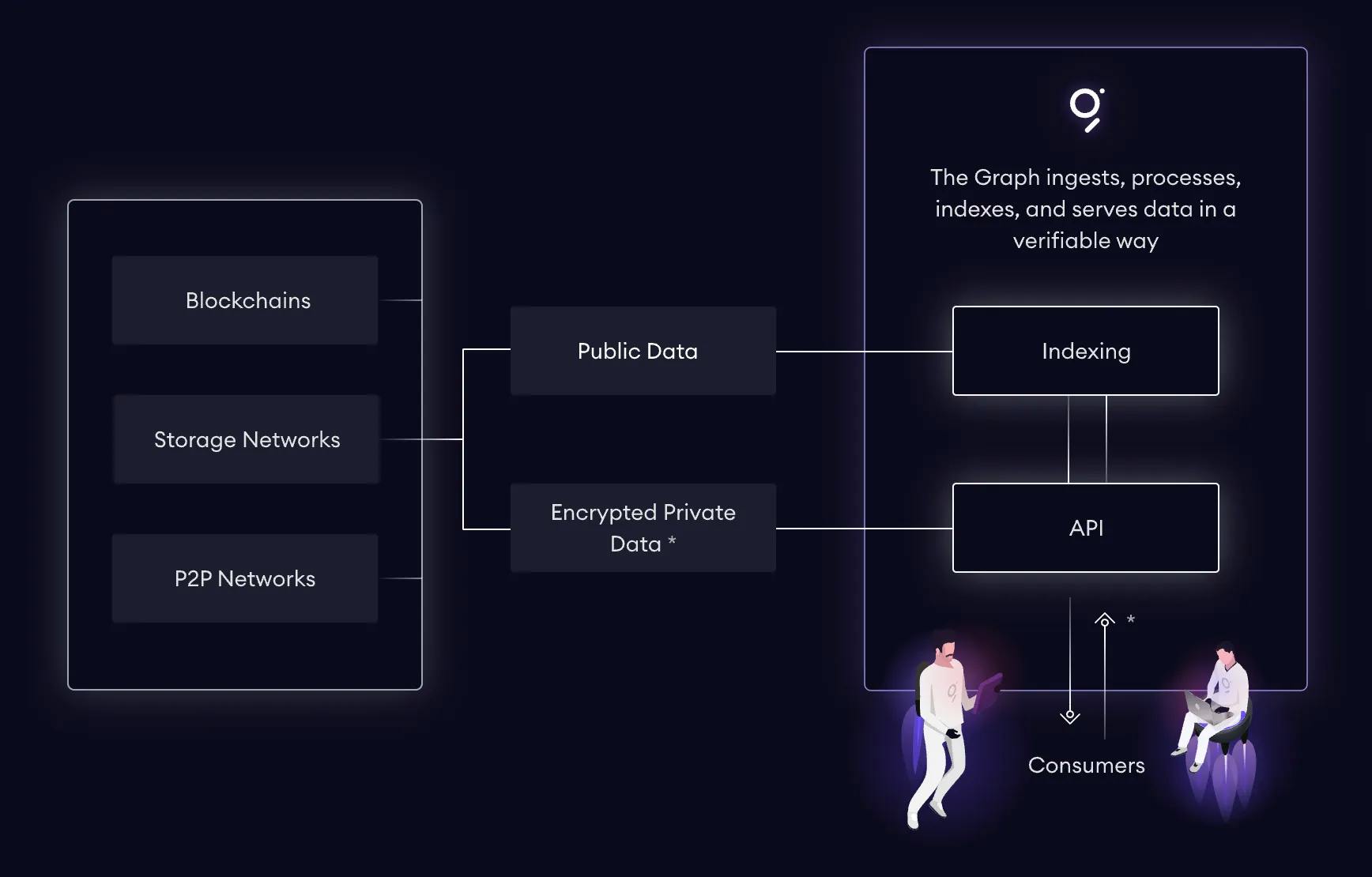
Usually, indexer data is presented as:
PostgreSQL databases, which can be utilized by dApps to power their features
Tables and graphs for individual usage by traders and analytics
Blockchain indexers use RPC nodes to reach out to the blockchain and catch essential information about its state. Many of them also analyze offchain information, like market data from CEXs and DEXs.
Do you think GetBlock needs blockchain indexer functionality or any other new feature? Check our Feedback Portal and share your ideas with us!
Indexers comparison matrix
Let’s explore and compare all 10 indexers before diving further into them.
Indexer | Data analyzed | Features and services | Best used for |
The Graph | Onchain | Subgraphs; Substreams | Developers; dApp builders |
Space and Time | Onchain & offchain | Blockchain data APIs; Proof of SQL | Financial tools; data/AI teams |
Covalent | Onchain & offchain | GoldRush API; Agent SDK | Developers; analytics platforms |
Dune Analytics | Onchain | SQL workbench; Public dashboards | Traders; onchain analysts |
Subsquid | Onchain | Squid SDK; Decentralized data APIs | Protocol teams; analytics backends |
Goldsky | Onchain & offchain | Managed subgraphs; Mirror streaming | Data-heavy dApps; chain analysts |
SubQuery | Onchain | Indexer SDK | Multi-chain dApps; infra providers |
Bitquery | Onchain & offchain | GraphQL APIs; Mempool & DeFi data | Traders; compliance and monitoring tools |
Envio | Onchain & offchain | HyperIndex; GraphQL APIs | EVM developers; cross-chain indexers |
Blockvision | Onchain & offchain | Indexer APIs; Mempool tools | Chain explorers; MEV/trading tooling |
Note that while indexers usually can provide pricing and value data, they don’t extract them directly. Instead, they provide the raw transaction data from swaps, DEXs, and other services, so the price can be calculated based on that.
Top 10 blockchain indexers comparison
Now we can dive deeper into each of these tools and explore who might need it and why. Let’s start!
1. The Graph
The Graph is an indexing protocol and query layer that structures blockchain data into subgraphs and exposes it via GraphQL APIs for dApps and analytics tools.
It provides:
Subgraph Studio for subgraph creation
Substreams to enhance performance and scalability
Graph Nodes that ingest chain data
Additionally, it contains a decentralized network where indexers, curators, and delegators coordinate around GRT incentives.
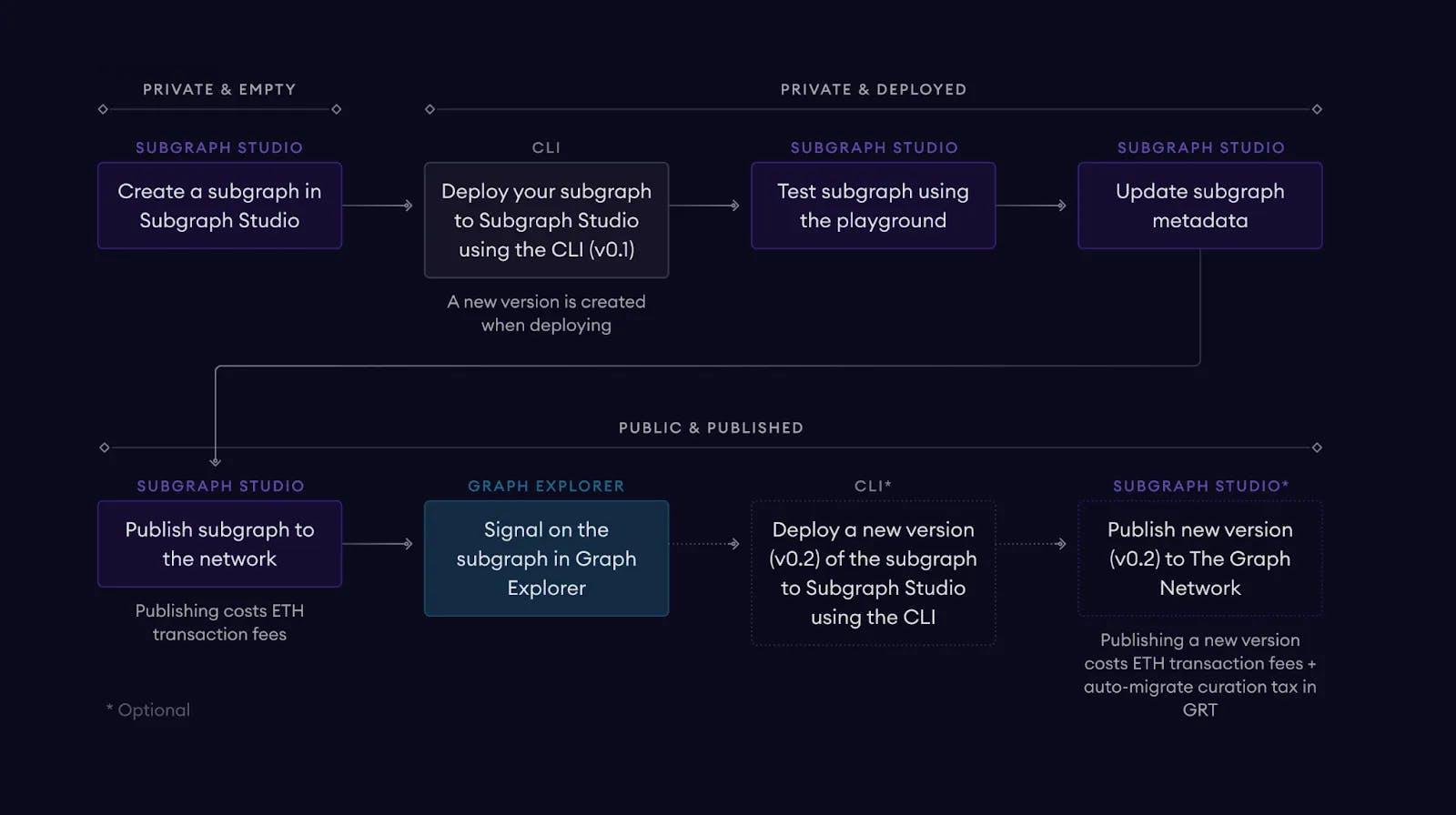
Source: Subgraph Docs
This is most useful for dApp developers, DeFi protocols, NFT projects, and analytics dashboards that need structured, queryable onchain state. The core protocol is open and permissionless, while production-grade indexing uses a mix of free hosted options and paid, token-incentivized decentralized network resources, positioning The Graph as a standard Web3 data layer.
2. Space and Time
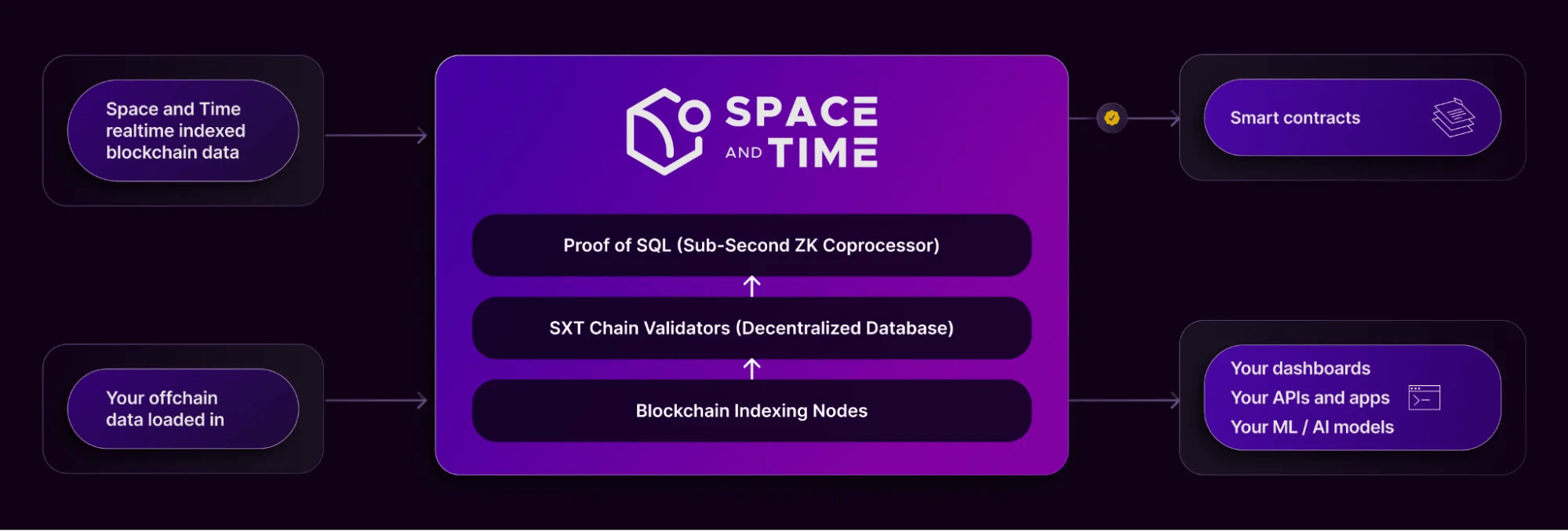
Space and Time is a Web3 data warehouse and decentralized HTAP (hybrid transactional/analytical) platform that combines indexed blockchain and offchain data with verifiable computations using its ZK-based Proof-of-SQL technology.
It contains:
A distributed data warehouse
A decentralized query engine
Space and Time Studio interface
Web3 API tools
They can be used to ingest, transform, and query multi-chain data, with tamperproof query proofs that can be consumed onchain or by enterprises.
Source: Space and Time Docs
This app is best suited for data-heavy dApps, DeFi protocols, financial institutions, and AI/data science teams that need trusted analytics across blockchain and traditional datasets. The platform runs as a commercial Web3 infrastructure service with free access paths and paid enterprise-grade tiers, positioning it as a trust-minimized alternative to traditional cloud data warehouses.
3. Covalent (GoldRush)
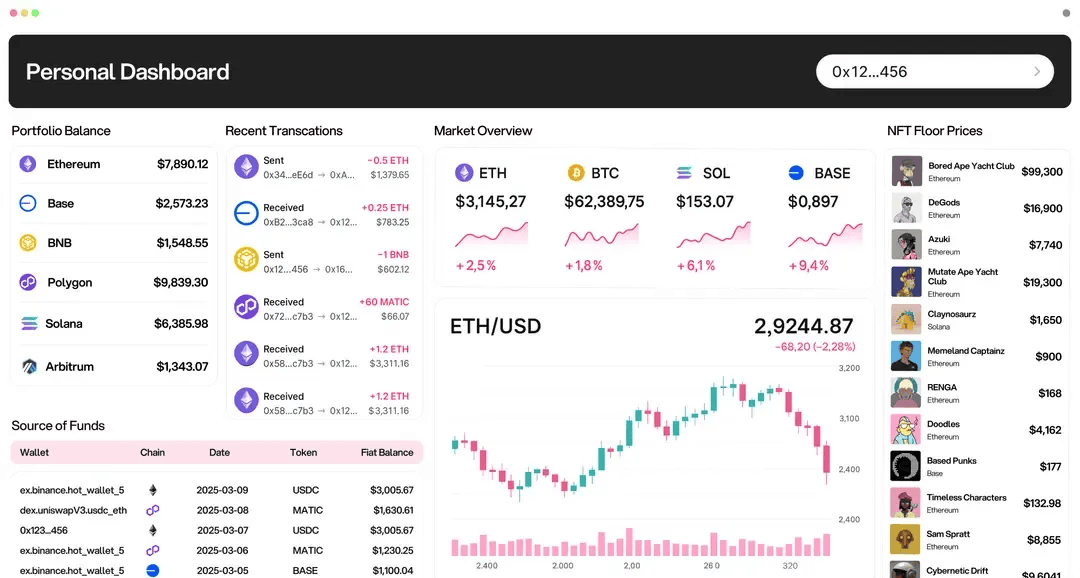
Covalent’s GoldRush is a blockchain data API suite that exposes normalized, multi-chain onchain data, including balances, transactions, logs, and pricing, through developer-friendly endpoints. It offers REST APIs and SDKs that cover real-time and historical data for addresses, smart contracts, DEX activity, and pricing, indexing chains from genesis to the latest block to avoid custom node management.
Source: GoldRush
GoldRush is most useful for wallet builders, DeFi dashboards, AI agents, compliance, and analytics platforms that need fast, normalized multi-chain data without operating their own infra. It uses a typical SaaS-style model with free and paid tiers (and enterprise focus), positioning itself as a plug-and-play data backbone rather than a DIY indexing framework.
4. Dune Analytics
Dune Analytics is a crypto data analytics platform that lets users query and visualize onchain data from multiple networks using SQL and share dashboards publicly. It provides pre-indexed blockchain data tables, a browser-based SQL editor, dashboarding, and APIs/DataShare for programmatic access, along with real-time and historical data for DeFi, NFTs, and tokens.
Dune is especially valuable for traders, onchain analysts, researchers, and protocol teams who need flexible, ad-hoc analytics and public dashboards without managing infrastructure. The platform has a strong free tier and several paid subscription levels (Analyst, Plus, Premium) plus API-specific plans, positioning it as a community-driven yet enterprise-capable crypto BI layer.
5. Subsquid
Subsquid is a Web3 indexing network and decentralized data lake that stores and serves blockchain data with a focus on high-performance retrieval and flexible indexing. It uses a peer-to-peer data lake where nodes store compressed subsets of chain data and an SDK (“Squid SDK”) for building custom indexers that can perform real-time indexing and write to various databases.
Subsquid is ideal for dApp developers, DeFi and NFT protocols, and analytics platforms that need fast, scalable indexing beyond classic subgraph-style architectures. The network positions itself as significantly faster and more scalable than traditional subgraphs, with decentralized participation and likely a mixed free/paid token-incentivized model for production workloads.
6. Goldsky
Goldsky is a data indexer that provides managed subgraph hosting and real-time streaming of onchain data directly into user databases. It offers backwards-compatible subgraphs that expose GraphQL APIs, plus Mirror/Turbo products that stream blockchain and some offchain datasets (e.g., NFT metadata, token prices) into your own infra for downstream processing.
Goldsky is most useful for teams running data-intensive dApps, cross-chain protocols, and analytics systems that want both subgraph-like APIs and full control over raw data in their own warehouses. With easy onboarding (including no-credit-card Mirror access) and fully managed infra, it positions itself as a premium, performance-focused indexing and streaming provider with commercial pricing on top of free entry points.
7. SubQuery
SubQuery is a decentralized data indexing and RPC infrastructure platform that turns raw blockchain data into queryable formats for dApps across many networks. It offers an Indexer SDK for custom projects, decentralized indexers, sharded data nodes for optimized RPC, and even AI applications, all accessible via GraphQL or other APIs.
SubQuery is well suited for protocol teams, multi-chain dApps, DAOs, and analytics providers that need flexible, cross-chain indexing plus performant RPC in one ecosystem. The network combines free consumer access with token-based incentives and potentially lower query costs.
8. Bitquery
Bitquery is a multi-chain blockchain data platform providing APIs and streaming for trading, DeFi, mempool, NFT, and general chain data. It exposes GraphQL APIs, WebSocket subscriptions, and Kafka streams covering crypto price feeds, DEX trades, liquidity events, contract events, mempool data, NFT activity, and more, including specialized stablecoin-related APIs.
Bitquery is particularly useful for trading platforms, quant and DeFi analysts, compliance tools, and monitoring services that need granular, real-time and historical data, including pre-confirmation mempool insights. The service runs on a SaaS model with a free tier and paid plans for higher volumes and advanced features, positioning it as an enterprise-ready, developer-centric data firehose.
9. Envio (HyperIndex)
Envio HyperIndex is a feature-rich indexing solution for EVM chains that lets developers create APIs for smart contracts and index data much faster than raw RPC approaches. It supports contract import to auto-generate indexer boilerplate, multi-chain aggregation into a single database, GraphQL APIs over indexed data, asynchronous fetching from offchain sources like IPFS, and quickstart templates for common standards such as ERC‑20.
HyperIndex is most useful for dApp developers and protocol teams on Arbitrum and other EVMs who need real-time indexing, cross-chain aggregation, or to combine onchain and offchain data in a single query layer. Envio positions itself as a high-speed, developer-friendly indexer with commercial viability, likely combining free developer access with paid production-grade plans for high throughput.
10. Blockvision
Blockvision is a Web3 data and infrastructure platform that provides explorer-as-a-service, node infrastructure, and high-performance indexing APIs. It offers white-label blockchain explorers, low-latency RPC node hosting (AceNode), real-time indexer APIs for NFTs, DeFi, tokens, and portfolios, plus features like mempool monitoring, Flashbots integration, and trace analysis.
This makes it especially valuable for chains wanting custom explorers, trading/infrastructure teams needing MEV-aware and mempool data, and dApps that require robust, low-latency API access. Blockvision uses tiered pricing suitable for startups through enterprises and emphasizes customization and performance, positioning itself as a full-stack infra and data partner.
How to choose the best indexer
Before defining which indexer is best for you, it’s better to define what you’ll do with it. Let’s summarize the article with a quick overview of various purposes where an indexer may be needed.
Developers utilize specific onchain data to realize various functionalities in their dApps.
Traders need price fluctuation and other financial data to secure the best strategies.
Security analysts use onchain data for smart contract auditing and optimization.
Blockchain researchers need archive data for performing their research.
Depending on the purpose, each Web3 user should decide which chains they need and which types of data suit their needs. Some services need large data sets for precise analytics, security, or compliance, while others train AI agents with them.
Some services need specific on- or offchain data, like NFT metadata or price fluctuations, and other data would only distract and overload the service. As one can see, each specific service offers different solutions to these problems, so use this article’s table to locate the service that corresponds to the data you need.
Blockchain indexers are crucial for the healthy Web3 economy functioning. They gather and provide data that other dApps. Like Web3 infrastructure services connect dApps to the blockchain, indexers provide data flows necessary to power their operations. These two services are often combined, and our own nodes use various indexing tools to optimize your RPC calls.
GetBlock continues to develop its RPC node infrastructure, and now we support more than 100 different chains for dApp developers. And not only that - we support all our customers expand on different markets as the Web3 infrastructure service demands growth. The blockchain indexer market may be our next target. For now - sign up and explore our RPC nodes for any use case, which grow and scale with your project.
FAQ
What is a blockchain indexer and why do I need one?

What types of data does a blockchain indexer provide?
Can a blockchain indexer provide real-time data updates?
Does an indexer support multiple blockchains?
Can I index my own smart contract events with a blockchain indexer?


Popular Posts

June 9, 2021
4 min read

November 9, 2021
5 min read

May 24, 2022
5 min read

March 18, 2021
4 min read


